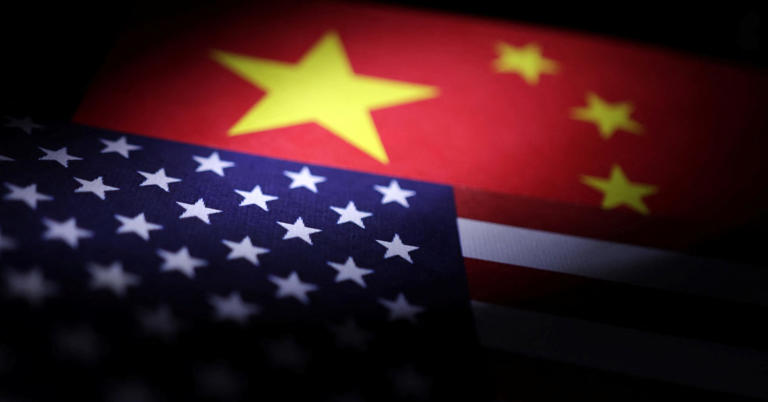
THE renewed U.S.-China trade truce struck in London left a key area of export restrictions tied to national security untouched, an unresolved conflict that threatens a more comprehensive deal, two people briefed on detailed outcomes of the talks told Reuters.
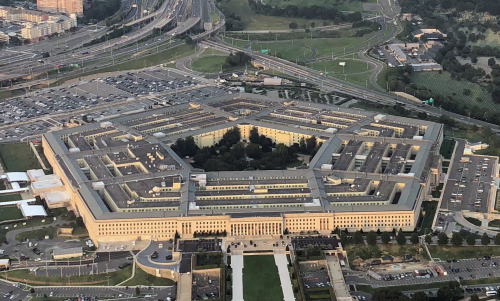
Beijing has not committed to grant export clearance for some specialized rare-earth magnets that U.S. military suppliers need for fighter jets and missile systems, the people said. The United States maintains export curbs on China's purchases of advanced artificial intelligence chips out of concern that they also have military applications.
At talks in London last week, China's negotiators appeared to link progress in lifting export controls on military-use rare earth magnets with the longstanding U.S. curbs on exports of the most advanced AI chips to China. That marked a new twist in trade talks that began with opioid trafficking, tariff rates and China's trade surplus, but have since shifted to focus on export controls.
In addition, U.S. officials also signalled they are looking to extend existing tariffs on China for a further 90 days beyond the August 10 deadline agreed in Geneva last month, both sources said, suggesting a more permanent trade deal between the world's two largest economies is unlikely before then.
The two people who spoke to Reuters about the London talks requested not to be named because both sides have tightly controlled disclosure. The White House, State Department and Department of Commerce did not immediately respond to requests for comment. China's Foreign and Commerce ministries did not respond to faxed requests for comment.
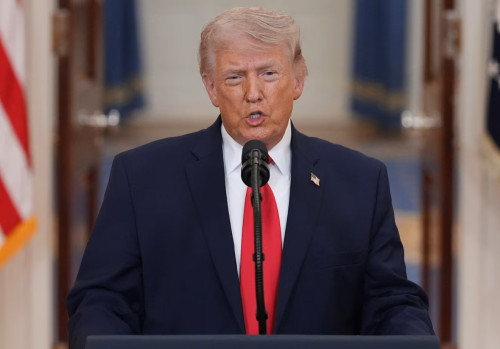
President Donald Trump said on Wednesday the handshake deal reached in London between American and Chinese negotiators was a "great deal," adding, "we have everything we need, and we're going to do very well with it. And hopefully they are too."
And U.S. Treasury Secretary Scott Bessent said there would be no "quid pro quo" on easing curbs on exports of AI chips to China in exchange for access to rare earths.
China Chokehold
But China's chokehold on the rare earth magnets needed for weapons systems remains a potential flashpoint.
China dominates global production of rare earths and holds a virtual monopoly on refining and processing.
A deal reached in Geneva last month to reduce bilateral tariffs from crushing triple-digit levels had faltered over Beijing's restrictions on critical minerals exports that took shape in April.
That prompted the Trump administration to respond with export controls preventing shipments of semiconductor design software, jet engines for Chinese-made planes and other goods to China.
At the London talks, China promised to fast-track approval of rare-earth export applications from non-military U.S. manufacturers out of the tens of thousands currently pending, one of the sources said. Those licenses will have a six-month term. Beijing also offered to set up a "green channel" for expediting license approvals from trusted U.S. companies.
Initial signals were positive, with Chinese rare-earths magnet producer JL MAG Rare-Earth saying on Wednesday it had obtained export licences that included the United States, while China's Commerce Ministry confirmed it had approved some "compliant applications" for export licences.
But China has not budged on specialized rare earths, including samarium, which are needed for military applications and are outside the fast-track agreed in London, the two people said. Automakers and other manufacturers largely need other rare earth magnets, including dysprosium and terbium.
US-China trade truce leaves military-use rare earth issue unresolved, sources say
The rushed trade meeting in London followed a call last week between Trump and Chinese leader Xi Jinping. Trump said U.S. tariffs would be set at 55% for China, while China had agreed to 10% from the United States.
Trump initially imposed tariffs on China as punishment for its massive trade surplus to the United States and over what he says is Beijing's failure to stem the flow of the powerful opioid fentanyl into the U.S.
Big Issues Remain
"Temporary mutual accommodation of some concerns is possible but the fundamental issue of the trade imbalance cannot be resolved within this timeframe, and possibly during Trump's remaining term," said Liu Weidong, a U.S.-China expert at the Institute of American Studies, Chinese Academy of Social Sciences.
An extension of the August deadline could allow the Trump administration more time to establish an alternative legal claim for setting higher tariffs on China under the Section 301 authority of the USTR in case Trump loses the ongoing legal challenge to the tariffs in U.S. court, one of the people with knowledge of the London talks said.
The unresolved issues underscore the difficulty the Trump administration faces in pushing its trade agenda with China because of Beijing's control of rare earths and its willingness to use that as leverage with Washington, said Ryan Hass, director of the John L. Thornton China Center at the Brookings Institution.
"It has taken the Trump team a few punches in the nose to recognise that they will no longer be able to secure another trade agreement with China that disproportionately addresses Trump's priorities," Hass said. - June 16, 2025