THE 17th BRICS Summit convened in Rio de Janeiro this weekend under Brazil’s chairmanship, with member nations taking a measured approach to discussions on major global conflicts.
Keen to avoid attracting the ire of US President Donald Trump, leaders are expected to issue subdued statements on the wars in Ukraine and Gaza, while focusing instead on less contentious issues such as climate change, healthcare, artificial intelligence governance, and institutional reform.
The Associated Press reported today that the cautious tone marks a shift from last year’s summit hosted by Russia in Kazan, which featured more overt criticism of Western-led global systems.
Analysts note the BRICS bloc—enlarged in 2024 to include Iran, Egypt, Ethiopia, Indonesia and the UAE—is struggling with internal coherence, further limiting the summit’s ambition.
Several prominent leaders, including China’s President Xi Jinping and Russia’s President Vladimir Putin, are notably absent. Putin will join proceedings via videoconference, while other members such as Egypt and Saudi Arabia have yet to confirm full participation.
“Brazil wants to keep the summit as technical as possible,” said Oliver Stuenkel, professor at the Getulio Vargas Foundation, reflecting the host nation's desire to avoid escalating tensions with Washington.
Brazilian officials also indicated the final communiqué will avoid strong geopolitical language, with three joint statements expected to focus on consensus-based issues.
Meanwhile, for Malaysia, participating as a BRICS Partner Country, the summit presents an opportunity to deepen ties with emerging economies.
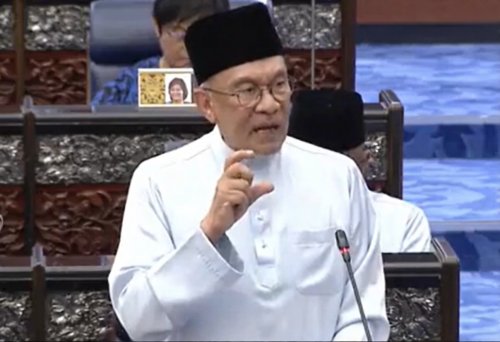
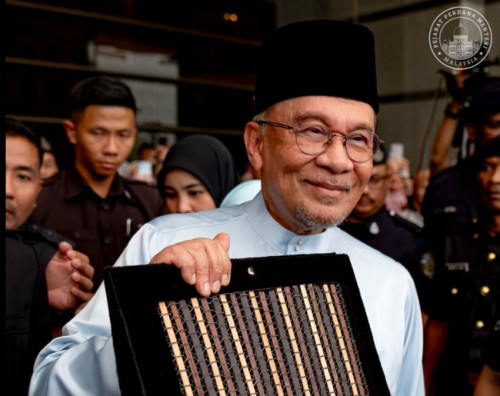
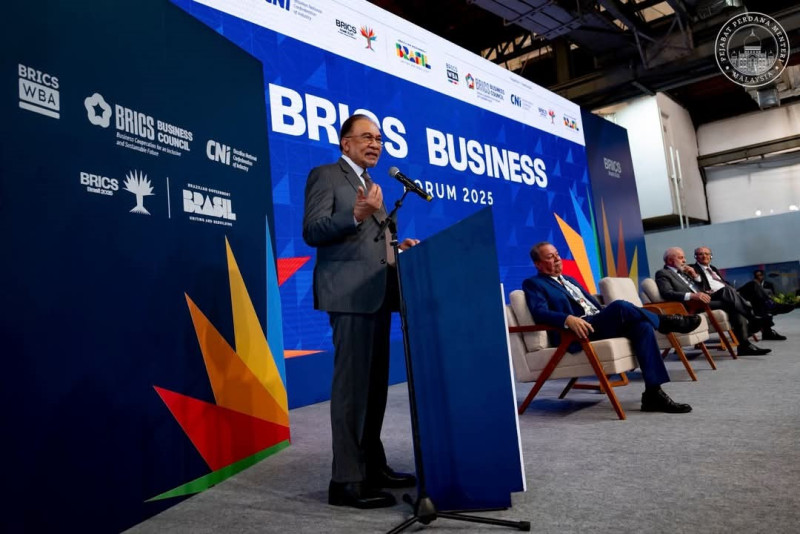
Prime Minister Datuk Seri Anwar Ibrahim, attending at the invitation of President Luiz Inácio Lula da Silva, used the platform to call on Malaysian businesses to seek growth beyond their traditional markets.
“Malaysian firms must be ready to explore new markets and seek trading opportunities abroad,” Anwar said. He highlighted the success of Malaysian companies already operating in Brazil, particularly Petronas and Yinson Production.
At a dinner hosted by Yinson in Rio, Anwar told guests, “I mentioned Yinson and Petronas to President Lula, and their role in Brazil. He was surprised and asked for more details.”
Yinson, a provider of floating production, storage and offloading (FPSO) solutions, is operating three major projects in Brazil: FPSO Anna Nery, FPSO Maria Quiteria and FPSO Atlanta. Petronas, which has upstream operations in Brazil, also opened retail stations in the country last year.
Despite Malaysia’s continued reliance on China and the United States for trade and investment, Anwar stressed the importance of market diversification. He said the Minister of Investment, Trade and Industry, Datuk Seri Tengku Zafrul Abdul Aziz, has been tasked with supporting Malaysian firms expanding into Brazil.
“Brazil is not only a strong voice for the Global South but has also emerged as a key economic power,” said Anwar, who also serves as Malaysia’s Finance Minister.
Anwar met with President Lula da Silva during the summit, with both leaders agreeing to strengthen bilateral cooperation. Lula accepted Anwar’s invitation to visit Malaysia during the ASEAN Summit in October, where a special business conference is expected to be co-hosted.
Malaysia’s participation in the BRICS summit follows its formal inclusion as a BRICS Partner Country on 1 January 2025. It also holds the rotating chair of ASEAN next year, aligning its diplomatic agenda with broader regional cooperation.
Bilateral trade between Malaysia and Brazil grew by 14.6 per cent in 2024, reaching RM20.35 billion (US$4.38 billion), up from RM17.43 billion in 2023—solidifying Brazil’s status as one of Malaysia’s most important trading partners in Latin America. - July 6, 2025