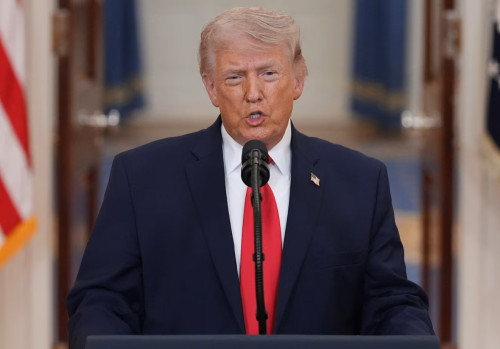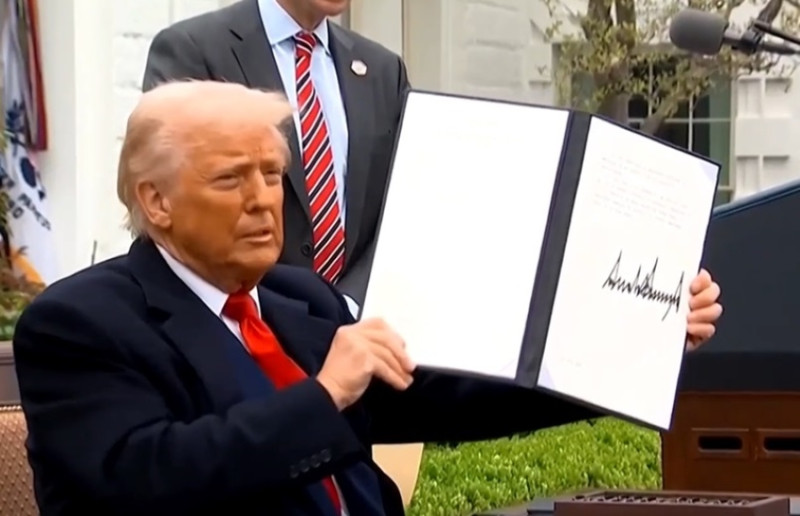
UNITED States President Donald Trump cranked up the pressure Monday on America’s trading partners, firing off letters to heads of several countries, informing them of their new tariff rate. But at the same time, Trump took some of the edge off by signing an executive action to extend the date for all “reciprocal” tariffs, with the exception of China, to August 1.
Those “reciprocal” tariffs were expected to come into effect Wednesday. In some cases, the letters Trump sent specify new “reciprocal” tariff rates that are higher or lower compared to April levels.
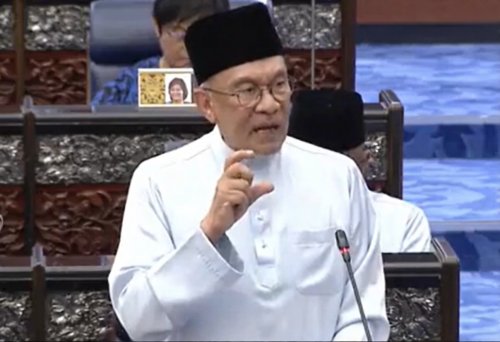
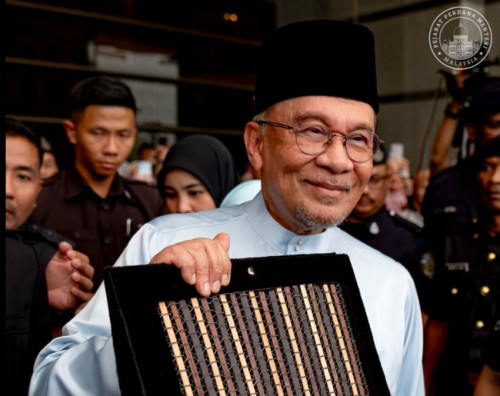
In a letter from the White house dated July 7, 2025 addressed to Prime Minister Datuk Seri Anwar Ibrahim, the US declared it will impose a 25 per cent tariff on all Malaysian imports from 1 August 2025, attributing the move to what it describes as “long-term and very persistent trade deficits engendered by Malaysia’s tariff, non-tariff policies and trade barriers.”
In a firmly worded letter, American officials remarked: “Our relationship has been, unfortunately, far from reciprocal. Starting on August 1, 2025, the US will charge Malaysia a tariff of only 25% on any and all Malaysian products sent into the US, separate from all sectoral tariffs. Goods transhipped to evade a higher tariff will be subject to that higher tariff.”
Officials assert the 25 per cent tariff is moderate compared to what is required to correct the imbalance, stating, “Please understand that the 25% number is far less than what is needed to eliminate the trade deficit disparity we have with your country.”
They argued the measure is necessary to restore fairness. “These tariffs are necessary to correct the many years of Malaysia’s tariff and non-tariff policies and trade barriers, causing these unsustainable trade deficits against the US. This deficit is a major threat to our economy and, indeed, our national security."
In an attempt to incentivise local investment, the US extended an offer to Malaysian companies, as the letter stated that “There will be no tariff if Malaysia, or companies within your country, decide to build or manufacture product within the US. In fact, we will do everything possible to get approvals quickly, professionally, and routinely—in other words, in a matter of weeks.”
The letter includes a warning regarding potential retaliatory action from Malaysia: “If for any reason you decide to raise your tariffs, then, whatever the number you choose to raise them by, will be added onto the 25% that we charge.”
Despite the punitive measures, the letter ends on a diplomatic note, citing: “It is a great honour for me to send you this letter in that it demonstrates the strength and commitment of our trading relationship, and the fact that the US has agreed to continue working with Malaysia, despite having a significant trade deficit with your great country.”
“We invite you to participate in the extraordinary economy of the US, the number one market in the world, by far,” adding that trade between the nations “must be more balanced and fair.”
Meanwhile, CNN reported that Japan’s Prime Minister Shigeru Ishiba and South Korea’s President Lee Jae-myung were the first recipients of Trump’s letters.
Both countries will face a 25% tariff come August 1, Trump said in posts on Truth Social displaying the letters, potentially giving countries more time to negotiate deals. Around two hours later, he announced similar letters were sent to Malaysia, Kazakhstan, South Africa, Myanmar and Laos, informing their leaders of new tariff rates as high as 40%.
Then later in the day, he posted seven new letters sent to leaders of Tunisia, Bosnia and Herzegovina, Indonesia, Bangladesh, Serbia, Cambodia and Thailand, putting the running total at 14 letters delivered on Monday.
In the letters, Trump said he takes particular issue with the trade deficits the US runs with them, meaning America buys more goods from there compared to the amount that American businesses export to those countries. Trump also said the tariffs would be set in response to other policies that he deems are impeding American goods from being sold abroad.
He encouraged country leaders to manufacture goods in the US to avoid tariffs.
This comes ahead of his initial 12:01 a.m. ET July 9 deadline for countries to make deals or face the threat of higher tariffs. That date marks the end of the pause on “reciprocal” tariffs, which briefly went into place in April. Since then, impacted countries have faced a minimum 10% tariff.
In all 14 letters, Trump threatened to raise tariffs even higher than the specified rates if a country retaliated against the US with tariffs of their own. Trump said these rates would be “separate from all Sectoral Tariffs,” meaning, for instance, the new tariff won’t be stacked on top of the current auto tariff of 25%, the White House confirmed. That would apply to any future sector-specific tariffs, too, a White House official said.
Despite the many trade qualms Trump has broadcast as having with the European Union, prompting him to threaten higher tariffs on several occasions, the trading bloc appears to have not received a letter from him.
“We’re not going to comment on letters that we haven’t received,” Olof Gill, a European Commission spokesperson, told reporters Monday afternoon.
“My understanding is that we can now expect an extension of the current status quo until August 1 to give further time for the EU and the US to reach an agreement in principle on a mutually beneficial agreement that works for both sides,” Simon Harris, Irish Minister for Foreign Affairs and Trade, said in a statement on Monday.
What’s at stake
Collectively, the US bought $465 billion worth of goods last year from the 14 countries that received letters on Monday, according to US Commerce Department figures. Japan and South Korea, America’s sixth- and seventh-largest trading partners, accounted for 60% of that, shipping a total of $280 billion worth of goods to the US last year.
The prospect of higher tariffs on goods could translate into higher prices for American consumers. Among the top goods America imports from South Korea and Japan, for example, are cars, auto parts, semiconductors, pharmaceuticals and machinery. Trump has placed or threatened to levy industry-specific tariffs on many of these goods.
In April, Japan was set to face a 24% tariff, while South Korea was set to face a 25% tariff.
While the other countries ship less to the US compared to Japan and South Korea, in many cases they are among the top foreign sources of goods.
For instance, South Africa, which is set to face 30% tariffs, accounted for roughly half of the platinum the US imported from other countries last year and was the top foreign supplier of it.
Malaysia, which is set to face a 24% tariff versus the 25% rate Trump announced in April, was the second-top source of semiconductors shipped to the US last year, with Americans purchasing $18 billion worth of them from there.
Meanwhile, Bangladesh, Indonesia and Cambodia are top manufacturing hubs for apparel and accessories.
Trump’s letter to Cambodia’s prime minister threatened a tariff rate of 36%, 13 percentage points lower than what had been in place in April, before it was paused.
Stocks sink
Stocks dropped lower midday after Trump announced the first batch of letters and continued to fall as Trump announced tariffs of varying rates from 25% to 40% on countries including Myanmar, Malaysia, Kazakhstan, Laos and South Africa.
The S&P 500 fell 0.79% and posted its worst day in about three weeks.
Despite Trump saying country-specific tariffs won’t be stacked on top of sectorial ones, shares of auto companies that have a heavy manufacturing presence in Japan and South Korea declined sharply. US-listed shares in major Japanese automakers Toyota, Nissan and Honda dropped by 4%, 7.16% and 3.86%, respectively.
Those declines, however, may reflect the increased likelihood of Trump potentially raising tariffs on cars from the two countries should they retaliate against the general 25% tariffs, were they to go into effect, by slapping higher tariffs on American goods.
“These Tariffs may be modified, upward or downward, depending on our relationship with on our relationship with your Country. You will never be disappointed with The United States of America,” Trump ended the letters before signing off.
The Dow closed lower by 422 points, or 0.94%. The S&P 500 fell 0.79% and the tech-heavy Nasdaq Composite fell 0.92%. The three major indexes posted their worst day in about three weeks. - July 8, 2025