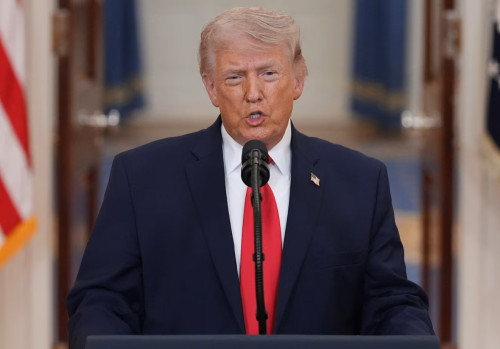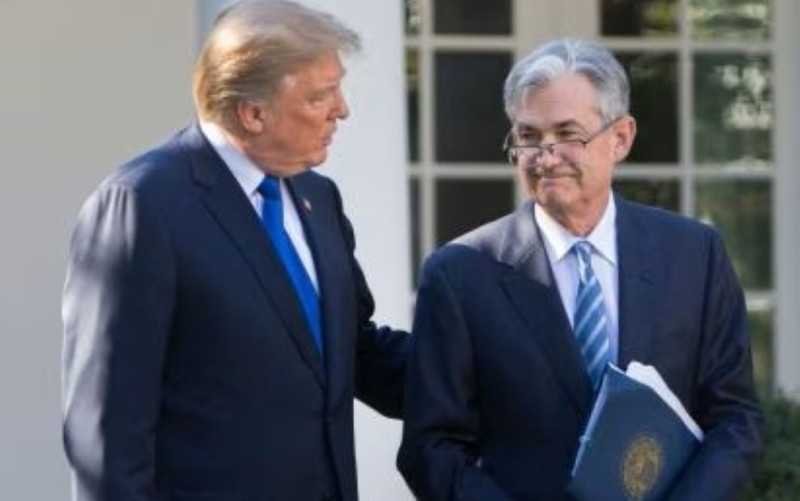
FEDERAL Reserve Chair Jerome Powell gave little indication on Wednesday of bowing anytime soon to President Donald Trump’s frequent demands that he cut interest rates, even as signs of dissent emerged on the Fed’s governing board.
AP reported the Fed left its key short-term interest rate unchanged for the fifth time this year, at about 4.3%, as was expected. But Powell also signalled that it could take months for the Fed to determine whether Trump’s sweeping tariffs will push up inflation temporarily or lead to a more persistent bout of higher prices.
His comments suggest that a rate cut in September, which had been expected by some economists and investors, is now less likely.
“We’ve learned that the process will probably be slower than expected,” Powell said. “We think we have a long way to go to really understand exactly how” the tariffs will affect inflation and the economy.
There were some signs of splits in the Fed’s ranks: Governors Christopher Waller and Michelle Bowman voted to reduce borrowing costs, while nine officials, including Powell, favoured standing pat. It is the first time in more than three decades that two of the seven Washington-based governors have dissented. One official, Governor Adriana Kugler, was absent and didn’t vote.
The choice to hold off on a rate cut will almost certainly result in further conflict between the Fed and White House, as Trump has repeatedly demanded that the central bank reduce borrowing costs as part of his effort to assert control over one of the few remaining independent federal agencies.
Powell has in the past signaled during a news conference that a rate move might be on the table for an upcoming meeting, but he gave no such hints this time. The odds of a rate cut in September, according to futures pricing, fell from nearly 60% before the meeting to just 45% after the press conference, the equivalent of a coin flip, according to CME Fedwatch.
“We have made no decisions about September,” Powell said. The chair acknowledged that if the Fed cut its rate too soon, inflation could move higher, and if it cut too late, then the job market could suffer.
Major U.S. stock indexes, which had been trading slightly higher Wednesday, went negative after Powell’s comments.
“The markets seem to think that Powell pushed back on a September rate cut,” said Lauren Goodwin, chief market strategist at New York Life Investments.
Powell also underscored that the vast majority of the committee agreed with a basic framework: Inflation is still above the Fed’s target of 2%, while the job market is still mostly healthy, so the Fed should keep rates elevated.
On Thursday, the government will release the latest reading of the Fed’s preferred inflation gauge, and it is expected to show that core prices, excluding energy and food, rose 2.7% from a year earlier.
Gus Faucher, chief economist at PNC Financial, says he expects the tariffs will only temporarily raise inflation, but that it will take most of the rest of this year for that to become apparent. He doesn’t expect the Fed to cut until December.
Trump argues that because the U.S. economy is doing well, rates should be lowered. But unlike a blue-chip company that usually pays lower rates than a troubled startup, it’s different for an entire economy. The Fed adjusts rates to either slow or speed growth, and would be more likely to keep them high if the economy is strong to prevent an inflationary outbreak.
Earlier Wednesday, the government said the economy expanded at a healthy 3% annual rate in the second quarter, though that figure followed a negative reading for the first three months of the year, when the economy shrank 0.5% at an annual rate. Most economists averaged the two figures to get a growth rate of about 1.2% for the first half of this year.
The dissents from Waller and Bowman likely reflect jockeying to replace Powell, whose term ends in May 2026. Waller in particular has been mentioned as a potential future Fed chair.
Michael Feroli, an economist at JPMorgan Chase, said in a note to clients this week if the pair were to dissent, “it would say more about auditioning for the Fed chair appointment than about economic conditions.”
Bowman, meanwhile, last dissented in September 2024, when the Fed cut its key rate by a half-point. She said she preferred a quarter point cut instead, and cited the fact that inflation was still above 2.5% as a reason for caution.
Waller said earlier this month that he favored cutting rates, but for very different reasons than Trump has cited: Waller thinks that growth and hiring are slowing, and that the Fed should reduce borrowing costs to forestall a rise in unemployment.
There are other camps on the Fed’s 19-member rate-setting committee — only 12 of the 19 actually vote on rate decisions. In June, seven members signaled that they supported leaving rates unchanged through the end of this year, while two suggested they preferred a single rate cut. The other half supported more reductions, with eight officials backing two cuts, and two — widely thought to be Waller and Bowman — supporting three reductions.
The dissents could be a preview of what might happen after Powell steps down, if Trump appoints a replacement who pushes for the much lower interest rates the White House desires. Other Fed officials could push back if a future chair sought to cut rates by more than economic conditions would otherwise support.
Overall, the committee’s quarterly forecasts in June suggested the Fed would cut twice this year. There are only three more Fed policy meetings — in September, October, and December.
When the Fed cuts its rate, it often — but not always — results in lower borrowing costs for mortgages, auto loans and credit cards.
Some economists agree with Waller’s concerns about the job market. Excluding government hiring, the economy added just 74,000 jobs in June, with most of those gains occurring in health care.
“We are in a much slower job hiring backdrop than most people appreciate,” said Tom Porcelli, chief U.S. economist at PGIM Fixed Income. - July 31, 2025