.jpg)
INDIA and China are development partners, not rivals, Prime Minister Narendra Modi and Chinese President Xi Jinping agreed on Sunday, as they discussed ways to improve trade ties amid global tariff uncertainty.
Modi is in China for the first time in seven years to attend a two-day meeting of the Shanghai Cooperation Organisation regional security bloc, along with Russian President Vladimir Putin and leaders from Iran, Pakistan and four Central Asian states in a show of Global South solidarity.
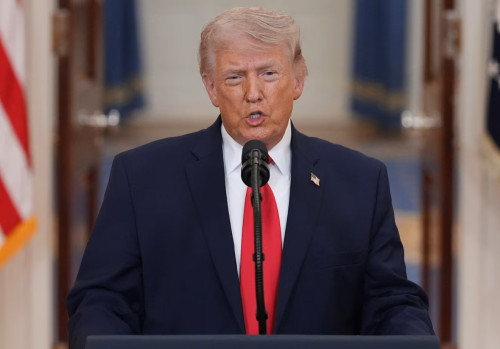
Reuters cited analysts saying Xi and Modi are seeking to align against pressure from the West, days after U.S. President Donald Trump imposed a punitive total of 50% tariff on Indian goods, partly in response to New Delhi's purchase of Russian oil.
Trump's moves hurt decades of carefully cultivated U.S. ties with New Delhi, which Washington had hoped would act as a regional counterweight to Beijing.
Modi told Xi his country was committed to improving ties with China and discussed reducing India's burgeoning bilateral trade deficit of nearly $99.2 billion, while emphasising the need to maintain peace and stability at their disputed border after a clash in 2020 triggered a five-year military standoff.
"We are committed to progressing our relations based on mutual respect, trust and sensitivities," Modi said during the meeting on the sidelines of the summit, according to a video posted on his official X account.
He said an atmosphere of "peace and stability" has been created on their disputed Himalayan border and that cooperation between the two nations was linked to the interests of 2.8 billion people of the world's two most populous countries.
The nuclear-armed Asian neighbours share a 3,800 km (2,400 miles) border that is poorly demarcated and has been disputed since the 1950s.
Xi said that China and India are each other's development opportunities rather than threats, Chinese state news agency Xinhua reported.
"We must ... not let the border issue define the overall China-India relationship," Xinhua reported Xi as saying.
China-India ties could be "stable and far-reaching" if both sides focus on viewing each other as partners instead of rivals, Xi added.
Ties between the nations were ruptured by the 2020 clash, in which 20 Indian and four Chinese soldiers died in hand-to-hand combat, following which the Himalayan border was heavily militarised by both sides.
Indian Foreign Secretary Vikram Misri told reporters later in the day in that the border situation had evolved over the course of last year, following a patrolling agreement in October. "The situation at the border is moving towards normalisation," he said.
To a question on the U.S. tariffs, he said that Modi and Xi discussed the international "economic situation" and the challenges it created.
"They tried to ... see how to leverage that for building greater understanding between themselves and how to ... take forward the economic and commercial relationship between India and China," he said.
The leaders also discussed expanding common ground on bilateral, regional, and global issues, and challenges like terrorism and fair trade in multilateral platforms, a statement from the Indian foreign ministry said.
Direct Flights, Trade Curbs
Both leaders had a breakthrough meeting in Russia last year after reaching a border patrol agreement, setting off a tentative thaw in ties that has accelerated in recent weeks as New Delhi seeks to hedge against renewed tariff threats from Washington.
Direct flights between both nations, which have been suspended since 2020, are being resumed, Modi added, without providing a timeframe.
China had agreed to lift export curbs on rare earths, fertilisers and tunnel boring machines this month during a key visit to India by China's Foreign Minister Wang Yi.
China opposes Washington's steep tariffs on India and will "firmly stand with India," Chinese Ambassador to India Xu Feihong said this month.
In recent months, China has allowed Indian pilgrims to visit Hindu and Buddhist sites in Tibet, and both countries have lifted reciprocal tourist visa restrictions.
"I see the meeting as a step in the direction of incremental improvement. The readouts indicate a lot of mixed political signalling ... But there's also a sense of the need to stabilise the relationship in the context of broader geopolitical currents," said Manoj Kewalramani, a Sino-Indian relations expert at the Takshashila Institution think tank in Bengaluru.
Other long-term irritants remain in the relationship, too.
China is India's largest bilateral trade partner, but the long-running trade deficit - a persistent source of frustration for Indian officials - reached a record US$99.2 billion this year.
Meanwhile, a planned Chinese mega-dam in Tibet has sparked fears of mass water diversion that could reduce water flows on the major Brahmaputra River by up to 85% in the dry season, according to Indian government estimates.
India also hosts the Dalai Lama, the exiled Tibetan Buddhist spiritual leader whom Beijing views as a dangerous separatist influence. India's arch-rival Pakistan also benefits from staunch Chinese economic, diplomatic and military support. - Sept 1, 2025