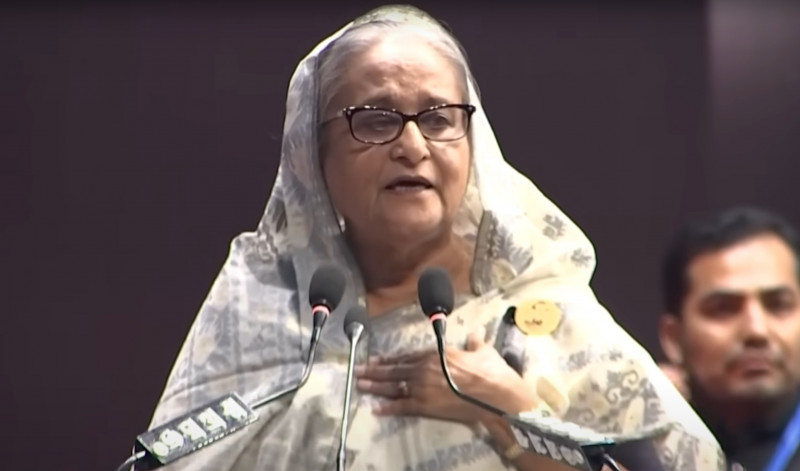
BANGLADESH’S International Crimes Tribunal has condemned former Prime Minister Sheikh Hasina to death for crimes against humanity, holding her responsible for the violent suppression of student-led protests last year that left some 1,400 people dead.
The 78-year-old fugitive politician, who has been in exile in India since losing power in 2024, was tried in absentia as the tribunal deemed her the “mastermind and principal architect” behind the nationwide crackdown that ended her 15-year rule, a tenure critics have described as authoritarian and marked by widespread allegations of extrajudicial killings, detentions, and suppression of dissent.
AlJazeera reported today that the tribunal ruled that Hasina directly ordered security forces to employ lethal weapons, drones, and helicopters to quell the student uprising, describing the attacks on civilians as “widespread and systematic.”
The court concluded that she had failed both to prevent and to punish the atrocities, finding her guilty under multiple charges of crimes against humanity.
The toppled Prime Minister’s now-banned Awami League party dismissed the tribunal as a “kangaroo court” and called for public protests, stoking fears of civil unrest across Bangladesh.
Over the past several days, the country had already witnessed a surge in violence, including at least 30 crude bomb explosions and 26 vehicles set ablaze.
In addition to Hasina, former Home Minister Asaduzzaman Khan Kamal was also sentenced to death, while former police chief Chowdhury Abdullah Al-Mamun received a five-year sentence in recognition of his cooperation with the tribunal.
A spokesperson for the interim government led by Nobel laureate Muhammad Yunus defended the tribunal’s proceedings, asserting that the court operated transparently and allowed public observation with regular documentation. Hasina, who rejected the court’s authority and refused to participate in the trial, had stated in October that she anticipated a guilty verdict, describing it as “preordained.”
Bangladesh’s Foreign Ministry has also summoned India’s envoy in Dhaka to demand that New Delhi prevent Hasina from speaking to journalists and cease providing her a platform, labelling her a “notorious fugitive.” - November 17, 2025