FOR many young Chinese professionals, the dream of upward mobility in bustling cities like Shanghai is starting to feel like a fading illusion.
Take 28-year-old Sasa Chen, for example. Once a high-earning finance worker in Shanghai, she has traded in the fast-paced corporate grind for a peaceful life by the sea in Jiangsu Province’s “Life in Venice,” a sprawling, yet partially abandoned replica of the Italian city.
“I have all the time in the world, the freedom to do whatever I want,” AP reported Chen saying, describing her life in the remote development where she pays a modest 1,200 RMB ($168) per month for her spacious apartment. “I am living the life that I want.”
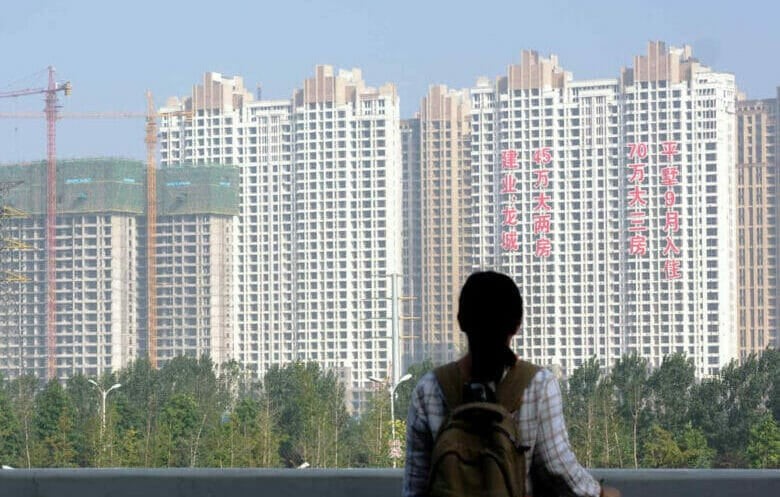
The once-promising development, built by real estate giant Evergrande, has faced a severe downturn since the collapse of China’s property market.
What was supposed to be a luxurious resort for wealthy Shanghai residents has become a ghost town, with empty homes, abandoned boats, and vacant storefronts lining the streets. But for some young Chinese, like Chen, these circumstances have turned the location into an affordable haven.
Chen’s decision to leave the intense “996 culture” of China’s corporate world — where employees often work from 9 a.m. to 9 p.m. six days a week — is part of a larger movement.
Many young Chinese professionals are abandoning the city for smaller towns where real estate is cheap, living costs are low, and personal freedom is plentiful.
This lifestyle choice reflects a broader shift in attitudes, where young people are opting for rest and relaxation over relentless work and career ambition.
The phenomenon, often referred to as “lying flat,” is a rebellion against the expectations of an entire generation that once idolized climbing the career ladder and chasing financial success.
Instead, many are embracing a “low-desire life,” rejecting corporate ambition for the simple pleasures of life, like hiking, cooking, or enjoying nature.
Chen, who worked at a large finance firm earning up to 700,000 yuan ($98,480) a year, decided to quit her high-pressure job after just three years.
She saved up 2 million yuan (US$290,000) and moved to “Life in Venice,” where the low cost of living allows her to survive comfortably off her investments.
“I never believed that work is the meaning of life,” she said. “My ideal state of life is not to work and stay at places that I like.”
The shift away from big cities is not unique to Chen. Many other young Chinese are making similar choices, seeking out more affordable lifestyles in towns where housing prices are a fraction of those in China’s larger cities.
This trend comes at a time when China’s once-booming economy is cooling. The country’s GDP growth has slowed significantly, and opportunities in major cities are becoming increasingly scarce.
The youth unemployment rate among 16- to 24-year-olds has surged to 16.5%, and Beijing has seen a significant population decline in recent years.
In cities like Hegang, a former coal mining town in northeastern China, housing prices are so low that apartments are cheaper than cars.
One-bedroom flats can be bought for as little as US$3,000, and four-bedroom homes can be had for around US$13,000. Yang Xuewei, a realtor in the area, has sold over 100 homes to people from all over China, including some foreign buyers attracted by virtual tours.
“The cost of living in Hegang is very low,” Yang said. “I can only say that living here is easy.”
For some, the appeal of a quiet, low-cost life is irresistible. Ban Zhao, a 29-year-old who moved from a bustling eastern coastal city to a small town in Yunnan Province, now rents a three-bedroom apartment for just US$110 a month.
She and her boyfriend work fewer than 20 hours a week, offering online yoga classes to make ends meet. “I can do whatever I want and not do whatever I don’t want,” she said. “I live in heaven.”
Chen Zhiwu, a finance professor at the University of Hong Kong, explained that the migration to smaller towns is driven by a combination of high living costs in big cities and fewer job opportunities.
“Young people are facing reality and thinking hard about their futures,” he said. “It’s natural.”
While the broader economic implications of this trend remain unclear, it signals a profound shift in values for China’s younger generation.
As home prices fall and opportunities in major urban centres become harder to come by, a growing number of young people are choosing freedom over career success, embracing a lifestyle that seems to promise more time, more space, and far less pressure. - March 2, 2026