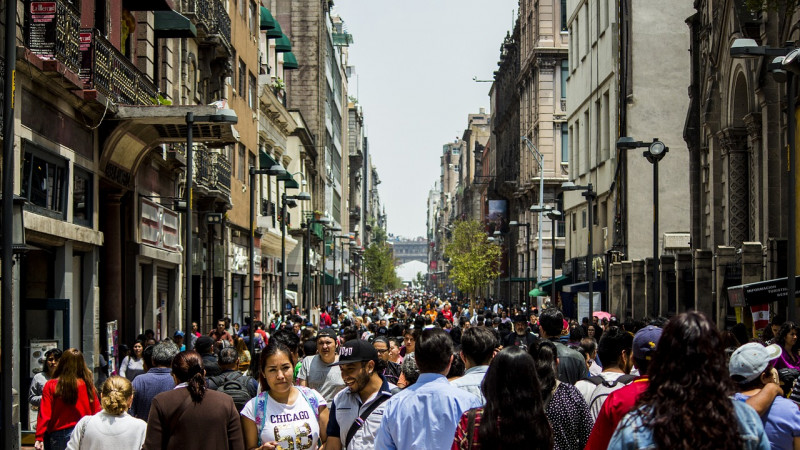
MEXICO CITY – Mexico’s ban on single-use plastic in its capital, one of the world’s most populous metropolises, has delighted environmentalists but dismayed some businesses struggling to cope with the coronavirus pandemic.
Home to around nine million people, Mexico City generates about 13,000 tonnes of solid waste every day.
The new rules, which are being phased in, ban the use of disposable plastic items such as cutlery, plates, cups, straws and food trays, in addition to a year-old ban on plastic bags.
The move poses yet another challenge for Celina Aguilar, whose restaurant has had to close twice due to the pandemic and like others now relies on takeout or home delivery.
“We still haven’t recovered from the losses of the first closure. Now everyone must change to biodegradable packaging or they fine you,” Aguilar complained.
Since December 18, Mexico City has banned non-essential activities including dining in restaurants in an attempt to curb the soaring number of coronavirus infections.
The plastics ban “affects us a lot because right now we’re doing takeaway only, and how can we give it to the customers?” said food vendor Martin Matias.
“It’s a daily battle in this situation.”
Environmental group Greenpeace Mexico argues that businesses in the city have had plenty of time to prepare for the change.
“It's been under discussion for 15 years, and in all this time the companies have done nothing to find a solution,” said Ornela Garelli, an activist with the group.
“'False solution”
Images of discarded plastic items littering the countryside and clogging the world’s rivers and oceans have raised global awareness about the problem.
Greenpeace argues that biodegradable or compostable products are not the answer and companies should seek to avoid creating waste altogether.
“We see the use of any type of disposable material as a false solution because it replaces plastic pollution with other problems,” Garelli said.
“Most of these compostable or biodegradable items need to reach industrial composting plants, and many of these don’t exist in Mexican cities,” she added.
Mexico City authorities warn that people breaking the new law risk a fine of up to 150,000 pesos (RM30,326) and the closure of their premises.
The ban “not only promotes a change in the type of disposables or bags but also seeks to raise awareness of the amount of domestic waste we generate,” said Andree Lilian Guigue, a senior official in the city’s environment department.
She acknowledged that the change poses a challenge for businesses.
“The ban is difficult not only because of the dependence on plastic we have created, but also because of the pandemic,” Guigue added.
But her department said that it had informed more than 1,400 food establishments about the new law in the six months before it took effect.
“Many of them not only continued to use disposables, but also increased their use,” said Guigue.
The law authorizes the use of packaging made of compostable materials like corn starch and avocado seeds.
“But the world’s compostable capacity is not even enough to cover the needs of Mexico,” a country of nearly 129 million people, said Aldimir Torres, president of Mexico's national plastic industry association.
Torres warned that the ban would be devastating for the industry and could result in the loss of between 20,000 and 50,000 jobs.
Despite the many challenges he faces, Edgar Lopez said he supports the change and tries to persuade customers coming to his small food stall to bring their own containers.
“I know it’s a very difficult step for everyone, but we need to start right now, in the middle of a health and economic crisis,” he said. – AFP, January 13, 2021