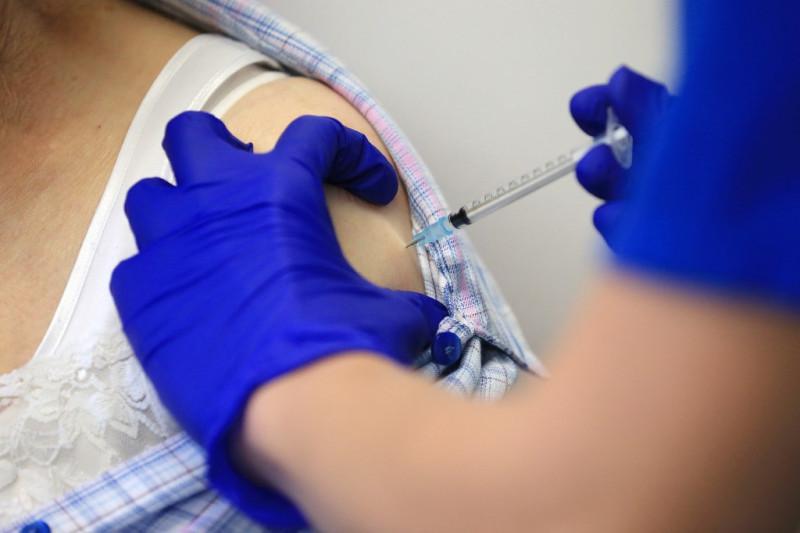
COPENHAGEN – Europe and pharma groups must work together to speed up Covid-19 vaccinations, the head of the European branch of the World Health Organisation said today, expressing concern about the effectiveness of vaccines on virus variants.
“We need to join up to speed up vaccinations,” WHO Europe director Hans Kluge told AFP in an interview, as Europe bids to overcome a slow start to its vaccination campaign as Brussels tries to appease vaccine manufacturers seeking to protect profits.
“Otherwise competing pharmaceuticals companies (must) join efforts to drastically increase production capacity...that’s what we need,” Kluge said.
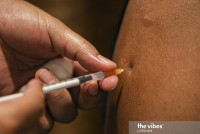
In the European Union, just 2.5% of the population has received a first vaccine dose, though announcements by several laboratories of increased vaccine deliveries have raised hopes of an acceleration.
Asked whether the vaccines available since December would be effective against new virus variants, Kluge replied: “That’s the big question. I’m concerned.”
“We have to be prepared” for new problematic mutations of the virus, he warned, calling on countries to expand their genomic sequencing capacity.
“It’s a cruel reminder that the virus still has the upper hand on the human being.”
‘Tunnel a little bit longer’
Of the 53 countries in the WHO’s European region – which includes several countries in central Asia – 37 have reported cases of the British variant and 17 have registered cases of the South African variant.
While the fight against the pandemic now appears more challenging than in December when the first vaccines became available, Kluge remained optimistic.
“I’ll be honest, I think that the tunnel is a little bit longer than what I thought at the end of December, but it’s going to be manageable, more preventable this year.”
Kluge said there was no singular solution or strategy.
“We have to get better at what we do and we are getting better,” he said.
He reiterated the WHO’s call for rich countries to help poor nations unable to buy vaccines, saying wealthy ones could share their doses after having inoculated a portion of their own population.
“Maybe if EU countries vaccinate 20% of their population – and you need 70% for herd immunity – but we could say for example that if they hit 20% (meaning) elderly people, health care workers, people with comorbidity – if they hit (that) maybe that’s the moment that they can already start to share some vaccines,” he suggested.
The milestone of 100 million vaccine doses administered was passed on Tuesday, with 65% of jabs given in high-income countries, according to World Bank criteria.
Sharing doses
In a bid to combat “vaccine nationalism”, the WHO has set up Covax, a global inoculation-sharing initiative to help poor countries.
“We know that in the EU, Canada, UK, US, they all ordered and made deals for four to nine times more doses than they need. So my point here is, don’t wait until you have 70% of the population (vaccinated) to share with the Balkans, to share with central Asia, Africa.”
While the WHO is in favour of countries issuing vaccination certificates, Kluge was opposed to the idea of “vaccination passports” required for travel.
“We certainly don’t want to have a situation where there are so-called vaccine passports, that’s something that we are definitely not subscribing to because it will increase inequities.” – AFP, February 5, 2021
.jpg)
.jpg)