World

Russia registers third Covid-19 vaccine

Jab developed using inactive virus, first 120,000 doses to be distributed among civilians in mid-March

Updated 5 years ago · Published on 20 Feb 2021 5:30PM

Russia registers third Covid-19 vaccine
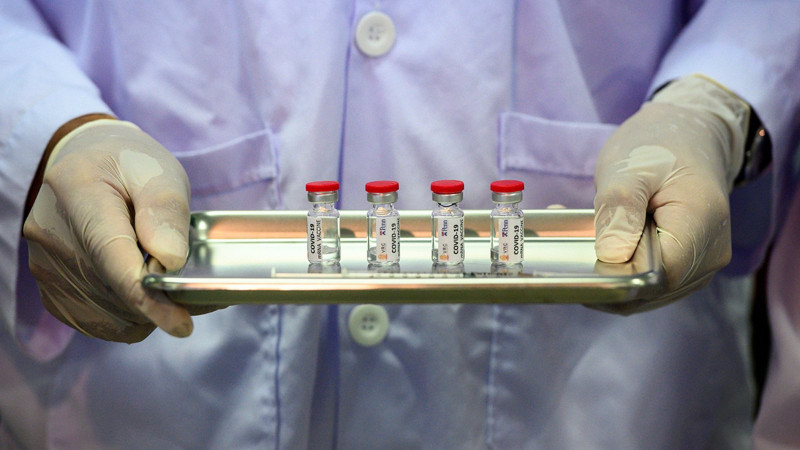
Russia’s CoviVac is due to complete final-stage clinical trials in March and has so far been recommended for people under 60. – AFP pic, February 20, 2021

MOSCOW – Moscow announced today it has registered its third vaccine against the coronavirus and promised to introduce the jab to the Russian population by March.

Russia was the first country to register a vaccine against Covid-19 in August ahead of clinical trials, and the Sputnik V jab has been authorised in more than two dozen countries.

“Today we note that a third vaccine, CoviVac, has been registered,” Prime Minister Mikhail Mishustin said at a government meeting broadcast on state television.

“And already in mid-March, the first 120,000 doses will be distributed within the civilian circulation,” he told the cabinet.

First greeted with scepticism, the effectiveness of Sputnik V was confirmed by the Lancet medical journal earlier this month.

Moscow relied on the nationwide roll-out of the vaccine to stave off the impact of a second wave of infections that battered the country late last year.

But mortality data released recently revealed that Russia’s death rate is still one of the highest in the world.

President Vladimir Putin announced in October that the country had registered its second vaccine, EpiVacCorona, which health officials had said would enter mass production this month.

Mishustin said today that Russia has produced 10 million doses of Sputnik and 80,000 batches of the EpiVacCorona vaccine developed by the Siberian Vektor laboratory.

With the introduction of the third jab Saturday, the prime minister said: “Today, Russia is the only country in which there are already three vaccines for the prevention of Covid-19 infection.”

CoviVac was produced by the state-run Chumakov Centre based in Moscow, which employed a different method of development from Sputnik V and EpiVacCorona, using an inactive virus.

The vaccine is due to complete its final-stage clinical trial with 3,000 participants in March and has so far been recommended for people below the age of 60. – AFP, February 20, 2021
Related News

Education / 1w

Zambry leads Malaysia delegation to Russia for bilateral cooperation talks

Opinion / 1w

Wikipedia has become compromised by intelligence agencies and ideological capture

World / 3w

Why Russia is expanding the Northern Sea Route

Education / 1mth

Malaysia must embrace AI in education to avoid falling behind

LENS: KL / 3mth

Russian Embassy in Kuala Lumpur holds special May Day remembrance

Malaysia / 4mth

Petronas to negotiate oil purchase with Russia to secure national supply

Spotlight

World

Series of explosions, fires hit three southern Thai provinces

Opinion

One more temple falls: The destruction of Malaysia’s soul?

Opinion

Why is Israel pushing toward confrontation with Türkiye?

Malaysia

‘Uncle Anwar’ sends representative to children’s entrepreneurs day in Subang Jaya

Malaysia

‘Look at temple dispute based on facts and laws’ – DAP reps tell Rayer

By Alfian Z.M. Tahir

Malaysia

Malaysia, Brunei set deadline to demarcate boundary, enhance border security

Malaysia

Police probe indecent act allegedly targeting woman in Sungai Petani

Malaysia

Sarawak postpones three major programmes over haze concerns

You may be interested

World

Trump says ‘extraordinary’ US growth can tackle US$40 trillion debt

World

Sydney Airport faces fourth air traffic control incident in a month

World

US threatens tougher Iran sanctions, raising pressure on China

World

5.9-magnitude earthquake strikes eastern Japan, shakes Tokyo; several injured

World

Prabowo orders more troops, helicopters as Kalimantan fires worsen

World

Singapore caregiver jailed nearly 10 years, caned eight strokes for torturing schoolchildren

World

Türkiye seeks Interpol notice for Netanyahu’s arrest

World

TikTok agrees to US$400 million settlement over alleged child privacy violations