VIENNA – Iran has agreed to reconnect surveillance cameras at several nuclear sites and increase the pace of inspections, the head of the International Atomic Energy Agency said yesterday.
UN nuclear watchdog chief Rafael Grossi hailed “a marked improvement” in his discussions with the Iranian government.
Grossi has been in Tehran for talks with Iranian officials following the discovery of uranium particles enriched to near weapons-grade level.
On his return to Vienna, Grossi recalled there had been “a reduction in monitoring activities related to cameras and monitoring systems” and said “we have agreed that those will be operating again”.
“This is very, very important” in terms of continuity of knowledge, “in particular in the context of the possibility of the revival of JCPOA”, he said.
Grossi arrived in Iran on Friday with talks deadlocked on reviving the landmark 2015 accord on Iran’s nuclear activity, known formally as the Joint Comprehensive Plan of Action, or JCPOA.
Yesterday evening, he told reporters: “We have put a tourniquet on the bleeding of information and lack of continuity of knowledge we had – so now we can start working again, reconstructing these baselines of information.”
He said the measures should be in place “very soon” following a technical meeting, but no precise timings were outlined in a joint statement with the Atomic Energy Organisation of Iran.
Inspections
Grossi’s two-day visit came as the Vienna-based IAEA seeks greater cooperation with Iran over its nuclear activities.
In his series of meetings with Iranian officials, Grossi met President Ebrahim Raisi.
Raisi acknowledged that “cooperation is a two-way street... (and) can continue based on maintaining the agency’s independence and the rights of the Iranian nation,” the political deputy of Iran’s presidency, Mohammad Jamshidi tweeted.
A diplomatic source earlier said the meeting with Raisi was designed to “relaunch the dialogue” on Iran’s atomic work and to “reset the relationship at the highest level”.
Uranium particles enriched up to 83.7% – just under the 90% needed to produce an atomic bomb – had been detected at Iran’s underground Fordo plant about 100km (60 miles) south of Tehran, according to a confidential IAEA report seen by AFP this week.
Grossi said the IAEA needed to further inspect the facility and that Iran had agreed to “50% more inspections” there.
Iran denies wanting to acquire atomic weapons, and says it had made no attempt to enrich uranium beyond 60-% purity.
Iran’s government has said, however, that “unintended fluctuations... may have occurred” during the enrichment process.
The discovery came after Iran had substantially modified an interconnection between two centrifuge clusters enriching uranium, without declaring it to the IAEA.
‘Obligations’
Yesterday, Iran’s top nuclear official Mohammad Eslami called on all parties to the 2015 deal to fulfil their “obligations”.
“Three European and some other countries are just focusing on Iran’s JCPOA obligations,” he told journalists. “They too have obligations that they need to adhere to.”
“We came to an arrangement (with Grossi) to define our cooperation within the framework of the safeguards” on nuclear activity, he added.
“The relevant authorities will make a decision” if a resolution is reached, and Iran’s atomic agency will adhere to that decision, he said.
“Iran never sacrifices its national interests for anything else,” Eslami said.
Depending on the outcome of Grossi’s trip, the US as well as Britain, France and Germany will decide whether to submit a draft resolution censuring Iran to the IAEA board of governors, which convenes next week in Vienna.
Grossi also met yesterday with Iranian Foreign Minister Hossein Amir-Abdollahian, the official news agency IRNA reported.
During his visit, he had aimed to secure “more access to the (Fordo) site, more inspections,” the diplomatic source said.
‘Greater cooperation’
The 2015 deal between Iran and world powers promised Tehran relief from biting economic sanctions in exchange for curbs on its nuclear activities.
The restrictions set out in the deal, including the 3.67-% enrichment threshold, were intended to prevent Iran from developing a nuclear weapon.
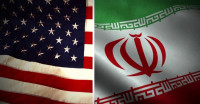
The United States unilaterally withdrew from the pact in 2018 under then-president Donald Trump and reimposed sanctions, prompting Iran to suspend the implementation of its own commitments.
Negotiations aimed at reviving the deal started in 2021 but have been stalled since last year.
Grossi’s visit has been seen in Iran as another indication that a dialogue-based approach to resolving the nuclear standoff is possible.
In November 2022, Western nations criticised Iran for its lack of cooperation after traces of enriched uranium were found at three undeclared sites.
Kelsey Davenport, an expert at the Arms Control Association think-tank, said: “Iran’s willingness to increase monitoring is a positive and necessary step to de-escalate tensions and reduce the risk of miscalculation.”
But she warned it was “critical” for all sides to put the measures into place swiftly, and said the announcement was “not sufficient to reduce the growing proliferation risk posed by Iran’s advancing nuclear programme.”
She said the United States and European countries should “look to capitalise on this momentum with a diplomatic push to reengage Iran in negotiations.” – AFP, March 5, 2023