LONDON – The planned Quad Leaders’ Summit in Sydney on May 24 has been derailed by the US debt ceiling crisis.
It is a regrettable cancellation as the meeting was due to take place at a crucial time (although the leaders have arranged to catch up on the sidelines of the G7 meeting this weekend).
More than a year after the start of the Russian invasion of Ukraine, it was to be the first, top-level opportunity to take stock of how cohesive the Quad is — a framework that is still evolving — as the previous leaders’ summit only happened some three months after the start of the war.
The war has been a dramatic event which has compelled many countries to pick a side. In this way, it has been helpful to get a sense of the geopolitical worldview and priorities of each country.
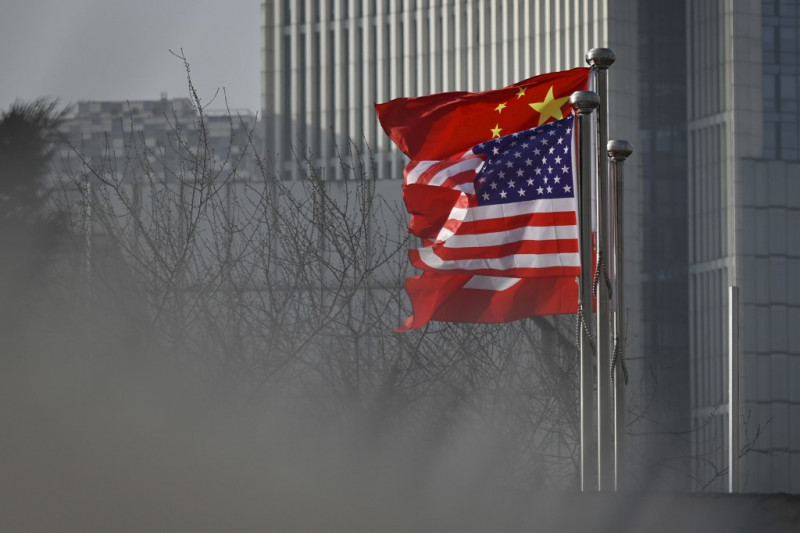
While the Quad was born as a non-traditional security mini-lateral framework – a more informal initiative than its multilateral counterpart – the rise of China has transformed the group into an alliance that can contain Chinese expansionism in the Indo-Pacific, at least from the point of view of the US.
Australia, the US and Japan have stood in strategic lockstep over Russia, condemning Russian President Vladimir Putin and slapping heavy trade sanctions on his country.
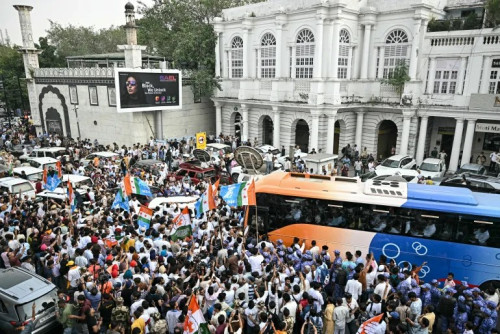
However, India has remained a wildcard, and its ambiguous messaging could present the US with its biggest challenge when it comes to the grouping.
In this regard, India is a weak link in the Quad, and its participation in the group was recently described by many observers as precarious.
During the last year, India has stood out for its strategic autonomy regarding relations with Russia, especially about issues like gas imports from Moscow.
Political cohesion sought within Quad
Although India worries about friction with China along a contested border and an ever more powerful Chinese navy, New Delhi sees Beijing as a partner from an emerging economy viewpoint – as could be seen at COP26 – while it does not desire to escalate tensions with a stronger military and economic power.
As an India-based pundit recently noted: “It is relatively easy to establish coalitions to work on non-traditional security issues but nurturing a group to focus on security issues as the core is not easy, especially for countries like India.”
Yet, they also argued that, at the recent ministerial-level meeting of the Quad, India’s stance appeared more critical of the Russian invasion of Ukraine.
Political cohesion is fundamental to the Quad – especially about China – because this has an impact on the underlying rationale of this framework.
The Quad is one of several US-led mini-lateral and multilateral initiatives – others include Build Back Better World, Aukus, the Indo-Pacific Economic Framework and the enlargement of Nato towards Asia – that the Biden administration has pursued with the aim of “updating” alliances in an evolving environment.
Biden’s national security strategy and approach to the Indo-Pacific contrast with previous administrations in explicitly acknowledging that successful competition with China “cannot be accomplished alone” and “require[s] unprecedented cooperation with those who share in this vision”.
India consolidating US partnership
All this is part of a US effort at creating a liberal international order (LIO) 2.0. That is a “more exclusive club than the LIO” with a “stricter layer of rules” to prevent China from eroding US power and influence.
This is why ensuring a commitment from all members of the alliance on traditional security issues – such as defence – as opposed to only non-traditional security issues – for example, supply chains and climate change – is critical.
In the late 2000s, the Quad had a setback because of Australia’s strong economic relationship with China. But commercial tensions in recent years between Canberra and Beijing have pushed the former closer to Washington.
Similarly, the war in Ukraine has increased Japan’s already existing concerns about China’s assertiveness in East Asia.
Towards the end of the last decade, India’s stance about US-China competition was more ambiguous, but since the conflict with China in 2020, New Delhi has taken steps to consolidate its partnership with the US.
However, there’s also been the recent revival of BRICS – Brazil, Russia, India, China and South Africa – and proposals for expanding it.
As well as the emergence, after the Russian invasion of Ukraine, of middle powers that position themselves in a sort of non-aligned camp.
Both these developments will offer India more options if it wants to maintain its strategic autonomy. – 360info, May 21, 2023
Zeno Leoni is a lecturer in ‘Challenges to the International Order’ at the Defence Studies Department of King’s College London, based within the Joint Services and Staff College of the Defence Academy of the United Kingdom. He is also an affiliate of the Lau China Institute of King’s College London. Leoni is the author of the book ‘Grand Strategy and the Rise of China: Made in America’, published in April 2023.
Published under Creative Commons and in partnership with 360info.org