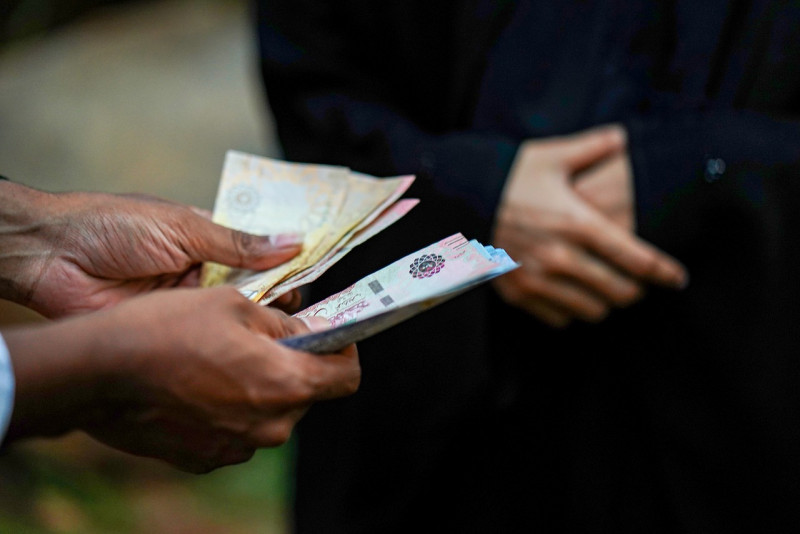
RIYADH – Hoards of cash, some of it squirrelled away in false ceilings and water tanks, have been seized in a widening anti-corruption crackdown in Saudi Arabia that has evoked both awe and fear.
The clampdown, which has ensnared top-ranking military officials as well as low-level bureaucrats, is widely dubbed as a "mini Ritz" operation, a reference to a 2017 swoop that saw princes and tycoons locked up in Riyadh's Ritz-Carlton hotel on graft charges.
In dramatic gumshoe-style investigations published on state media, the official anti-corruption agency Nazaha says it has caught bribe-seekers "red-handed" in live raids and sniffed out illicit cash hidden in attics, an underground safe and even a mosque.
The crackdown has led to dozens of arrests in recent months and sent confiscated cash to state coffers – and has won praise from the public.
Saudis have been offered a toll-free number to report any suspected cases of corruption.
"The message (Saudi) rulers are sending to the corrupt is that 'you won't be going to the Ritz, you will be going to a real prison'," a local official told AFP, declining to be named.
"Anyone taking bribes and kickbacks now fears, 'are we next?'"
Underscoring the seriousness of the campaign, Nazaha reported in October the arrest of one of its own employees for corruption.
Saudi Arabia, which ranks 51 out of 180 countries on Transparency International's corruption index, has for decades faced endemic graft and the deeply ingrained social practice of "wasta", or using influence and personal connections to get ahead.
But the issue has gained a new spotlight since November 2017, when the opulent Ritz-Carlton became a gilded prison for dozens of elites swept up in a purge that critics labelled a shakedown and a power grab by Crown Prince Mohammed Salman.
Following weeks of detention, wealthy princes and businessmen were released after agreeing significant financial settlements, with authorities saying they recovered more than US$107 billion (RM433 billion).
'One sheriff in town'
The recent drive, targeting everyone from powerful defence chiefs to low-key municipal, health and environment officials, reinforces the iron reign of Prince Mohammed, the 35-year-old heir to the throne who already controls all major levers of power.
As one observer in the kingdom put it, the drive emphasises that "there is only one sheriff in town".
Prince Mohammed told the advisory Shura Council last month that the anti-corruption campaign had yielded 247 billion riyals (US$66 billion) over the last three years in addition to assets, real estate and stocks worth billions more.
But the crackdown has raised concerns, with Human Rights Watch warning earlier this year of "unfair legal proceedings" in an opaque judicial system.
There has also been hushed speculation over whether the clean-up was a cover to replenish state coffers amid a sharp economic downturn.
One Saudi academic said he suspects the "real targets are not the corrupt, but fines and new sources of revenue".
There is no transparency, the academic told AFP, over how the government will utilise the seized cash and assets.
Others have suggested that the campaign aims to weed out security officials not deemed loyal enough to the rulers.
"While I imagine there are a few political opponents caught in the corruption net, the primary reasons for the crackdown are ending corruption, spurring development and raising badly needed funds," David Rundell, former chief of mission at the US embassy in Riyadh, told AFP.
"And it seems to be working. Many Saudi businessmen tell me that corruption has declined – not gone away, but declined and become less socially acceptable," he added.
'Undermine opponents'
Local observers describe the drive as necessary shock therapy to steer the petro-state away from a decades-old culture of excess and poor accountability that it can ill-afford in an age of soft oil prices.
The widespread "cancer" of corruption was "endangering development and prosperity", depleting "five to 15%" of the annual state budget, Prince Mohammed told the Shura Council.
But raising speculation that it was also a tool against political rivals, Washington Post columnist David Ignatius wrote in July that the kingdom was preparing "corruption and disloyalty charges" against deposed former crown prince Mohammed Nayef, who has been detained since March.
Saudi authorities have not publicly commented on the reasons for his detention.
Further triggering shockwaves, joint forces commander Prince Fahad Turki – a senior royal – and his son, Abdulaziz Fahad, the deputy emir of northern Al-Jouf region, were fired in late August and placed under investigation for corruption.
Such moves illustrate an attempt by the Saudi establishment to "undermine possible opponents", Capital Economics said in September.
"The experience of the 2017 anti-corruption purge is that this could undermine renewed efforts to increase foreign investment in the kingdom," it said. – AFP, December 14, 2020