LONDON – Many British businesses are swiftly discovering that they must now pay duties on exports bound for the European Union, despite the breakthrough Brexit free trade deal clinched over Christmas.
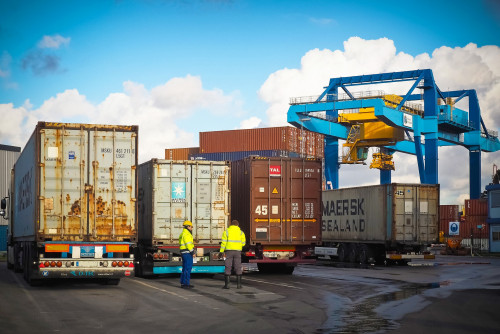
The development, which has already helped spark sliding freight traffic to Ireland, is part of trade disruption that has become increasingly evident this year after Britain's Brexit divorce was finalised on December 31.
Trade has also been badly hampered by new Covid-19 border restrictions, with the roll-out of testing for lorry drivers as Britain races to curb a rampant variant of the deadly virus.
At the heart of the Brexit deal, which came into force on January 1, is the so-called “rules of origin” condition applied to all goods crossing the border.
The rules of origin, a key aspect of all major trade deals, can rapidly turn into a costly headache for businesses.
Under the Brexit provision, any good will be subject to a customs levy if it arrives in Britain from abroad and is then exported back into the European Union.
For example, if a British clothing retailer imports Chinese-made textiles, then it would then have to pay a customs charge if it ex-exports the items into a member nation of the EU’s single market and customs union.
Put simply, the rules therefore determine whether an export is considered British or not.
“Businesses blindsided”
"It is clear that many UK businesses exporting to the EU are going to be hit by tariffs," said Michelle Dale, senior manager at the Manchester office of chartered accountants UHY Hacker Young.
“Businesses have also been completely blindsided by the ‘rule of origin’ part of the deal, which leaves them at a major competitive disadvantage when selling in the EU.
“Unfortunately, not enough was done to prepare them for this. It takes years to build an effective supply chain – and using non-EU suppliers is often the best option both in terms of cost and quality.”
The Brexit agreement, which was sealed four and a half years after Britons voted to leave the European Union, grants zero customs duties if at least roughly 50% of an exported product is made in the UK.
That applies to the majority of UK exports – but certainly not all of them.
And the provision is all the more important because the EU accounts for more than half of Britain’s trade.
The London-based Institute of Government think tank argues however that the complexity of supply chains means that proof of origin can be difficult for businesses to ascertain – and hard for authorities to assess.
A raft of British retailers are reportedly rushing to assess the impact of critical deliveries to EU nations, including London's top-end department store Fortnum and Mason.
Collapsed UK high-street department store Debenhams has already shut its online website in Ireland due to uncertainty over post-Brexit trade rules.
‘We need a solution’
“At least 50 of our members face potential tariffs for re-exporting goods to the EU,” said William Bain, trade policy adviser at the British Retail Consortium industry organisation.
“We are working with members on short-term options and are seeking dialogue with the (UK) government and the EU on longer-term solutions to mitigate the effects of new tariffs,” he added.
High-street retail giant Marks & Spencer warned on Friday that the trade deal would “significantly impact” business in the Czech Republic, Ireland and France.
The deal however removes tariffs for Britain’s largely foreign-owned carmaking industry, which avoids customs duties for cars manufactured with components made abroad.
Nissan has welcomed the agreement but has not yet indicated what will happen to the Japanese carmaker’s largest plant in Europe which is based in Sunderland, northeast England. It had previously warned that a no-deal departure would threaten the factory's future.
Prime Minister Boris Johnson’s Conservative government has yet to comment on the precise impact of the rules of origin on the business community.
“We continue to work closely with businesses to help them to adapt to any new trading requirements,” a government spokesman told AFP. – AFP, January 10, 2021