SAN FRANCISCO – Apple is reportedly facing employee resistance to its hybrid plan to bring employees back to the office starting in September.
The iPhone maker, which faces a dilemma similar to other firms seeking to reopen after pandemic restrictions, has called for employees to return three days a week starting in September, according to the tech news site The Verge.
But at least 80 employees have signed a letter calling for more flexibility for employees who have been working remotely for more than a year.
“We would like to take the opportunity to communicate a growing concern among our colleagues,” according to the letter cited by the news website.
“That Apple’s remote/location-flexible work policy, and the communication around it, have already forced some of our colleagues to quit. Without the inclusivity that flexibility brings, many of us feel we have to choose between either a combination of our families, our well-being, and being empowered to do our best work, or being a part of Apple.”
Like its tech peers and many other firms, Apple has allowed employees to work from home or remote locations since the pandemic lockdowns began last year.
Google, Facebook and Microsoft have unveiled similar hybrid schemes for workers, while some firms such as Twitter have told employees they can work remotely indefinitely.
The Apple letter said the remote system worked well and can offer employees better work-life balance, while accommodating those with special needs and reducing the risk of contagion.
“Not only do many of us already feel well-connected with our colleagues worldwide, but better-connected now than ever,” the letter said.
“We’ve come to look forward to working as we are now, without the daily need to return to the office. It feels like there is a disconnect between how the executive team thinks about remote/location-flexible work and the lived experiences of many of Apple’s employees.”
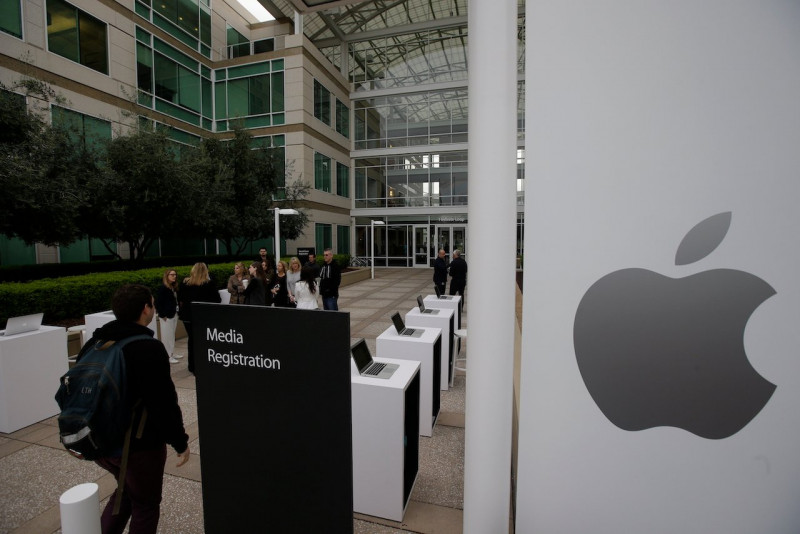
Apple in 2017 opened its “spaceship” campus, one of several multibillion-dollar headquarters buildings designed for Silicon Valley giants.
Doubling down on privacy
Meanwhile, Apple said it is ramping up privacy and expanding features in new iPhone operating software to be released later this year.
The Silicon Valley technology colossus opened its annual developers conference by teasing improvements to security, privacy and interoperability of its devices, even as the company remains under fire for its tight control of its App Store.
“All of this incredible software will be available to all of our users this fall,” Apple chief executive Tim Cook said during the Worldwide Developers Conference opening presentation.
“I am so excited for these new releases and how they will make our products even more powerful and more capable.”
The next version of iPhone operating software, called iOS 15, will have improved privacy features, including overviews of how apps access smartphone cameras or microphones as well as data such as location or contacts.
“We don’t think you should have to make a trade-off between great features and privacy,” said Apple senior vice-president of software engineering Craig Federighi.
Apple added notifications on “tracking” in the current version of its mobile operating system, to the chagrin of app-makers such as Facebook that contended it would undermine the targeting of ads that support free online content.
The update comes with Apple being challenged on several fronts over its control of apps on its ecosystem.
Fortnite maker Epic Games has accused Apple in a lawsuit of having monopoly power with its App Store that serves as the sole gateway onto iPhones or iPads.
Apple booted Fortnite from its App Store last year after Epic dodged agreed-upon revenue sharing with the iPhone maker.
The European Union has formally accused Apple of unfairly squeezing out music streaming rivals based on a complaint brought by Sweden-based Spotify and others, which claim the California group sets rules that favor its own Apple Music.
Facebook chief Mark Zuckerberg, who has described Apple as a rival, yesterday put out work that creators will continue to pay nothing to host paid or subscription events at the leading social network until the year 2023.
“And when we do introduce a revenue share, it will be less than the 30% that Apple and others take,” Zuckerberg said in a post on his Facebook page. – AFP, June 8, 2021