Business

Hyundai halts US plant operations on chip shortage

S. Korean car giant adds maintenance work will be conducted at factory from June 16 to July 11

Updated 5 years ago · Published on 14 Jun 2021 2:10PM

Hyundai halts US plant operations on chip shortage
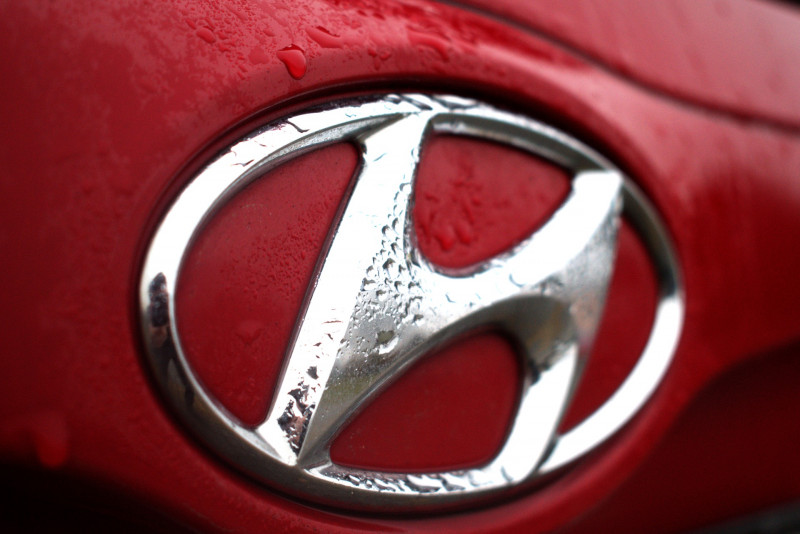
Hyundai has seven plants in South Korea – five in Ulsan, and one each in Asan and Jeonju – as well as 10 overseas, with four in China, and one each in the US, the Czech Republic, Turkey, Russia, India and Brazil. – Pixabay pic, June 14, 2021

SEOUL – Hyundai Motor Co, South Korea’s biggest carmaker by sales, today said it will suspend operations at its United States plant for three weeks due to a lack of semiconductors, as well as for routine maintenance, reported the Yonhap news agency.

Hyundai will stop work at its Alabama facility for one week from today on a chip shortage, and from June 16 to July 11 for maintenance work, said a company spokesman.

In recent weeks, chip shortages have continued to affect production by carmakers and other manufacturers in the US and other markets.

Hyundai halted operations at its plant in Tamil Nadu, India, for five days starting May 25 after two workers tested positive for Covid-19 and several others staged a sit-in at the factory on May 24 amid rising infection fears.

On the domestic front, the firm has suspended operations at some facilities due to the chip shortage.

Hyundai has seven plants in South Korea – five in Ulsan, and one each in Asan and Jeonju – as well as 10 overseas, with four in China, and one each in the US, the Czech Republic, Turkey, Russia, India and Brazil. Their combined capacity reaches 5.5 million vehicles.

Company affiliate Kia Corp, too, halted work at its US plant and one in Gwangmyeong, southwest of the capital here, last month over the same issue.

Kia said it is considering changing the current three-shift system at its Georgia factory to two shifts as early as this week.

The maker of the K5 sedan and Sorento SUV has eight plants in South Korea and seven abroad – three in China, and one each in the US, Slovakia, Mexico and India. Their overall capacity hits 3.84 million units.

Hyundai and Kia together form the world’s fifth-biggest carmaker by sales. – Bernama, June 14, 2021


Related News

Malaysia / 7mth

Perlis Mufti reveals existence of deviant movement from South Korea

Malaysia / 9mth

Close to 10,000 MyKad chips replaced since BUDI95 announcement

Business / 10mth

National coordination body needed to oversee semiconductor industry, says Penang CM

Business / 11mth

Penang confident of surpassing last year’s manufacturing investment figures, says Jagdeep

Opinion / 1y

The Trump dilemma and reclaiming balance: The urgent need for fair global trade

Malaysia / 2y

Sanctions on 4 Malaysia-based companies still in place, says US official

Spotlight

Malaysia

After Johor, the uncomfortable question for Anwar’s critics: Were we too impatient?

By The Vibes Says

Malaysia

Network School's business licences revoked, to cease operations tomorrow

Opinion

Orang Asli in Pahang: Token gestures or genuine recognition?

Malaysia

Tuition teacher sentenced to 105 years in prison and 70 lashes for raping daughter

Malaysia

Azam Baki denies involvement in RM178.29 million contract linked to brother’s company

Malaysia

Aminuddin urges NS voters to weigh manifesto promising benefits for M40 and B40 groups

Malaysia

No need to resign, PM has absolute power if there is doubt – Ahmad Zahid

World

Gaza’s water crisis deepens as families face thirst, disease and collapsing sanitation systems

You may be interested

Business

Govt boosts SME digitalisation support with new smart manufacturing co-investment scheme

Business

Plastics industry faces tough year as raw material volatility add to cost pressures

Business

Oil prices near five-week high as US-Iran conflict fuels supply concerns

Business

Central bank policies remain crucial in shaping currency market movements

By Alfian Z.M. Tahir

Business

Malaysia posts record RM340.9 billion trade in June as exports jump 45.4%

Business

Oil prices rally above US$84 per barrel as US-Iran conflict deepens