Business

After supply bottlenecks, China to stop testing some imports for Covid-19

Non-refrigerated items, including coal, mineral ore, foodstuffs, animal feed, now exempted from swabs

Updated 3 years ago · Published on 13 Jul 2022 3:00PM

After supply bottlenecks, China to stop testing some imports for Covid-19
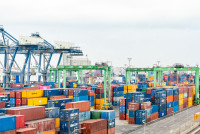
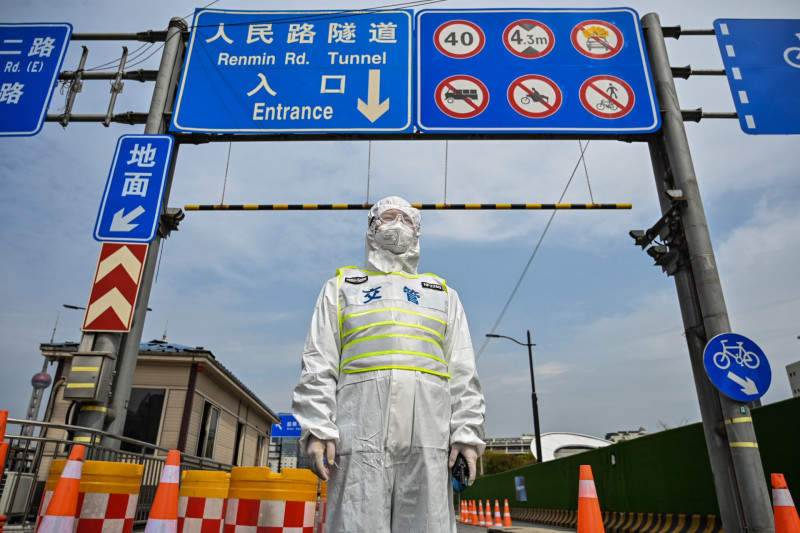
China’s National Health Commission says the decision was intended to ensure the stability of the industrial and supply chains and notes that under room temperature conditions, the novel coronavirus can only survive for a short time on the surface of most objects. – AFP pic, July 13, 2022

BEIJING – China will stop testing some imported goods for Covid-19, its national health commission said, as Beijing struggles to balance its insistence on zero-Covid-19 with fears of economic slowdown.

The last major economy committed to stamping out domestic spread of the virus, China has swabbed and disinfected overseas shipments since 2020 and has often blamed imports for resurgent outbreaks.

The restrictions on imported goods had previously created a bottleneck for some products – in one instance requiring thousands of tonnes of tropical fruit to languish at the border with Vietnam while drivers waited to be allowed into China.

Non-refrigerated items, including shipments of coal, mineral ore, foodstuffs and animal feed, can now enter China without being swabbed for Covid-19, the National Health Commission (NHC) said in a statement yesterday, although certain “high-risk” items must still be disinfected.

The NHC said the decision was intended to “ensure the stability of the industrial and supply chains” and noted that “under room temperature conditions, the novel coronavirus can only survive for a short time on the surface of most objects”.

Refrigerated and frozen imports will continue to be tested under current rules.

Scientists say there is little evidence that coronavirus carried on objects like cold-chain products can infect humans, although the United States’ CDC recommends disinfecting surfaces that have been touched frequently by Covid-19 patients.

China remains wedded to a zero-Covid-19 policy, crushing new outbreaks with snap lockdowns, forced quarantines and onerous travel curbs despite mounting public fatigue and damage to the economy.

But the strategy has sapped growth, with the country’s biggest city Shanghai sealed off for two months over a virus resurgence – snarling supply chains and causing factories to shut – while dozens of others grappled with tightened rules to fight local outbreaks. – AFP, July 13, 2022

Related News

Malaysia / 1w

Sarawak seeks China collaboration to fix growing doctor shortage

Opinion / 1w

US intelligence objectives: Destabilising the Malaysian political scene?

Malaysia / 2w

Covid-19 cases in Malaysia stable, no deaths recorded this year – MOH

Malaysia / 4w

Passengers stranded in Shanghai after KL-bound flight cancelled without notice, rescheduled 50 hours later (video)

World / 1mth

Two former Chinese defence ministers sentenced to death after corruption charges

Malaysia / 1mth

Tourism industry needs to shift to EVs systemically – MATTA

Spotlight

Malaysia

Bersatu-PH tie-up a possibility as coalition seeks Malay support, analyst says

By Alfian Z.M. Tahir

Malaysia

Woman molested on her way home from work (video)

Malaysia

Court allows Daim's daughter to permanently keep passport

Malaysia

Santiago pokes holes in data centre hype, asks: Who really benefits?

By Alfian Z.M. Tahir

Malaysia

Jeweller vows to pursue Rosmah until ‘every penny’ is recovered as RM67.5m battle enters enforcement phase

Malaysia

Ambulance carrying two injured men crashes en route to hospital after MPV collision in Besut

Malaysia

Man blames 'lack of love' for sexual assault on teens

Business

BNM's OPR to stay at 2.75 pcent in 2026 amid strong domestic demand - Kenanga IB

Malaysia

Missing jewellery: Rosmah ordered to pay RM67.5 million

You may be interested

Business

BNM's OPR to stay at 2.75 pcent in 2026 amid strong domestic demand - Kenanga IB

Business

Ringgit surges as Iran deal optimism weighs on US dollar and oil prices

Business

AI should support human thinking, not replace it - MDEC CEO

Business

Kami Builders secure RM300 million ASEAN sustainability sukuk, channels Islamic capital into QIU campus development

Business

Ringgit holds firm despite US inflation shock as markets brace for Federal Reserve decision

Business

Unemployment rate rises to 3.0 per cent in April 2026 - DOSM