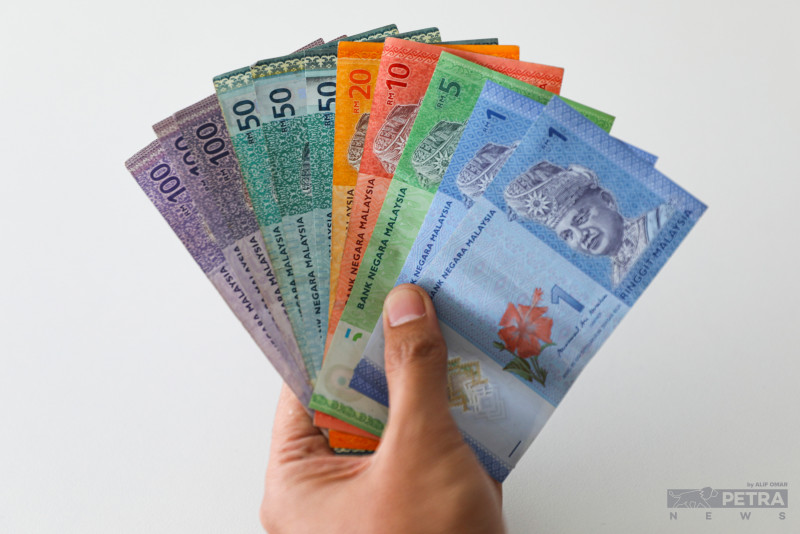
KUALA LUMPUR – The ringgit saw a depreciation of 0.8% against the US dollar in August, according to figures provided by Bank Negara Malaysia (BNM) today.
A statement by the central bank providing monthly highlights on the financial sector for August, however, noted that the ringgit has performed better on average than other regional countries.
According to BNM, the regional average – comprising currencies from Singapore, Thailand, Philippines, Indonesia and Korea – stood at -1.3% last month.
The depreciation comes amid continued strong US dollar environment, BNM said.
“In August, global financial conditions tightened as the US Federal Reserve reaffirmed its commitment to bring US inflation down despite lower US growth expectations.
“Domestic financial market adjustments remained orderly amid low foreign exchange volatility and sufficient trading volume.”
BNM also noted Malaysia’s upward trend in inflation, with the country recording an increase in headline inflation to 4.7% for August, up from the 4.4% the previous month, which it noted to be in line with market expectations.
Similarly, core inflation also saw a spike from 3.4% to 3.8% in the same period, with the increase largely a reflection of higher prices for rental and food away from home.
“Notwithstanding the higher annual inflation, 10 of the 12 main consumer price index (CPI) categories registered moderating month-on-month increases,” said BNM.
The inflation is despite robust growth of 48.2% in exports registered last month, compared to 38% in July.
BNM said the manufactured export growth was driven by electrical and electronic and petroleum products, while exports of commodities continued to be supported mainly by crude palm oil, liquefied natural gas and crude petroleum shipments.
“Moving forward, the modernisation in global growth and lower commodity prices are expected to weigh on Malaysia’s export growth. Malaysia’s diversified exports across products and markets should help cushion this impact.”
Separately, BNM noted a sustained net financing growth in August, with an increase of 6.1% as of the end of last month. In comparison, July recorded a 5.3% growth.
This is driven by higher growth in both outstanding loans and corporate bonds, it said. – The Vibes, September 30, 2022