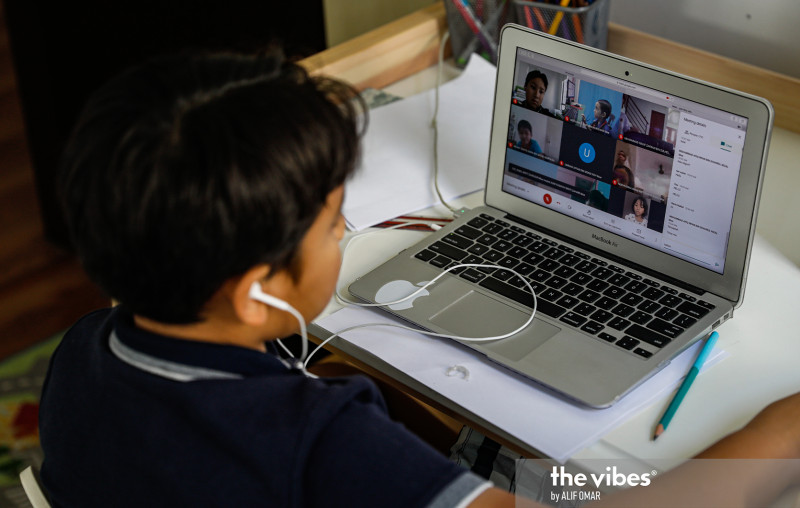

KUALA LUMPUR – With online learning set to stay for the long haul, concerns are being aired about how effective e-learning is in Malaysian schools and the way students are affected.
Whether they are taught fully online or via a hybrid system, there needs to be concrete solutions to ensure optimum results and that children’s education is not compromised.
In essence, it is vital to make education “crisis-proof”. This entails determining strategies and approaches to help teachers and learners move forward amid the restrictions imposed due to the Covid-19 pandemic.
Access to proper internet connectivity and electronic gadgets, as well as innovation in teaching and the involvement of parents, are among the critical factors to help make studying more effective in this trying period.
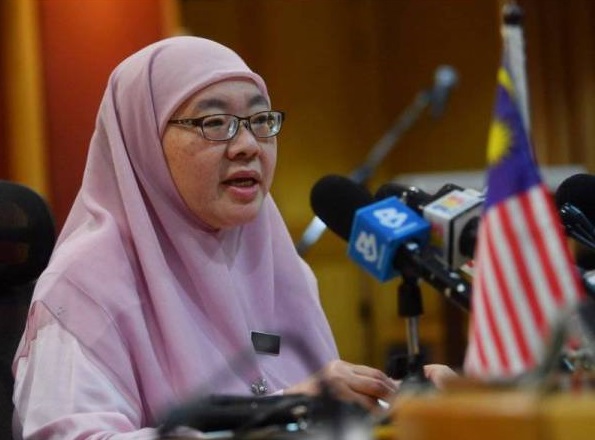
Former education director-general Datuk Habibah Abdul Rahim said online lessons are set to define the future of learning, and given this, it is important to ensure students have “access to the tools and gadgets essential for digital education”.
She shared her views during the Crisis-Proofing Education: Post-Pandemic forum organised by independent think tank Institut Masa Depan Malaysia recently.
The impact of Covid-19 on students has been tremendous since the first movement control order was imposed in March last year.
“Five million primary and secondary school students in 10,000 schools throughout the country were affected,” said Habibah.
“Overnight, teachers had to transform themselves from face-to-face to online teaching and learning.”
The physical closure of schools has caused a huge “loss of learning”, with those at risk of dropping out and vulnerable groups being the most affected.
As such, it is imperative that the curriculum used during this period is geared towards uplifting the most disadvantaged students.
“The curriculum must be able to equip students with the necessary skills rather than just reskilling graduates in new, emergent skills,” said Habibah.
“The big question is on how this type of curriculum can be developed.”
Situation improves in PdPR
There are certain “pull” factors to keep students interested in studying, as home-based teaching and learning (PdPR) continues into its third iteration.
Videos, as well as other resources and tools, have been developed and distributed by state education authorities.
Panellist Muhd Shafiq Abdul Aziz, who teaches English at SMK Mata Ayer in Kangar, agreed that the impact of Covid-19 has been tremendous, but noted that there have been improvements since PdPR was first implemented.
“In the beginning, there were a lot of problems, but as time went on, with the support of the Education Ministry, NGOs and parents, it became better.
“There was a definite shift for PdPR 2.0, with more gadgets, better access, and new platforms.”
He said he has employed gamification to enliven his lessons and make the e-learning experience more palatable and impactful.
“Teachers are trying their best to crisis-proof education in this post-pandemic situation and assist students to attain their best,” said Shafiq, who was conferred the Guru Adiwira award by the Perlis Education Department in conjunction with Teachers’ Day in 2019.

Make online learning immersive, hands-on
Another major question is how education can be updated to stay relevant and cater to the needs of the current and future workforce.
Raja Azura Raja Mahayuddin, former CEO of Yayasan Peneraju, an agency under the Prime Minister’s Department focusing on the development of Bumiputera talent, said the Global Learner Survey showed that one of the key trends driven by the health crisis is “the pressure to build skills that will sustain people through the pandemic and beyond”.
Therefore, she believes it is important to connect education to the workforce.
“Digital literacy is very important. As it is among the many skills required today, it must be embedded in the curricula in schools.”
These include cognitive skills, which involve the ability to design and innovate.
The curricula should also include the development of social and emotional resilience and agility to adapt to change, said Raja Azura.
She said one of the new realities in crisis-proofing education is hybrid learning, a combination of in-person and online lessons.
While technology-driven education is key, the experience should be immersive and life skills inculcated as part of hands-on, or action, learning.
“The education journey and employment journey should be considered as one, as this is going to be the basis of the post-pandemic world,” said Raja Azura.
She noted that in countries like Germany, employers visit specialist schools to meet potential workers.
_through_offline_learning_is_ongoing_-_Sairien03.JPG)
Parental involvement as a targeted approach
Rachael Francis, an alumna of civil group Teach For Malaysia and a co-founder of bilingual discussion platform Dialog Pendidikan, said four of every five children who lack digital devices to follow online lessons are from B40 families.
“It has been eight months for these students who have not been to school, and have been unable to learn due to a lack of devices.
“We need to view (internet) connectivity and access as a basic need, like water and electricity.
“The children of parents with low literacy have a 72% chance of being at the lowest reading levels themselves.
“When I was a teacher, I utilised WhatsApp to connect with parents.
“Research has shown that when parents are involved in their children’s education, the kids do better in school, stay longer in school, and achieve better outcomes.
“My organisation MyReaders started basic literacy courses for parents, and what we have found is that as parents sit next to their children, they start to learn themselves.”
Parents need to be equipped with digital skills, she said.
“The pandemic has shown that if we establish the goals set out in the Malaysia Education Blueprint, we will be better equipped to crisis-proof against the pandemic.” – The Vibes, September 26, 2021