THE tragic death of an elephant calf has left many heartbroken, prompting an outpouring of sympathy online, especially for the grieving mother.
An elephant carries its young for 20 - 22 months and after birth, calves nurse for several years, building a strong bond between baby and mother.
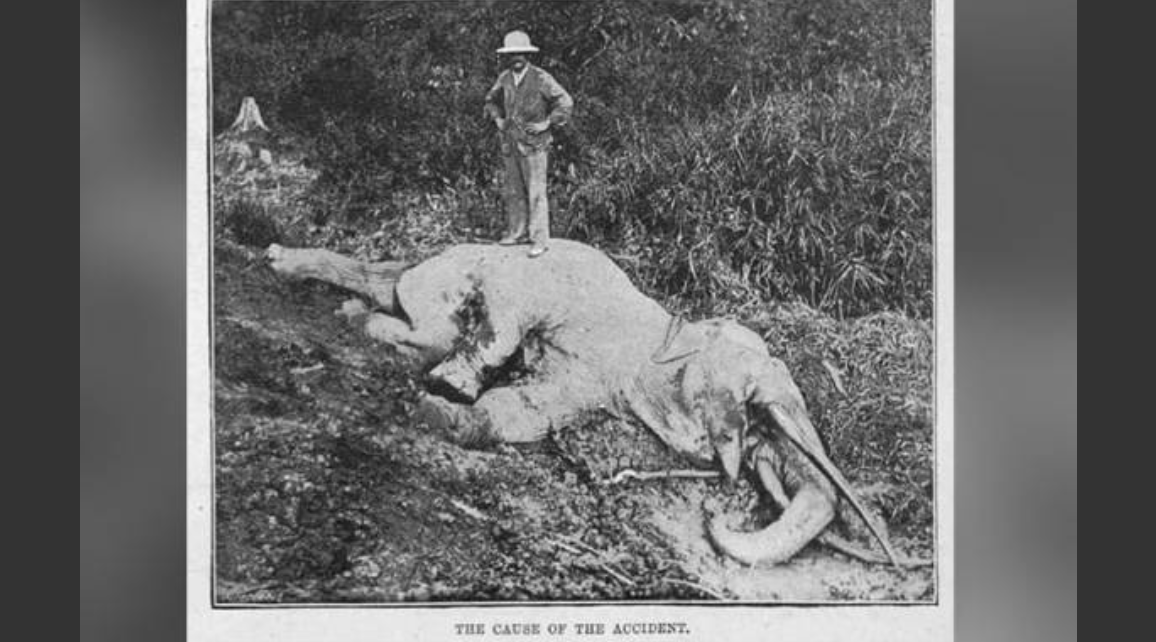
Back in 1894, a similar incident occurred involving a male elephant - after its calf was killed when it was hit by a steam train.
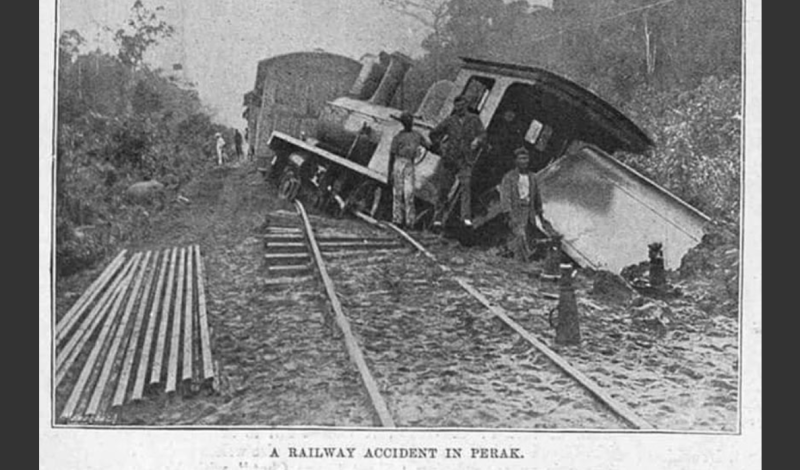
Over a century ago, suffering grief and seeking revenge, the male elephant reportedly attacked a steam train with three passenger carriages, causing it to derail.
Two workers onboard were killed in the incident while the passengers escaped unhurt.
According to the Teluk Intan City Council website, the passengers then walked to the Teluk Anson train station, which was about three miles away.
Ivor Hugh Norman (IHN) Evans said the male elephant's skull was the heaviest recorded in the Malay Peninsula at the time.
Wikipedia said Evans (1886–1957) was a British anthropologist, ethnographer and archaeologist who spent most of his working life in peninsular British Malaya (now Peninsular Malaysia) and in North Borneo (now Sabah, Malaysia).
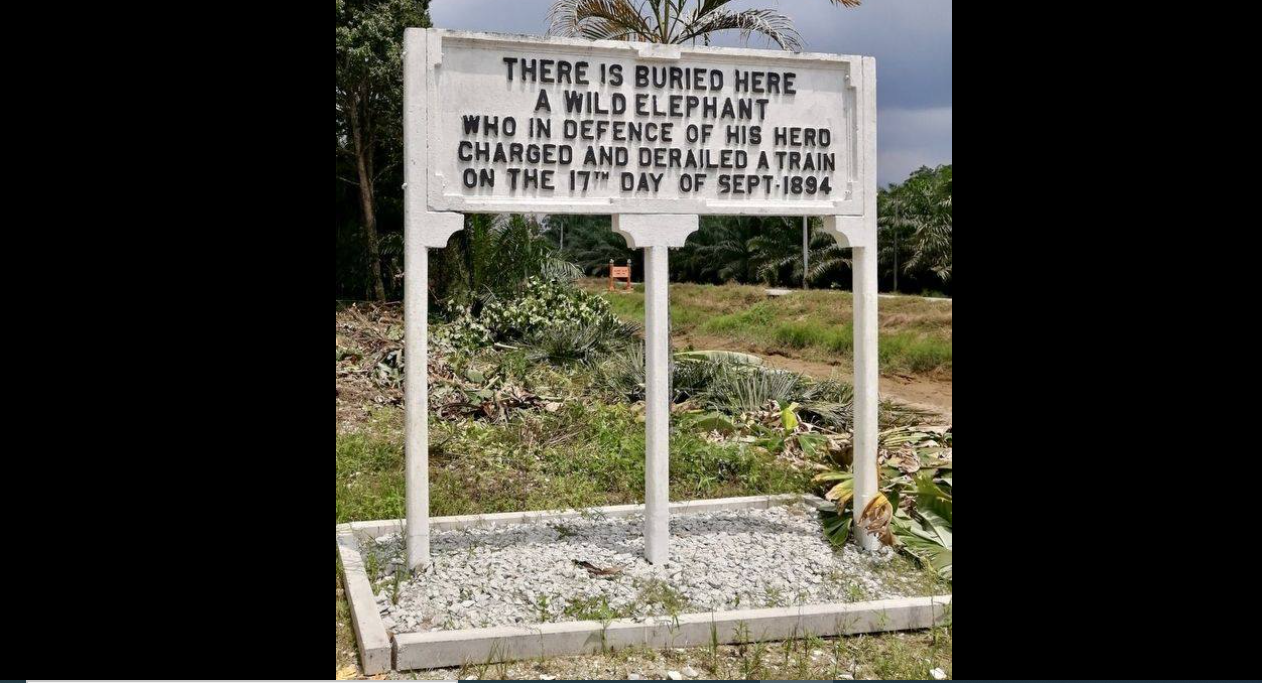
To commemorate the remarkable event, a signboard was erected at the place where the elephant carcass was buried by the British railway administration..
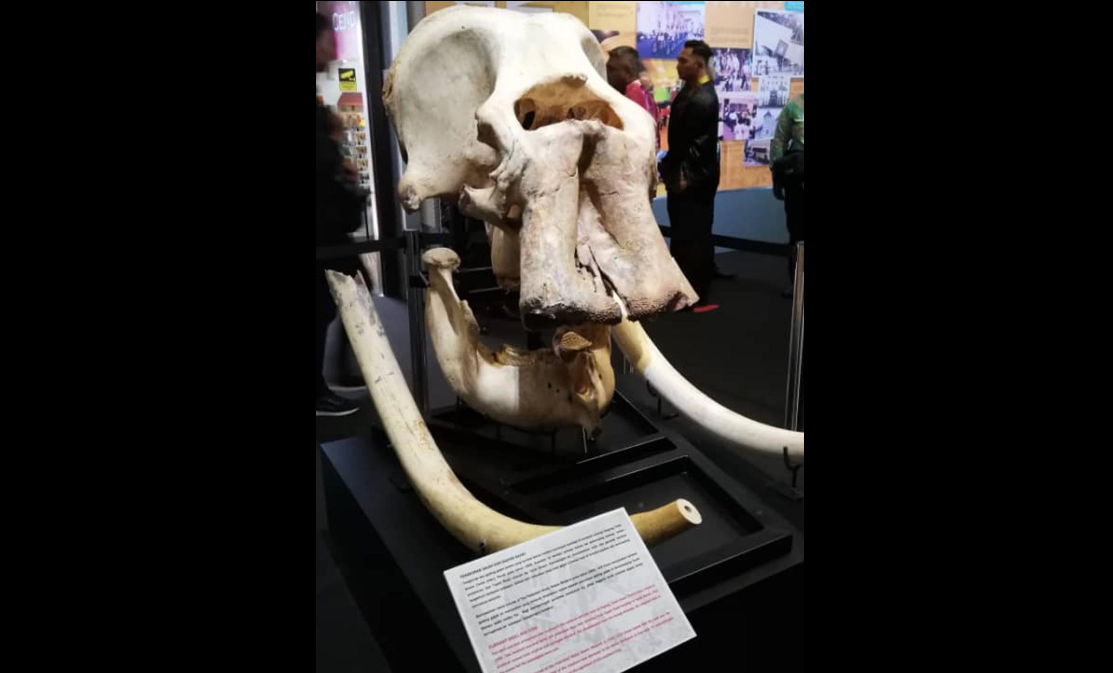
The skull and two tusks of the elephant are now kept and displayed at the Perak Museum, Taiping and the male elephant's thigh bone, which is about a metre long, is still well kept and displayed at the mini-concourse of the Johor Bahru KTMB museum.
However, over the years, and after use of the track from Tapah Road to Teluk Intan was discontinued in the 1990s, the area is now overgrown with shrubs.
The memorial read - “There is buried here a wild elephant who in defence of his herd charged and derailed a train on the 17th day of Sept 1894.” – May 13, 2025