PROLOGUE: The Eighties. Wondrous fashion mishaps – carrot crop pants: how does one even explain that? Simple, home-cooked food that bounced with freshness and flavours and lesser delights such as the ice balls – spheres of shaved iced smothered with thick syrup that cocked a diabetes-be-damned finger and momentarily relieved us in the hottest of days. And music. Glorious music.
Whether it was the American continent. Or India and other regions of Asia. Popular music probably scaled its final zenith after decades of innovations and experiments. Those songs stay with us for life; they were neatly arranged into an invisible jukebox in the mind and spun as the moods warranted.
It was warmer and, in as much as music is personal, more intimate than any drawn out of the cold music folders that occupy the smartphones.
…
Music was and still is a cultural centrepiece within the Tamil-speaking diaspora. The process of music-making, however, differed from other parts of the world as it is exclusively derived from films. Tamil cinema largely uses songs as devices to heighten the drama and, in rare instances, enhance the narration.
Singers rarely compose and croon their own odes; that is the job of the “music director” – or songsmith.
It is not an exaggeration to state that the success of a movie in the 1980s was wholly placed in the hands of Ilayaraaja. The imperial savant of the Tamil sonicscape exerted the power to raise a film riddled with the feeblest of plots and horrendously amateurish acting into a runaway blockbuster.
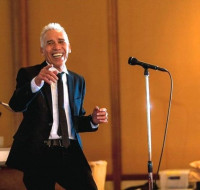
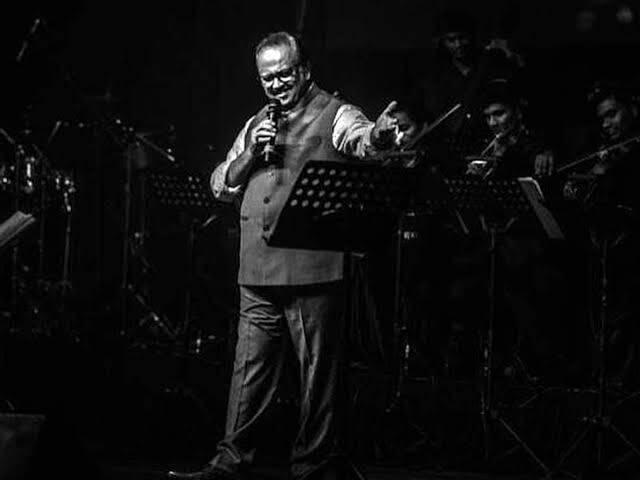
If the film depended on his songs, Ilayaraaja banked his trust on the much-lamented Sripathi Panditaradhyula Balasubrahmanyam, or simply SPB, to render his definitive songs.
SPB was the playback singer – as a vocalist is known in filmdom – that producers and directors demanded to breathe life into Ilayaraaja’s songs. The singer and songster remained anonymous then: unlike soundtrack albums now which splash the faces of the songwriter on their covers, the identity of Ilayaraaja remained concealed until the VHS tapes of live concerts were widely distributed.
It was during these viewings that we discovered that the generously rotund singer standing by the side of Ilayaraaja – the man who had voiced the many raucous and enthralling songs to which parties and people pulsed over the years – was SPB.
That was a shocker more to the ladies – who had mentally nursed a form that befits a charming romantic to go with the absorbing voice – than the men.
This, nevertheless, was the composer-singer partnership that ruled the 1970s to at least the first half of the 1990s. Music taste defines an individual. This norm, however, did not apply when family members and circle of friends are rabid aficionados of Ilayaraaja and SPB.
The duo had no peers and, such was their dominance, that the unending cascade of hits – innumerable to be listed here – made it a great time to be alive.
Weddings and landmark birthdays mandated reunions. As most Indian gatherings were and, in limited cases nowadays, are unfeasibly large. They required precision military planning.
Chartering a bus to shuttle an entire flock to another for the shindig was not unusual and, when they did arrive – the little cousins, gregarious uncles and the diametrically opposed imperious aunts – they brought along their sartorial sense, manner of speech and behaviour to be held up and judged.
There was a single denominator that traversed beyond these differences: music. Beyond these occasions themselves – adorned with carefree colours and augmented by the camaraderie – was an overarching feature that rose above it all to fall with such might upon us: the celestial voice of SPB. Regardless of the din – these are Indian social events after all – SPB commanded hushed attention. It completed the ceremony; it fulfilled us.
Biblical woes betide those who dared spin K.J. Yesudas or P. Jayachandran – both blessed with ethereal voices – on the stereo. An accusative look at the dastardly offender was all that was needed to restore order. We have fastened those songs to these memories, as the songs fulfilled the time.
As we transited from teenhood to maturity, we realise that SPB has actually soundtracked the various phases of our lives. His voice was the companion to our travails, thrills and triumphs; his is the voice that we appropriate as ours. But why do we feel a deeper connection to SPB? Why do we consider that he has been with us every step of the way? The answer is very much in his voice itself: it emotes exquisitely.
It is not an easy endeavour to transform words on a sheet of paper into a timeless song within a pre-set tune. While a composer is constricted by the circumstances of the song that will reach the screen which often enervates his urge to expand his invention, the singer has the more taxing task to transform himself into the film’s protagonist as he conveyed his sadness or yearning or any other sentiment. No one excels at this as SPB.
The lyrics may not be poetic in any way but in the care of SPB the words rake across our souls with the gentleness of the morning breeze, or they leave a dewdrop of ache to slowly spread over us.
He achieves this with notable devices: paring the words at the right angle, cleverly curling a note within a note, embellishing it with the appropriate timbre and adding subtle flourishes such as his amused half-chuckle.
SPB had unfailingly attributed the late Mohammed Rafi as an inspiration. He had described himself as a baktha (devotee) of Rafi, a monolith in the popular music of India and possessing an impossible vocal range.
We hear Rafi in SPB: the nuanced interpretation of odes, the willingness to harness the chords and not to clasp his voice to the song with such force so as to disallow acclaim to pass on to the composer. Both owned the songs without denying the songsmiths their due.
This demands magnanimity – and SPB had a profusion of it. He had sung in excess of 40,000 songs in 16 languages in a career that spanned 50 years though these statistics do not really matter.
SPB could have crooned a fraction of the quantity and yet would have left his ineradicable signature on all of them because he invested so much of himself in each of them. That is the truest mark of his artistry.
…
Epilogue: Memories are the remains of life. It has been a year since SPB passed on and perhaps the most suitable tribute to the troubadour is to remember him in relation to the moments that he evoked at numerous touchpoints of our existence. It is a weary cliché to claim that there will never be a singer such as SPB, as he never was a singer in its original meaning. His legacy has trekked past this connotation.
SPB rests above all as a personal devotion for a generation that is gratified that it lived in the same era as him, fortunate to continue to reel off his elaborately varnished words and voice and unwrap layers upon layers of sheer beauty. And in all of that, he lurks in the shadow of our shared soul to retell those moments and memories. – The Vibes, September 26, 2021
Nantha Kumar is a writer, and reader of The Vibes



_and_lohs_album.jpeg)