THE Ministry of Natural Resources and Environment Sustainability has responded decisively to the rising issue of e-waste smuggling into Malaysia, following large-scale raids on illegal e-waste processing factories in several states.
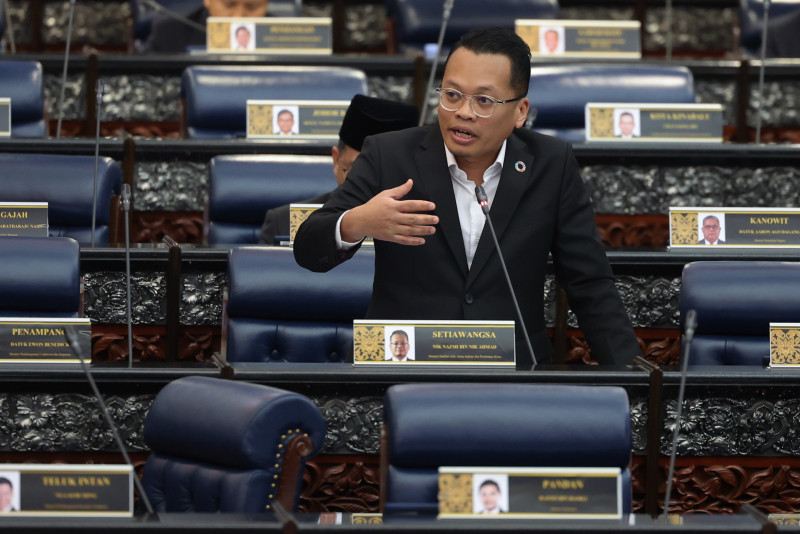
Minister Nik Nazmi Nik Ahmad told the Dewan Rakyat today, there will be no tolerance for e-waste importation, reiterating its strong stance on the matter, stating Malaysia does not permit the import of e-waste in line with the country’s policies and the Basel Convention’s Ban Amendment.
This amendment prohibits countries of the Organization for Economic Cooperation and Development (OECD) from exporting hazardous waste to developing nations, he explained.
“The Op Hazard joint operation, carried out nationwide with the cooperation of the Royal Malaysia Police (PDRM) and the Department of Environment (JAS), targeted 47 premises suspected of being involved in illegal e-waste processing.
“The operation led to the seizure of 15,764.90 metric tonnes of e-waste, valued at approximately RM55 million.
“The investigation found that 30 of the premises were operating illegally, 7 were scrap yard premises, 6 had licenses under JAS, 3 were licensed by local authorities, and 1 was an illegal warehouse,” Nik Nazmi highlighted.
He added, these illegal factories were found in industrial areas, as well as in non-industrial zones such as reserved land, palm oil plantations, and forest areas.
Most of these premises operated without proper licenses and were often managed by foreign nationals who employed illegal migrant workers or those abusing work permits.
Nik Nazmi said this in response to a question raised by Shaharizukirnain Abd Kadir, [Setiu], who called on the Minister of Natural Resources and Environment to explain the tough actions taken to tackle the smuggling of electronic waste into the country.
The minister added, the affected premises are being investigated under the Environmental Quality Act 1974 (Act 127), with several offenses identified, including:
- Section 16: Failure to comply with license conditions;
- Section 18: Operating as an unlicensed storage facility for scheduled waste;
- Section 19: Failing to provide written approval from the Director General of Environment;
- Section 34A: Failure to submit an Environmental Impact Assessment (EIA) report; and
- Section 34B: Improper disposal of scheduled waste without the required approval.
The minister explained, as a result of the operation, 37 premises had their equipment detained under Section 38(1)(a) of the Environmental Quality Act 1974.
Additionally, 59 directives were issued, and 27 fines were imposed for various environmental violations. A total of 52 investigation papers are also being prepared for legal action.
He cited that under Section 34B of the Environmental Quality Act 1974, any unauthorised disposal or transit of scheduled waste, including e-waste, within Malaysia’s land or waters, is considered a criminal offense.
If convicted, offenders can face a maximum fine of RM10 million and up to 5 years in prison, as stipulated under the Environmental Quality (Amendment) Act 2024.
“The Ministry is also considering several tough measures to further strengthen the enforcement against e-waste smuggling.
This takes the form of transferring enforcement powers under the Environmental Quality Act 1974 to the Royal Malaysia Police for environmental crimes, incorporating environmental crimes under the Anti-Money Laundering Act (AMLA) 2001 and the Prevention of Crime Act (POCA) 1959 and amending the Ports and Free Zones Act to penalize shipping agents involved in false declarations.
Additionally, he said, blacklisting companies that frequently violate environmental laws is being looked into along with amendments to the Environmental Quality Act to include all recycling activities under the Second Schedule of the Environmental Quality Regulations and introducing specific legislation for the management of waste imports.
Other actions to be taken include mandating third-party inspections for exporting countries to ensure that waste shipments are compliant with declarations, manning the import of waste from countries that have not ratified the Basel Convention and prioritising local waste and only allowing imports of waste that is essential for domestic industries.
“The Ministry’s tough approach aims to protect Malaysia from becoming a dumping ground for hazardous waste, ensuring that the country’s environmental integrity is preserved,” he added. – March 6, 2025