CALLS to abolish the matriculation programme have reignited national debate on equitable access to higher education, prompting strong responses from leading public universities and the Ministry of Higher Education.
Universiti Teknologi Malaysia (UTM) has reaffirmed its support for the matriculation system, warning that dismantling the programme would negatively affect students' opportunities to enter public universities and contradict national aspirations for talent development.
“UTM is confident that the Ministry of Higher Education and the Ministry of Education are committed to ensuring that all Malaysian children have access to inclusive and equitable education, in line with the Constitution and the National Education Philosophy,” said the university in a statement posted on Facebook on Saturday.
“We also hope this issue does not become a prolonged polemic. Instead, all parties must work together to strengthen the higher education ecosystem to ensure a sustainable and excellent future for our younger generation.”
The statement follows renewed pressure from the University of Malaya Association of New Youth (UMANY), which previously urged the government to abolish the matriculation programme and adopt the Sijil Tinggi Persekolahan Malaysia (STPM) as the sole standard for entry into undergraduate programmes at public universities.
UMANY president Tang Yi Ze argued that the STPM syllabus is more rigorous and internationally recognised, including by top universities around the world.
Universiti Pendidikan Sultan Idris (UPSI) also weighed in, asserting that the matriculation route remains vital for equitable access to higher education across Malaysia.
“The abolition of the matriculation programme will limit students’ opportunities and is not aligned with the long-term goals of national education development,” said UPSI’s Corporate Communications Department in a statement.
“UPSI believes that the Ministry of Higher Education and the Ministry of Education remain deeply committed to ensuring access to higher education for all children in Malaysia, in accordance with the Constitution and the National Education Philosophy.”
Like UTM, UPSI urged stakeholders to avoid turning the issue into a prolonged controversy and instead focus on enhancing the nation’s educational standards.
Facing criticism from political leaders, student groups, and higher education institutions, UMANY later issued a clarification via Instagram, stating that its actual proposal was to merge the matriculation programme with the STPM system under a unified syllabus.
“We used the word ‘abolish’, which may have caused misunderstanding. We apologise for the confusion,” the statement read.
“Our proposal for an integrated examination system is not at all related to racial issues. The real aim is to improve the existing system to make it fairer and more transparent, thereby addressing the root of inequality in university admissions.”
UMANY had earlier submitted a memorandum to the Ministry of Higher Education, calling for the STPM syllabus to become the sole benchmark for university entry.
The move followed media reports about Edward Wong, a straight-A STPM graduate with a CGPA of 4.0 who was rejected by six public universities despite aspiring to become an accountant.
The student group also emphasised that any proposed unified examination system must consider the needs of disadvantaged communities to uphold social justice.
“We believe that if such a system is implemented, the government can allocate special quotas to assist underprivileged groups, ensuring they are given due priority,” said UMANY.
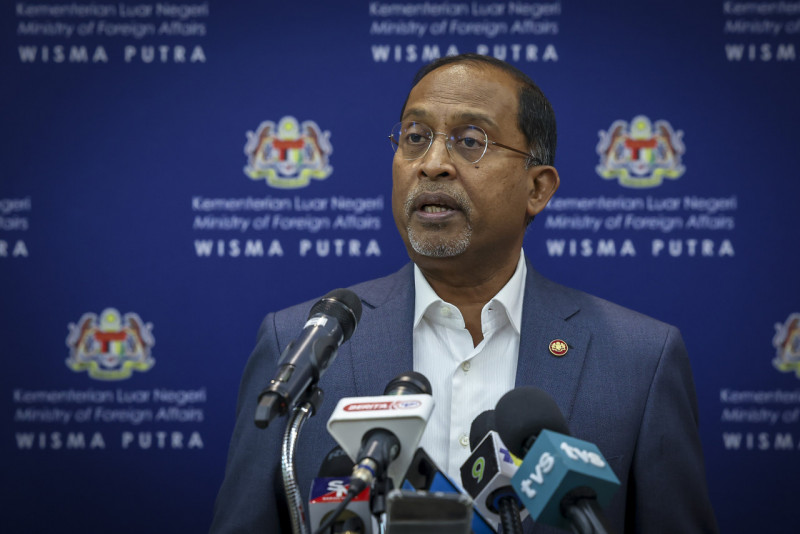
In response to the heated debate, Minister of Higher Education Datuk Seri Dr Zambry Abdul Kadir called for restraint and urged all parties to avoid extreme demands related to the UPUOnline university application system.
In a video statement released on Saturday, Zambry encouraged stakeholders to strengthen public confidence in Malaysia’s higher education system for the benefit of future generations.
“The Ministry is always open to good suggestions and discussions from all quarters and must avoid any manipulation or interests that could worsen the situation,” he said.
He also cautioned against making statements that could heighten tensions or create unease regarding access to higher education.
“I urge all parties to be more cautious when issuing statements or making demands that could create anxiety and an unsettling atmosphere, especially concerning university admissions,” he said.
Zambry added that the Ministry has made avenues available, including an appeal process via UPUOnline and a dedicated help desk at the Ministry’s lobby, to assist students with application-related issues.
“As I have previously stated, the Director-General of Higher Education, Prof Dr Azlinda Azman, and UPUOnline have both affirmed that these matters can be resolved through proper channels,” he said.
The Ministry of Higher Education, he concluded, remains committed to addressing each issue raised by applicants to ensure they are afforded the opportunity to pursue higher education. - September 14, 2025