ABOUT 18 individuals are declared bankrupt every day in this country, with the surge in cases involving youths under 30 years old recording almost 60 percent of the total increase in cases this year.
Senator Datuk Sivaraj Chandran recently said the estimate was made based on a total of 4,875 people who were declared bankrupt in the first nine months of this year, an increase of 5.7 percent compared to the same period last year.
He said the figure showed a worrying trend as 71.6 percent of the cases involved debts from RM500,000 to RM1 million, while another 20.6 percent involved debts of RM100,000 to RM500,000.025.
"Personal loans continue to be the largest contributor with 45.1 percent of all cases, proving that credit controls are too lax, leaving the younger generation vulnerable to getting caught up in huge debt.
"This is proof that youth are being pressured from two angles, namely the rising cost of living and the easy access to credit.
"Without adequate financial literacy and without a responsible credit assessment system, all forms of incentives, grants or government schemes no longer have any meaning when youth start their adult lives with a heavy debt burden," he said.
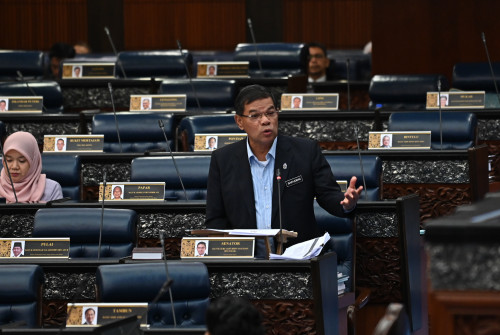
He said this when debating the Supply Bill 2026 at the Dewan Negara.
Meanwhile, Sivaraj informed that more than two million highly qualified workers are currently working in sectors that do not utilize their skills or expertise.
He said that more graduates are trapped in low-income jobs, far below their qualifications, with no clear career progression path.
"This issue is not about getting a job, but the problem of not getting a career that is equivalent to their qualifications," he stressed.
According to him, the situation stems from the mismatch of the education structure, the proliferation of study programs that are irrelevant to market needs, and the industrial training period that is too short to build the real skills needed by employers.
In this regard, Sivaraj also urged the government to comprehensively re-evaluate the support ecosystem for youth, while stressing that the government cannot continue to boast about allocation figures and digital transformation rhetoric if the basic system is still flawed and does not favour young people who want to build a life.
He said that Malaysian youth are not demanding sympathy, but rather expect a fair, efficient and responsible system, a system that does not burden them with debt and does not prevent them from building a better future. – December 11, 2025