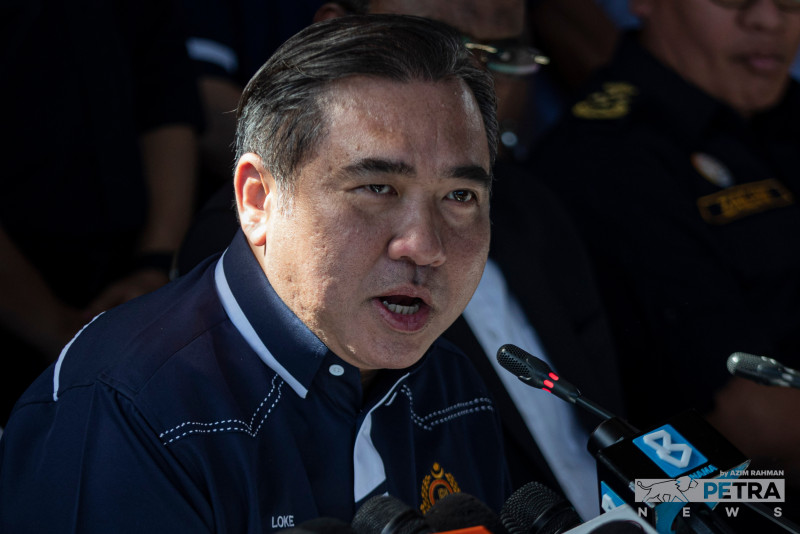
THE Ministry of Transport is open to exploring incentives for the disposal of ageing motorcycles, but the success of such a programme hinges on participation from local manufacturers, according to Minister Anthony Loke.
Speaking at the launch of the 28th Balik Kampung Road Safety Campaign in Seremban, themed “Pakai Lengkap, Balik Selamat (“Wear Full Gear, Return Safely”),” Loke highlighted that previous scrappage initiatives for cars were made possible because national automakers, including Proton Holdings Bhd and Perusahaan Otomobil Kedua Sdn Bhd (Perodua), had proactively participated.
“So far, there is no incentive for the disposal of old motorcycles. I recently received a letter from the Malaysian Motorcycle and Scooter Association (MMSDA), but manufacturers themselves need to take the initiative,” Loke said.
He clarified that any potential motorcycle scrappage programme would be limited to locally assembled motorcycles (CKD), while imported models would be excluded.
“We introduced programmes for old cars because there were initiatives from manufacturers. If manufacturers come forward, the condition is that the vehicles must be locally assembled (CKD); imported vehicles will not be included. Assistance is only given to local manufacturing companies,” he explained.
Loke described the concept of a motorcycle disposal scheme as still in its early stages but emphasised the ministry’s willingness to engage in discussions if local manufacturers show interest.
The proposal mirrors the government’s existing initiative offering a matching grant of up to RM4,000 to encourage owners to scrap vehicles more than 20 years old, which are often no longer economical and may pose safety risks.
Beyond scrappage policies, Loke urged motorcyclists to prioritise safety, particularly the use of helmets that meet regulatory standards.
He warned against waiting for government replacement programmes to upgrade helmets.
“Helmets remain the most important safety equipment for motorcyclists, but observations from helmet replacement campaigns over the years found that many riders were still using helmets that no longer provided adequate protection,” he said.
Loke also addressed plans to implement smart lanes on several highways as a measure to reduce congestion during peak hours.
He stressed that safety considerations must remain paramount and that further study is required, including analysing accident data on the lanes, before any proposals can be presented to the Ministry of Works.
“A study needs to be carried out before the matter is brought to the Works Ministry. The smart lane falls under the jurisdiction of the Malaysian Highway Authority, which is an agency under the Works Ministry,” he added.
The minister’s comments underscore the government’s cautious approach, emphasising industry collaboration and safety, while signalling openness to modernising motorcycle management and road traffic solutions in Malaysia. - March 14, 2026