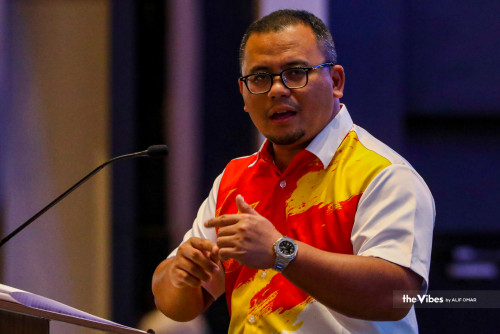
THE federal government’s handling of petroleum royalty payments to state governments should be understood within the framework of development project implementation and not used as political ammunition by the opposition to gain public support, a senior political aide has said.
Political Secretary to the Minister of Finance, Muhammad Kamil Abdul Munim, said the current arrangement reflects an established mechanism requiring coordination between federal and state administrations to ensure that allocated funds are used effectively.
“This step is an existing mechanism involving coordination between the federal and state governments to ensure funds are utilised effectively,” he said.
He stressed that petroleum-related special allocations are not intended solely for administrative expenditure, but are instead structured to ensure tangible development outcomes for the public.
“The goal was to ensure these special funds are not used solely to cover salaries and emoluments. Instead, they are coordinated between the Ministry of Finance and the state government to guarantee that projects benefit the people and are monitored to prevent leakage or wastage,” Bernama quoted him saying.
Muhammad Kamil’s remarks come in response to media reports on April 23 in which the Terengganu state government claimed that a cumulative RM2.25 billion in petroleum royalty payments had not been channelled into its accounts since 2023.
He also drew a distinction between the current MADANI Mart initiative and the earlier Kedai Rakyat 1Malaysia (KR1M) programme, saying the two operate on fundamentally different models.
According to him, KR1M relied heavily on direct government funding and involved the rebranding of essential goods such as rice, sugar and milk under a government label.
“While KR1M involved large-scale use of government funds, MADANI Mart is implemented through collaboration between Yayasan MADANI and private parties interested in the retail business,” he said.
He added that MADANI Mart retains existing commercial product branding rather than replacing it with government-labelled goods.
Under the current model, entrepreneurs are required to finance their own operations, while Yayasan MADANI provides technical assistance and coordination to ensure consistent implementation across outlets.
Muhammad Kamil said the government remains open to feedback and suggestions aimed at improving the initiative’s effectiveness, particularly in ensuring that it delivers meaningful benefits to lower-income groups. - April 25, 2026