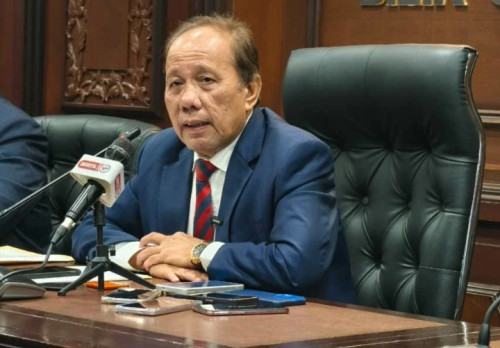
THE Government has expressed tentative optimism over its latest diplomatic engagement with Myanmar, with Foreign Minister Datuk Seri Mohamad Hasan saying the country's newly appointed government appeared more willing to consider regional recommendations than its predecessor.
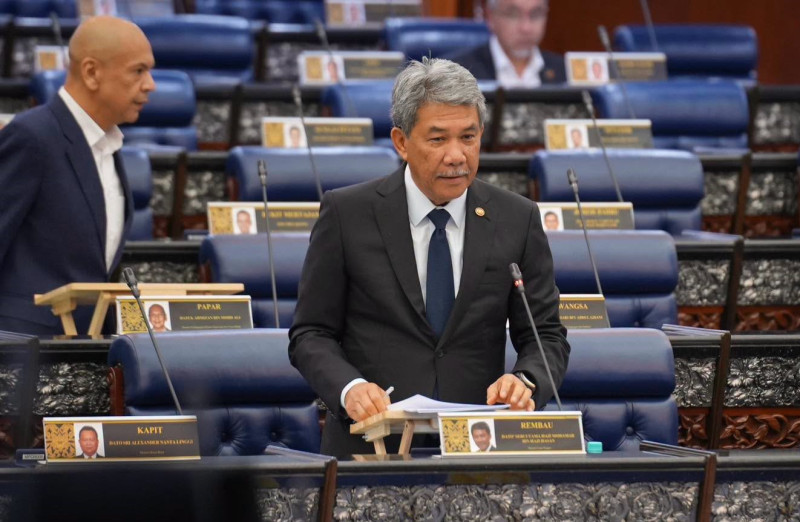
Speaking in Parliament on Thursday, Mohamad said he had met Myanmar Foreign Affairs Minister Tin Maung Swe in Naypyitaw last month and held extensive discussions on efforts to revive ASEAN's troubled peace initiative.
The comments come as Southeast Asian nations continue to grapple with Myanmar's prolonged political and humanitarian crisis following the 2021 military takeover that triggered nationwide unrest and armed resistance.
Reuters reported that Myanmar's current administration was installed after junta chief Min Aung Hlaing assumed the presidency and appointed a new cabinet in April, following an election that was widely criticised by opponents and many Western governments as lacking credibility.
Mohamad told lawmakers that discussions in Naypyitaw focused primarily on the implementation of ASEAN's "five-point consensus", the regional bloc's peace roadmap agreed with Myanmar's former military leadership in an attempt to end the conflict.
He said Malaysia also raised broader humanitarian and political concerns, including the release of political detainees and the ongoing challenge posed by the large Rohingya refugee population residing in Malaysia.
"I see that the Myanmar side this time seemed more open to the suggestions that were expressed compared to our previous interaction, when Malaysia was the chair of ASEAN last year," Mohamad said.
The assessment marks one of the clearest indications from Kuala Lumpur that ASEAN may be detecting a shift, however limited, in Naypyitaw's approach to regional diplomacy.
Nevertheless, the foreign minister acknowledged that the bloc's peace efforts have yet to produce the breakthrough ASEAN has sought since the coup.
The five-point consensus has been widely viewed as ineffective, largely because Myanmar's military authorities have refused to engage in dialogue with several opposition groups that the regime considers "terrorists".
Mohamad revealed that ASEAN leaders have instructed the bloc's foreign ministers to explore new ways of working with Myanmar to advance the peace process, including the possibility of revising elements of the existing framework.
"If we need to adjust, we will adjust but it will need to be approved by all the ASEAN leaders before any changes," he said.
The remarks suggest ASEAN is increasingly prepared to reassess its strategy after years of limited progress, while still insisting that any substantive changes must receive unanimous approval from member states.
For Malaysia, the stakes extend beyond regional diplomacy. The country remains one of the largest hosts of Rohingya refugees in Southeast Asia, making developments in Myanmar a matter of both foreign policy and domestic concern.
While Mohamad's comments offered a more hopeful tone than previous assessments, he stopped short of suggesting that a diplomatic breakthrough was imminent, reflecting the continued complexity of one of ASEAN's most intractable crises. - June 25, 2026