THE government has developed a comprehensive contingency plan to ensure Malaysia's food supply remains stable and resilient in the face of global supply chain disruptions, climate change, geopolitical conflicts and international food crises.
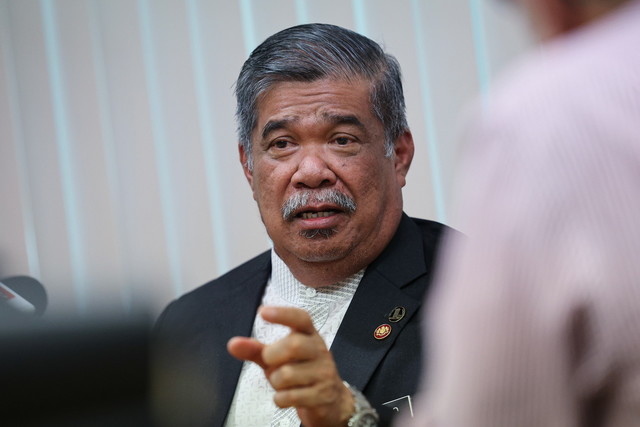
Agriculture and Food Security Minister Datuk Seri Mohamad Sabu said the strategy is being implemented through the National Agrofood Policy 2021-2030 (DAN 2.0) and the National Food Security Policy 2030 (DKMN 2030), both aimed at strengthening the resilience of the country's agrofood system against unforeseen external shocks.
Among the key measures is the regular monitoring of dam water levels, cloud seeding operations in critical areas, the use of tube wells for crop cultivation and the adoption of dry direct-seeded rice cultivation to reduce water consumption during El Niño conditions.
"Among the measures implemented are regular monitoring of dam water levels, cloud seeding operations in critical areas, the use of tube wells for the crop sector, as well as dry direct-seeded rice cultivation to reduce water usage during the El Niño phenomenon.
"The government has also introduced a temporary Sales and Service Tax (SST) exemption on selected agricultural fertilisers from Jan 1, 2026 until Dec 31, 2027, increased the land preparation incentive to RM300 per hectare and maintained the diesel subsidy for fishermen at RM1.65 per litre to safeguard domestic agrofood production capacity.
"In addition, the use of drought-resistant rice varieties such as MR380, MR381 and MR382 has been expanded, while farmers are encouraged to adopt water-efficient farming methods through the Alternate Wetting and Drying (AWD) technique and the System of Rice Intensification (SRI)," he said in a written parliamentary reply published on the Dewan Rakyat website.
He was responding to questions from Datuk Seri Hamzah Zainudin (PN-Larut) and Tan Kok Wai (PH-Cheras) on the government's contingency plans to address global supply chain disruptions, climate change, geopolitical tensions and international food security challenges.
Mohamad said the government was also pursuing large-scale grain corn cultivation by 2040, targeting annual production of 1.25 million metric tonnes, equivalent to 30 per cent of domestic demand, to reduce Malaysia's dependence on imported feed grain.
To strengthen the country's regulatory framework, he said the ministry is drafting a Fertiliser Bill and a National Food Security Bill.
"Among the key proposals are the establishment of a national fertiliser buffer stock and stronger government control over domestic fertiliser supplies to mitigate disruptions arising from geopolitical crises, natural disasters, pandemics or market uncertainty," he said.
Separately, Mohamad said Malaysia's cooperation with the United States in modern agriculture currently focuses on research, technology and innovation through collaboration between the Malaysian Agricultural Research and Development Institute (MARDI) and the United States Department of Agriculture (USDA).
He said the partnership is being strengthened through capacity-building initiatives, including the Borlaug Fellowship Program and the USDA Foreign Agricultural Service Scientific Exchanges Program, which focus on technology transfer, enhancing scientific expertise and expanding international research collaboration.
Mohamad added that the US-ASEAN Business Council had also expressed interest in working with Malaysia to strengthen food security ecosystems, promote sustainable and regenerative agriculture, build more resilient supply chains and encourage greater investment in the agrofood sector.
He said these initiatives form part of the government's broader strategy to reinforce national food resilience while reducing vulnerability to external shocks and ensuring long-term food security for the country. - July 14, 2026