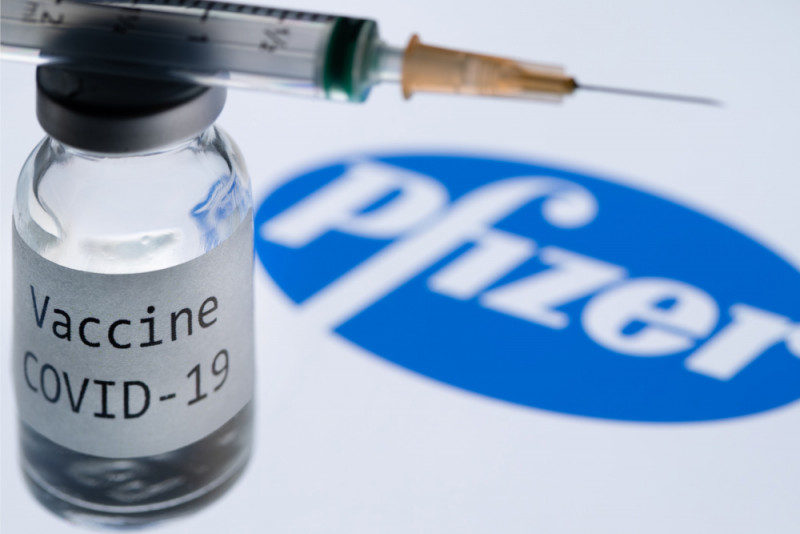

KUALA LUMPUR – The government will invest RM16.6 million to cover logistics and ultra-cold storage costs for the Pfizer/BioNTech Covid-19 vaccine, covering 55 urban areas throughout the country, said Science, Technology and Innovation Minister Khairy Jamaluddin.
“We will obtain 55 freezers to be placed in 55 locations. As the Pfizer vaccine requires ultra-cold storage facilities, it will be deployed in urban areas, while the AstraZeneca vaccine will be deployed in rural areas because it only requires normal freezers,” he told a press conference today, adding that the storage facility will cost RM6.7 million.
“Pfizer delivers to the point of vaccination, but the storage is our responsibility. Some quarters have said that the storage alone is RM16.6 million. The cold storage is actually around RM6.7 million, which is around RM70,000 to RM80,000 per freezer.”
He expects that the Pfizer vaccine will hit Malaysian shores in February while the AstraZeneca jabs will arrive within the first quarter.
The Covid-19 Vaccine Supplies Access Guarantee Special Committee will finalise its national distribution plan on Thursday.
The committee will present their findings to Prime Minister Tan Sri Muhyiddin Yassin on Monday and it will be tabled in cabinet for endorsement the following Wednesday.
Khairy said Malaysia is not late in receiving the vaccine and pointed out other developed states that will receive the Pfizer vaccine roughly at the same time as Malaysia or even later in the year.
“Singapore has a budget of over SG$1 billion, around RM3 billion, and was able to make multiple bets with multiple pharmaceutical companies producing the vaccine such as Pfizer and Sinovac.
“With that amount of money, they are only catering for three to four million people. I couldn’t place bets like Singapore did because I have a similar budget for 30 million people. If you look at other countries, Japan is getting it in February, Australia in March and Thailand in May.
“I don’t think we are late. Indonesia received the vaccine early from Sinovac because they were part of its phase three clinical trials. At the time of the clinical trials, we only had double- or single-digit infections and they were not interested in us,” said Khairy. – The Vibes, January 5, 2021




.jpeg)