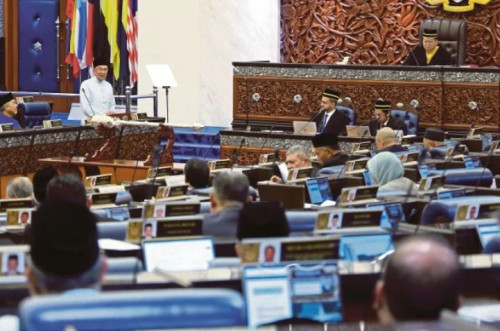
FORMER Klang MP Charles Santiago has questioned Malaysia’s decision to restrict the recruitment of Nepali workers to 25 agencies, saying the move was made without consultation with Kathmandu.
Santiago said Malaysia is home to about 400,000 Nepali workers and employers were previously able to recruit through agencies licensed by Nepal.
However, since last Friday, they have been limited to 25 agencies listed on the Foreign Workers Centralised Management System (FWCMS) portal.
He said Nepal was neither consulted nor informed about the change, with Kathmandu only discovering the decision after the list was posted online.
Santiago questioned the purpose of the Malaysia-Nepal labour memorandum of understanding (MoU) if major decisions could be made without discussion between both governments.
“What is the value of our labour MoU if Malaysia acts unilaterally whenever it suits us?” he said.
He also called on the Human Resources Ministry (KESUMA) to explain how the 25 agencies were selected, including the criteria and eligibility requirements used.
Santiago asked who made the decision and why Nepal was not involved in a process that directly affects the recruitment of its citizens.
He said Malaysia had seen the consequences of a similar arrangement involving the Bangladesh-Malaysia labour corridor, where recruitment was restricted to a small number of agencies.
That arrangement, he said, eventually allowed a syndicate to emerge.
“Why is Malaysia now repeating the same failed model with Nepal?” he asked.
The situation has since worsened after the Nepalese government suspended all 25 agencies selected under the new arrangement.
Santiago said the decision had disrupted recruitment and created problems for Malaysian employers planning their workforce.
He also warned that restricting recruitment to 25 agencies could put too much control in the hands of a small group of companies.
With fewer agencies competing for business, he said, there was a risk that recruitment costs could rise, leaving workers to shoulder a heavier debt burden.
Santiago said the fallout was not limited to recruitment.
He said Malaysia’s approach had also affected trust with Nepal, a key source of foreign labour for the country.
“KESUMA’s unilateral decision has come at a cost. It has undermined the trust between both countries, disrupted the recruitment of workers and affected operational planning for Malaysian employers,” he said.
“So how exactly are KESUMA’s plans benefiting Malaysia?” he added. – August 26, 2026












.jpeg)