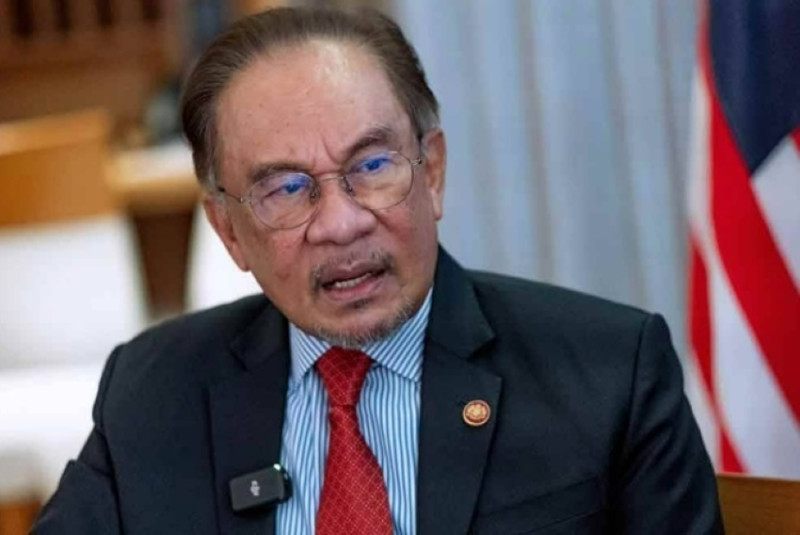
DATUK Seri Anwar Ibrahim leads five potential prime ministerial candidates in a new Vodus Research survey, recording the highest acceptance at 46% and first-choice support at 34%.
The Malaysia Prime Minister Candidate Study 2026 surveyed 1,482 Malaysians aged 18 and above nationwide from Aug 18 to Sept 1, with the sample stratified to mirror the Malaysian population census.
The study assessed Anwar, Khairy Jamaluddin, Johor Menteri Besar Datuk Onn Hafiz Ghazi, Terengganu Menteri Besar Datuk Seri Dr Ahmad Samsuri Mokhtar and Datuk Seri Rafizi Ramli using separate measures of acceptance, first-choice preference, familiarity, favourability and rejection.
Vodus said Anwar recorded a net acceptance score of +19 percentage points, the highest among the five, while 93% of respondents familiar with the candidates knew of him.
His first-choice support was strongest in East Malaysia, where 41% selected him compared with 28% in Peninsular Malaysia.
Vodus founder Dr Kelvin Goh said this may partly reflect greater attention by Anwar’s administration to Sabah and Sarawak, including developments involving the Malaysia Agreement 1963 (MA63), Sabah’s revenue entitlements and Sarawak’s greater control over its resources.
Khairy recorded 32% acceptance and 14% first-choice support, while registering the highest net favourability score among the five at +51 percentage points.
The survey found 63% of respondents who knew Khairy gave him a positive assessment, with strong and capable leadership, a clear national vision and trustworthiness among the qualities most frequently cited.
Onn Hafiz recorded 17% acceptance and 8% first-choice support, with a net acceptance score of +6 percentage points and national familiarity of 42%.
Ahmad Samsuri recorded 13% acceptance and 6% first-choice support, while 62% of respondents familiar with him gave him a positive personal assessment. His net favourability score was +44 percentage points.
Rafizi recorded 17% acceptance and 8% first-choice support. His 20% rejection rate resulted in a net acceptance score of -3 percentage points.
The survey highlighted a distinction between being personally well regarded and being preferred for the prime minister’s post.
While Khairy recorded the strongest personal favourability among the five, his first-choice support was 14%, less than half Anwar’s 34%.
Vodus said the measures should not be treated as interchangeable, with acceptance indicating whether respondents would accept a candidate as prime minister and first-choice support reflecting whom they would actually prefer among the candidates considered.
The findings represent respondents’ views during the Aug 18 to Sept 1 fieldwork period and are not a forecast of the outcome of a future general election. - September 17, 2026