
GEORGE TOWN – The pandemic should not be cited as a reason why Malaysia has slipped in attracting foreign direct investments (FDI) in the region.
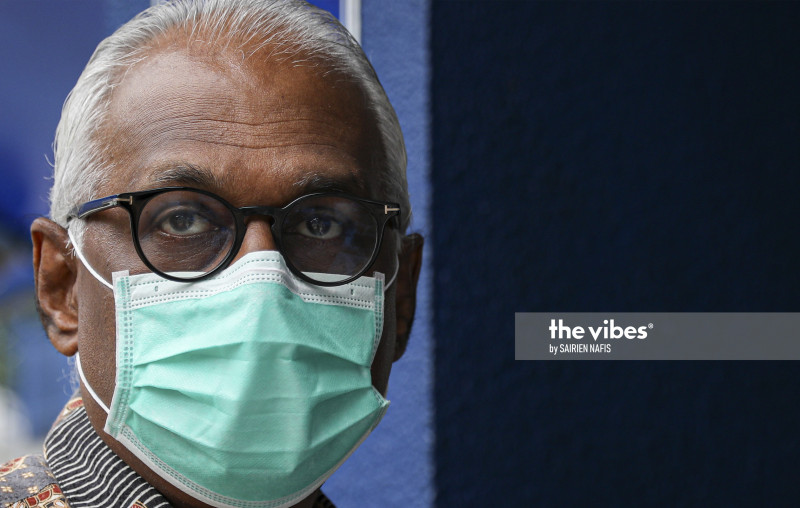
Covid-19 is affecting all countries, yet our neighbours, such as Singapore, Vietnam and Thailand, are weathering it better economically than Malaysia, said Klang MP Charles Santiago in an interview.
Just three decades ago, Malaysia was labelled one of Asia’s economic “tigers”.
Santiago, an economist by training, said politicians know the answers to the woes faced by the country and should get started on resolving them instead of engaging in aimless politicking.
“We politicise things that do not benefit us – from religion to culture, race or heritage. We should focus on nation-building and who has the best expertise to raise us up in an era dominated by anti-globalisation, extremism and climate change, not to mention a pandemic.”
Santiago said the report on Malaysia’s FDI standing is distressing and comes at a time when the country is in a state of an emergency, alongside movement restrictions that have yet to yield any results in reducing the number of daily Covid-19 cases.
Plunging 68% compared with 2019, Malaysia is now behind the Philippines, Thailand, Vietnam, Indonesia and Singapore in terms of FDI for last year.
He said he would recommend an end to the state of emergency, as it creates the perception of instability in the country.
“Focus on rebuilding the economy by going all out to reduce Covid-19, and improve the skill set (of human resources) through rapid digitalisation and reduce the dependence on migrant workers.”
It was reported that Malaysia lost FDI at a worse rate than its neighbours and the rest of the world in 2020, according to the United Nations Conference on Trade and Development’s (UNCTAD) Investment Trends Monitor.
UNCTAD determined that Malaysia’s FDI last year was down 68% from 2019 and amounts to just US$2.5 billion (RM10.1 billion), compared with the Asean region as a whole that lost 31% on average, or US$107 billion.
Globally, total FDI contracted 42%, going from US$1.5 trillion in 2019 to US$859 billion last year. – The Vibes, January 27, 2021