
KUALA LUMPUR – The government has yet to provide adequate communications infrastructure catering to primary and secondary school students learning from home throughout the movement control order despite having introduced several technology initiatives, said stakeholders.
Tech architect Steven Wong told The Vibes that Putrajaya’s Cerdik initiative to provide 150,000 laptops to children from low-income families, as well as the RM21 billion Jalinan Digital Negara (Jendela) national digital infrastructure plan, help address some issues, but a paradigm shift is needed to ensure the effective adoption of online learning.
The Cerdik programme is merely a “quick win” initiative to provide basic technology in the form of laptops to underprivileged students, he said.
On the other hand, Jendela is a long-term initiative to boost internet accessibility and speed that will improve the delivery of content such as ultra-high-definition videos, and low-latency-streaming virtual reality and gamified education programmes, as well as the consumption experience.
“Cerdik and Jendela partially address the technology aspect of the three key elements, but leave the people, such as students and teachers, in their ability to use the technology, and the processes (i.e. how to use the technology in education), open-ended,” said Wong.
“The programmes should also include training for students and teachers, and partner with online learning platforms such as Google Classroom to fully capitalise their implementation.”
While waiting for long-term and wide-scale solutions like Jendela to be rolled out, he said, the government can set up programmes to address students and teachers’ current needs.
This includes establishing “bubbles” of physical premises with laptops and internet connection, as well as training students and teachers on the basic use of technology for online learning, he said.
Wong also suggested setting up small study groups, where students can learn and interact while maintaining a low risk of Covid-19 transmission, and enhancing existing education television programmes by including school education delivery strategies for more effective teaching and measurement of students’ progress.

On Wednesday, Education Minister Mohd Radzi Md Jidin said home-based teaching and learning (PdPR) is not restricted to online platforms.
He said teachers have the flexibility to set up PdPR sessions that suit their students’ needs, adding that several approaches have been taken to distribute modules.
“There are schools that use the drive-through method to hand out modules. There are also many teachers who send the modules themselves to students.”
He said he was informed about teachers at SMK Pulau Gaya in Sabah taking boat trips to deliver learning materials to students.
“The ministry understands that pupils around the country come from various socio-economic backgrounds.
“All teachers are faced with different situations and challenges. Therefore, the PdPR method used must suit the needs of teachers and students.”
Parent Action Group for Education president Datin Noor Azimah Abdul Rahim said the application of technology is not a new phenomenon in Malaysia, but its implementation has fallen short over the years.
The Multimedia Super Corridor was the start of the proliferation of information technology in the country, she said.
“It was supposed to have been developed ahead in order for us to be prepared for the age of the internet, and now, IR4 (Industrial Revolution 4.0).”
She said IT was introduced in schools in 2003 with high-quality reference materials used, and teachers were the facilitators.
“Unfortunately, six years later, the policy of teaching science and mathematics in English was gradually scrapped.
“The reason given was that students could not follow the digital lessons. The real reason was that while some teachers succeeded in using the tools to their advantage, most did not.”
Despite this, she said, the Education Ministry attempted to bring technology into schools via the 1BestariNet initiative, but it failed at connecting schools and offering adequate content.
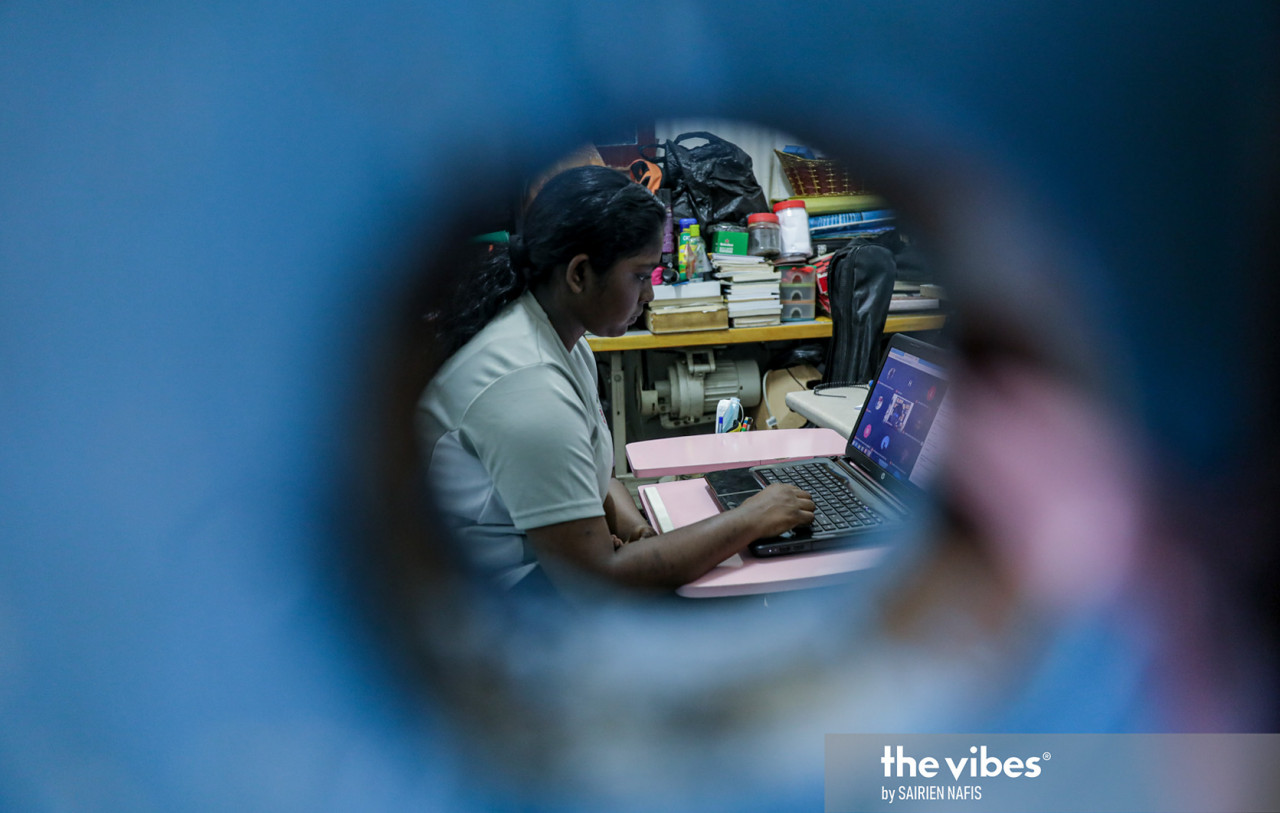
Noor Azimah pointed to several private initiatives to introduce online learning at a lower cost.
The Khan Academy, for example, is a free global learning platform that has been underutilised by Malaysian teachers and students, she said.
“‘Blended learning’ and ‘21st-century learning’ were buzzwords, but teachers failed because connectivity in schools was poor, devices were small in number, and excuses were made.”
Big sums should have been spent on building telecommunications towers, and providing students with tablets and laptops with maximum storage to download learning materials, she said.
“Instead, teachers and parents were arguing over whether to allow students to bring handphones to school.
“Fast-forward to 2020; had teachers allowed themselves to be guided and enhanced by digital learning, they would not be struggling now. In fact, with the internet, fast and easy connectivity, and tonnes of reference materials at teachers’ fingertips, online learning should be a breeze.”
She said the government must expedite the implementation of Jendela, which aims to bring connectivity to 1.2 million premises and homes by this year.
“The challenge is land matters, which differ between states. Devices need to be sourced for students. The government funding 150,000 laptops for students through its pilot project is still far from ideal. Storage needs to be maximised for lessons to be downloaded offline.”
The Education Ministry needs to hire private sector trainers and online consultants to train teachers and set up schooling infrastructure immediately, she said.
“Even when normalcy resumes, online learning is here to stay if we want to compete in this connected world.” – The Vibes, January 29, 2021