
KUALA LUMPUR – Young leaders in Barisan Nasional and Pakatan Harapan have expressed a willingness to strike a practical cooperation.
This includes working together on issues like ending the emergency, returning the democratic process to the country, and bringing the economy back on track.
The nation’s bearish economy has adversely affected low-income folk, most of whom are Malays.
Analysts and politicians agree that a post-election coalition between BN and PH – including the former’s long-time nemesis, DAP – is a possibility.
In fact, it may be a pragmatic solution to Malaysia’s political instability and uncertain dynamics.
For this union of opposites to take place without political disruption, all of the parties involved, particularly DAP and Umno, must find a middle ground where they can work together without stepping on one another’s toes.
Can economy, B40 be middle ground?
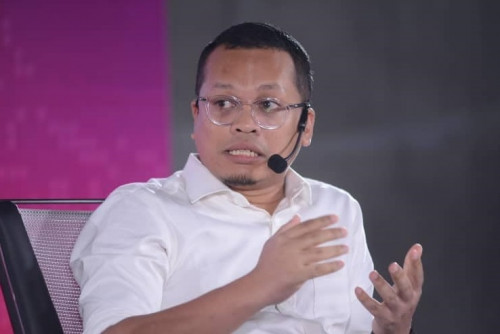
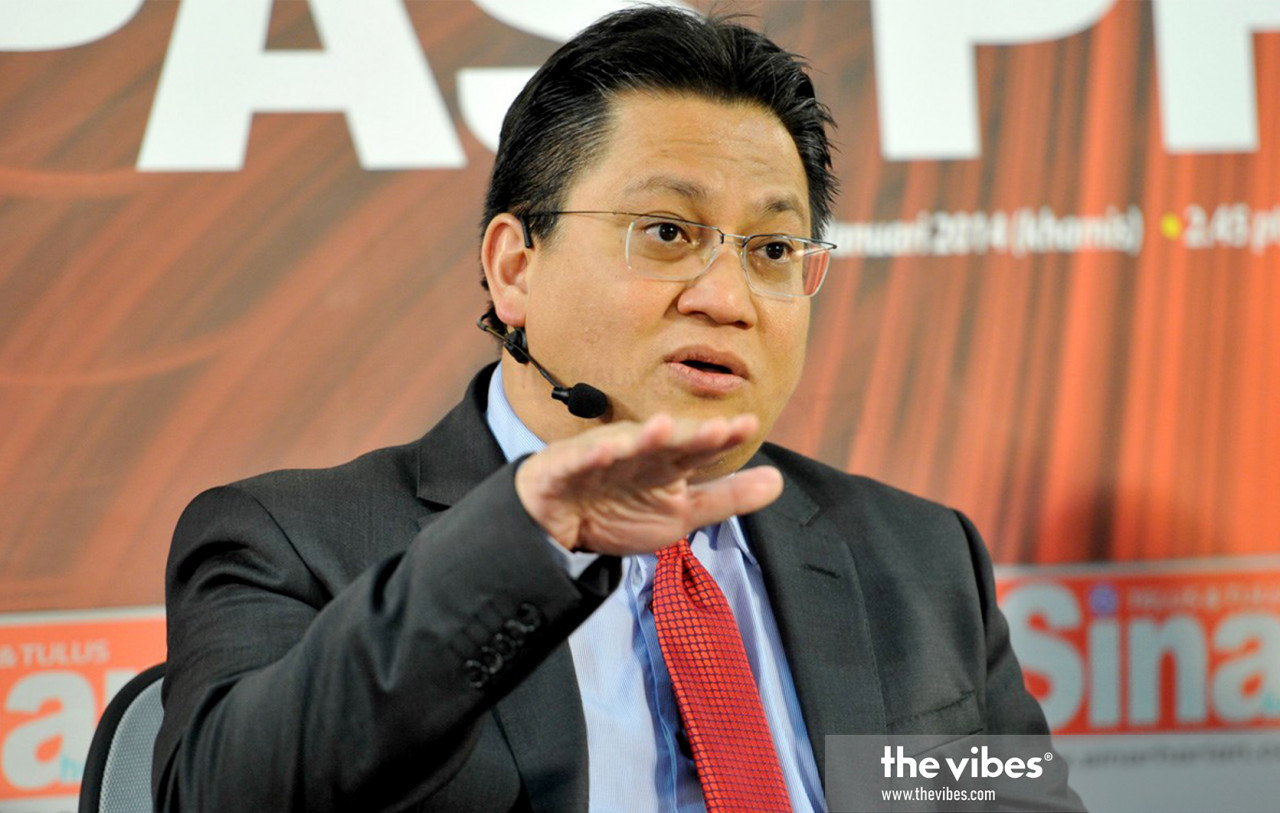
Johor Umno deputy chief Datuk Nur Jazlan Mohamed told The Vibes that a danger of cooperating with Bersatu is that his party could find itself being blamed – as how the ruling Perikatan Nasional has been – for the economic downturn triggered by the Covid-19 pandemic.
“Being with Bersatu is dangerous because people are suffering from economic pain, as well as the divisive politics that (Prime Minister and party president) Tan Sri Muhyiddin Yassin is playing, where he is buying up support and splitting up political parties.”
He took a pragmatic note on a potential alliance with PH, and did not discount the possibility of having a working relationship with the opposition pact after the elections are over.
The Pulai division chief said Umno’s strategy is to contest the 15th general election alone and work out a cooperation with the parties that show the strongest numbers after the votes have been tallied.
“The next government will be decided in the next general election.
“If (opposition leader Datuk Seri) Anwar Ibrahim wants to be part of the government (with us), he needs a substantial number of seats to form a government (with us).
“In my opinion, the only two parties that can garner a majority and sizeable support are Umno, which can pull the Malays, and DAP, pulling the Chinese.
“With the political situation today, I think that will be the eventual outcome of the next elections.
“There is no Bersatu or PAS.”
Asked how the Umno and DAP grassroots can be convinced to partner with each other, given their decades of animosity, Nur Jazlan said similar issues have cropped up with the PAS-Umno alliance under Muafakat Nasional, as well as the DAP-PAS relationship under the now defunct Pakatan Rakyat and Barisan Alternatif.
In today’s politics, he said, a party must wade through the currents and see where it is heading.
On whether Umno will continue to woo PAS or abandon the MN alliance, he said everyone is still keen on the union.
However, this could jeopardise the BN lynchpin in the long run, he added.
“In Umno, we don’t practise ‘polygamous’ politics.
“PAS has been practising political polygamy with Muslims and non-Muslims, but in Umno, we don’t.
“If PAS wants to do this by insisting on being in MN and PN, eventually, it might not work out in Umno’s favour because we could lose a lot more votes than we gain.”
Reigniting Malaysians’ imagination
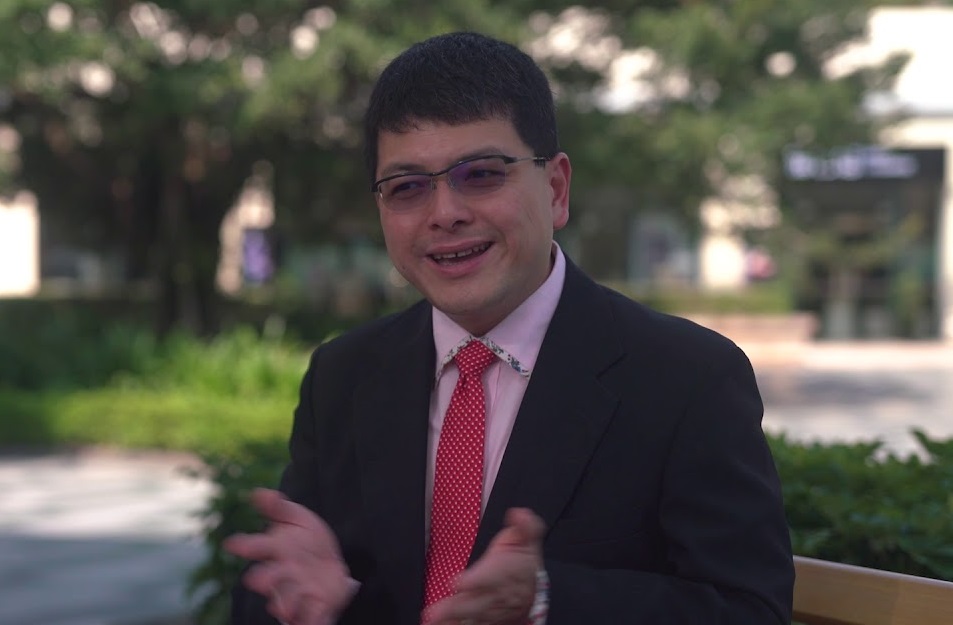
PKR information chief Fahmi Fadzil shares Nur Jazlan’s view on a BN-PH alliance after the election results have been decided, but said both sides must meet in the middle.
“I think that will be a real game changer.
“If the circumstances are right, if the ingredients and configuration are correct and put together carefully, it may ignite Malaysians’ imagination.
“But, we can’t have it both ways. There will need to be a coming together in the centre, in the middle.
“In general, Malaysian politics has to return to the middle ground, and the government must comprise politicians who believe that it is one that can accommodate the greatest number of voters, and Malaysians in general.”
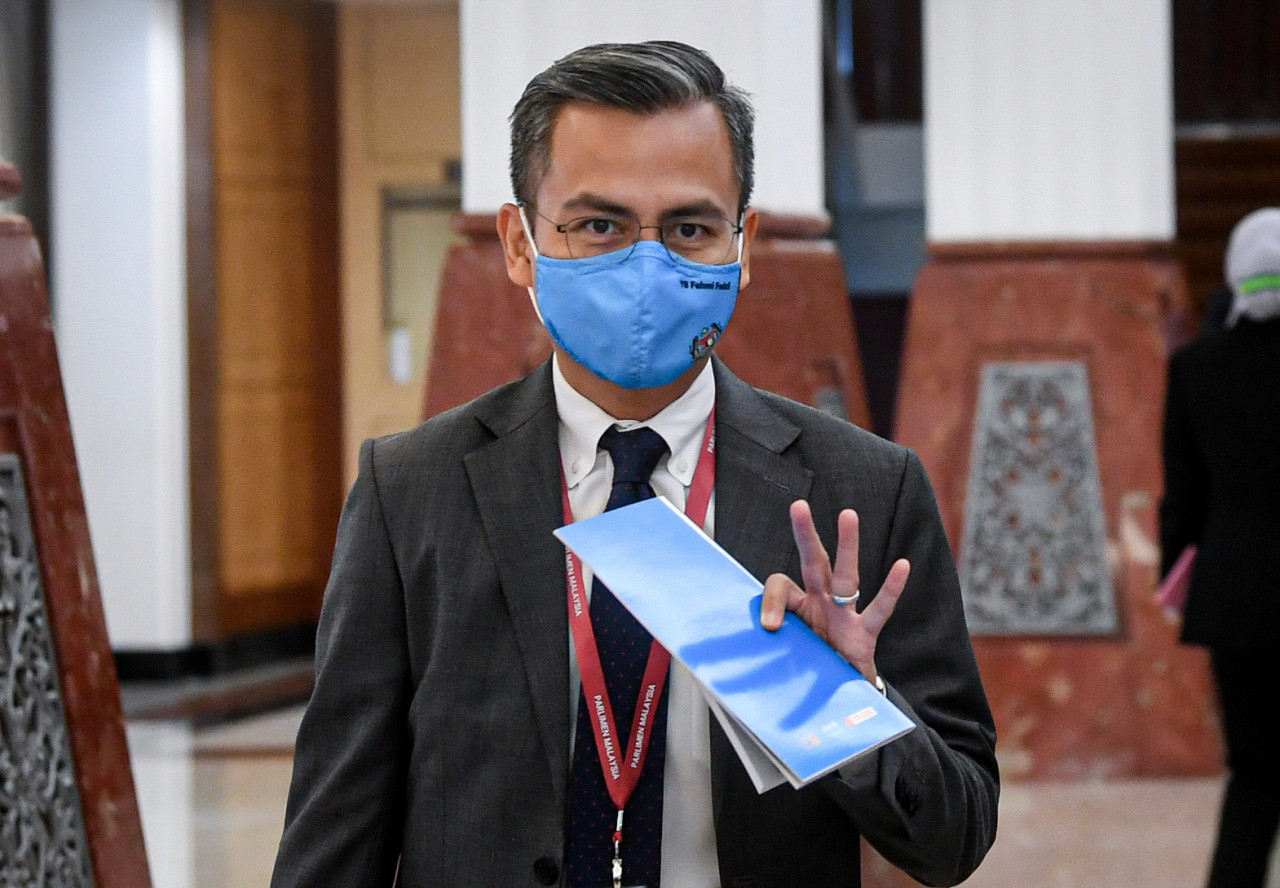
The Lembah Pantai MP agreed with Nur Jazlan’s sentiment that bread-and-butter issues are a major concern among the people, especially those in the low-income group.
Whichever party that is able to articulate a clear agenda and plan to resuscitate the economy, raise household income and help the public have cash in hand immediately will have a distinct advantage, he said.
“By now, people know that the PN government is either ramshackle or in omnishambles.”
Independent political analyst Khoo Kay Peng said the strength of DAP and Umno is mutually exclusive, with a stronger Umno to naturally create a more robust DAP.
“If Umno plays up racial and religious issues, they will be able to rally more Malay-Muslim support for the party.
“The moment they do that, the non-Malays, particularly the Chinese, will rally behind DAP to fight the notion of racial supremacy.
“For the two to coexist, they have to move to the centre.
“We don’t know whether they will be able to move to the centre, as some in the parties may be uncomfortable with the notion.
“It’s never been tested, but it’s not alien.”
In a historical turn of events, Umno and DAP, together with the rest of PH, last December cooperated in Perak to oust Bersatu’s Datuk Seri Ahmad Faizul Azumu as menteri besar, replacing him with Datuk Saarani Mohamad of Umno.

At the national level, however, said Khoo, if both parties are able to convince their respective support bases to cooperate and form a stable government, they could rule side by side.
He said at present, the strongest political players belong to the following parties in descending order: Umno, PAS, DAP and PKR.
He described the other parties, including Bersatu and most of its PN partners, as well as BN’s allies, as irrelevant, due to their low numbers in Parliament.
In a multi-cornered fight, Bersatu will lose out, he said, adding that Gabungan Parti Sarawak and Parti Warisan Sabah are state-based and rely a lot on the federal administration for funds.
At the same time, Umno cannot work with too many Malay parties so as to not weaken itself, with one instance being increased competition for seats.
PAS may be a boon to Umno, though, as both get their strength from the more conservative members of the Malay-Muslim electorate.
Umno leaders comfortable with Anwar
Singapore Institute of International Affairs senior fellow Oh Ei Sun does not believe in the likelihood of BN and PH entering an alliance before the elections.
A wise move for the coalitions is to reach an understanding prior to GE15 and avoid contesting against each other as much as possible, to ensure each is able to maximise its seats.
“After the elections, they can always form a coalition, or a confidence and supply agreement, like what happened in Perak,” said Oh.
“DAP is supposed to have a leadership shake-up anytime now, so that will make it even more conducive for them to work with Umno.”
He added that many mainstream Umno leaders are comfortable working with PKR president Anwar, seeing as to how he had risen through the ranks to become the Umno No. 2 and held the deputy prime minister’s post.
That the Port Dickson MP still holds sway over a large number of MPs makes his cooperation and leadership crucial for such an alliance to succeed. – The Vibes, March 8, 2021