
KUALA LUMPUR – Private funding will be among MRT Corp’s objectives for the upcoming MRT3 project to help ease the government’s financial burden.
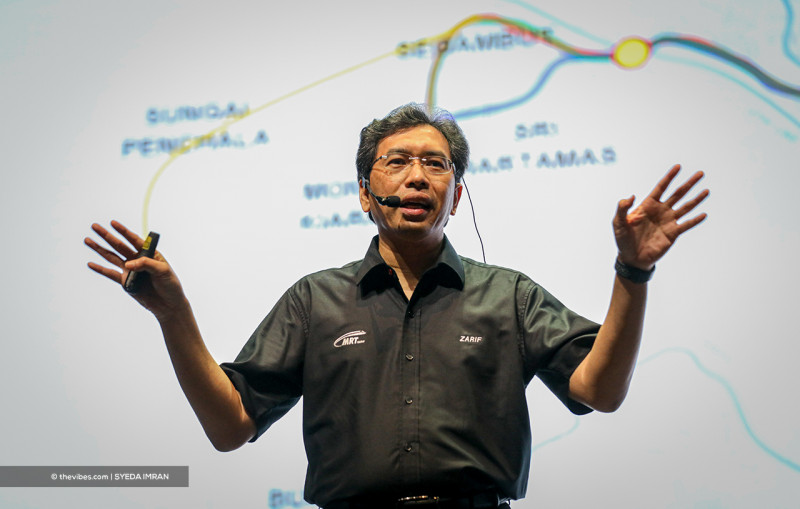
CEO Datuk Mohd Zarif Mohd Hashim said the corporate body is looking towards hybrid-model financing, and aims to procure between 10% and 30% in funding for the project, also known as MRT Circle Line.
“As it stands, the government is fully prepared to fund the project, but they are giving an opportunity for MRT Corp to come up with our own private funding proposal.
“So, looking at a hybrid model, the project remains reliant on government support, but by coming up with the funding proposal, we are alleviating its burden,” he said during a briefing on the project at Menara Ken TTDI here today.
Without revealing the cost of the project in view of the upcoming tender award exercise, he said the numbers quoted in the latest media reports are not far off the mark.
It is learnt that analysts have estimated the cost of MRT3 at between RM20 billion and RM30 billion.
The project will be built in five phases over a period of 10 years instead of the proposed seven years, said Zarif.
“Each completed phase will be connected to existing stations, allowing it to operate independently.
“So, we are trying to do it in an overall 10-year period instead of seven as we need the further development of local technology. As such, we are not going to rush this project.”
Each phase is expected to commence operations between five and seven years from when works begin, he said.
Describing the third phase of the new mass rapid transit line as a project with a “different playbook” from its predecessors, he said the tender award exercise should start by August, subject to government approval.
“We have already issued requests for information to industry players because we want to change the construction methods.
“As such, we are encouraging the participation of local players by engaging their technologies.”
He said the project is expected to utilise construction manufacturing methods like the industrialised building system (IBS) and building information modelling (BIM) that potential contractors must be familiar with.
“Potential contractors should likely possess mastery of these two methods in order to participate in the tender process.”
Zarif said MRT3 will be in favour of employing more locals as opposed to foreigners, given that its construction manufacturing methods focus on a factory environment instead of on-site.
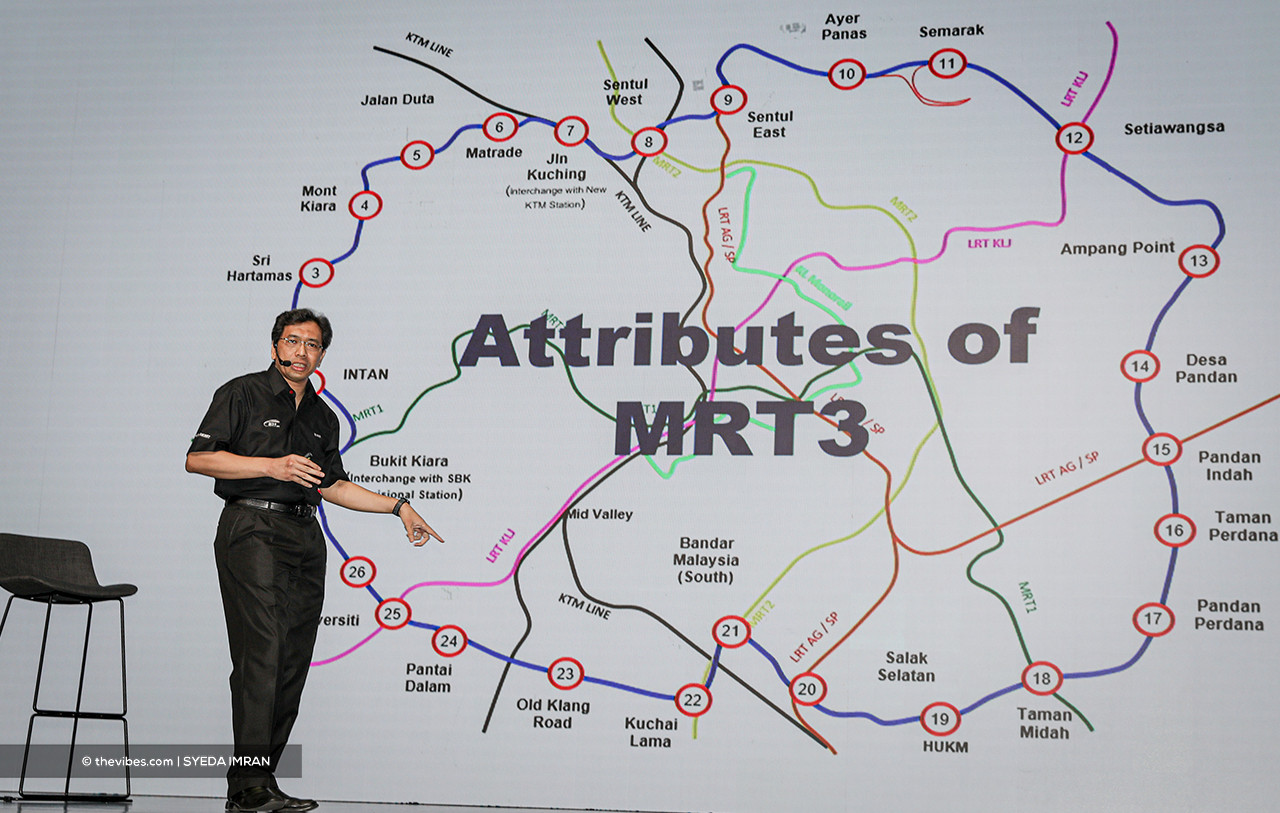
Its route is estimated to stretch about 50km, with 40% to be underground. There will be approximately 30 stations in total, 10 of them interchange stations.
Zarif added that MRT Corp will finalise the alignment by June, at the end of the three-month project review, before it is presented to the cabinet for approval. – The Vibes, April 13, 2021