.jpg)

KUALA LUMPUR – Opinions seem to differ among health and policy experts whether Malaysia could have done better in delivering its National Covid-19 Immunisation Programme (PICK) after claims of vaccine hoarding by industrialised countries.
In a World Bank virtual programme yesterday, Khairy Jamaluddin had slammed developed nations for such practices, reiterating it is one of the main reasons behind the delay in the vaccination drive here.
Former deputy health minister Dr Lee Boon Chye said while he acknowledged the existence of supply hoarding by certain countries, it was not an insurmountable problem and should not be an excuse for the slow vaccine roll-out in Malaysia.
Speaking to The Vibes, Dr Lee highlighted three measures that should be able to address the issue of insufficient vaccines and immediately expedite PICK.
For one, he urged the government to immediately allow third-party emergency use of vaccines not procured by the government but have been approved by the World Health Organisation (WHO), such as US-made Moderna and China’s Sinopharm.
At present, state governments and private entities may procure their own vaccines, subject to approval from the National Pharmaceutical Regulatory Agency (NPRA).
Additionally, the PKR health spokesman said the NPRA and Drug Control Authority should immediately approve the use of Sputnik V, having secured 6.4 million doses earlier this year.
Finally, Dr Lee said the government should use its good diplomatic ties with China to hasten delivery of the CanSino and Sinovac vaccines, as well as supply additional doses.
I agree hoarding does exist. If we look at the advanced countries, they are now even talking about vaccinating to enable travel, whereas third-world countries like us are just talking about vaccines to save lives.
“However, hoarding itself should not deter our (Malaysia’s) ability to get enough vaccines for our people.”
Dr Lee said while he understood the need to ensure vaccines are safe for use, the approval process by the NPRA should not take too long under the current pandemic circumstances, particularly for those that have been given WHO’s nod.
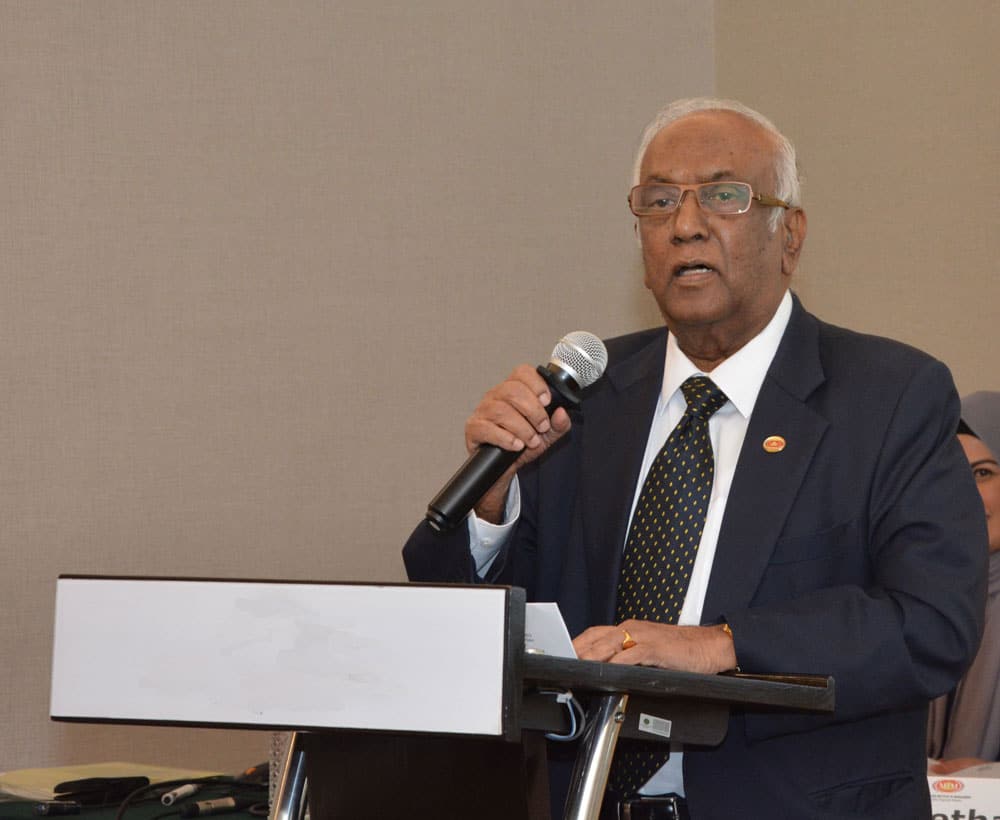
Asli’s Centre for Public Policy Studies chairman Tan Sri Ramon Navaratnam said while he sympathises with the government over its inability to receive more vaccines due to the hoarding by others, Khairy should back his claims with better explanations.
This includes elaborating if hoarding is indeed the cause for the slow vaccination rate here in past months and if there could have been other measures taken to expedite the process.
It has been widely reported by media agencies globally that advanced economies have been hoarding the majority of vaccines, with the People’s Vaccine Alliance saying last December that rich nations, which make up 14% of the world's population, had bought up 53% of the vaccines.
Ramon said even if hoarding does exist, this does not excuse the government from pushing for a faster vaccination rate via other means.
He added that state governments and private entities having a hard time procuring their own vaccines proves the existence of unwanted bureaucracy.
“I have to question if there is corruption and monopoly of the vaccine industry, especially considering the private sector is not given a bigger role to play in the procurement and delivery process. It certainly raises the issue of governance,” he said.
Lack of supply diversity
Galen Centre for Health and Social Policy chief executive officer Azrul Mohd Khalib said diversifying PICK to include the private sector is not easy, as is evident by the lack of countries taking a similar approach.
He said by doing so, the government will inevitably be competing directly with the private sector, with no real diversity of pharmaceutical manufacturers for the vaccines, and especially with limited vaccine supply due to hoarding.
“They would be tapping into the same supply. Procurement, delivery, and putting jabs into arms are three separate issues, each with their own challenges and complications.”
On the government’s refusal to procure, and its delay in allowing private companies to use other WHO-approved vaccines, Azrul said the vaccines are still subject to NPRA approval.

Commenting on Moderna in particular, Azrul said approval has been slower as it is not part of the basket of vaccines used in PICK.
However, he said the brand, once approved for use, would be an ideal choice for a private option as the order and delivery would not be competing directly with the national programme.
When asked if vaccines like Moderna should bypass NPRA checks since they have been approved by WHO, Azrul said doing so would set a bad precedent for the future.
Regardless, he added that even if approval is given soon, this does not translate to immediate immunisation benefits, as the vaccines still need to be ordered, distributed, and deployed.
Private health practitioner Dr N. Ganabaskaran said the vaccination rate in the country could be expedited if the issue of vaccine hoarding can be immediately addressed, especially through the private sector’s involvement.
The former Malaysian Medical Association president noted how private hospitals and clinics have been able to administer one million doses of the vaccine in just a two-week period following the availability of more vaccines in Malaysia in recent weeks.
Association of Private Hospitals Malaysia president Dr Kuljit Singh said on Tuesday that one million jabs have been given since June 7 to assist PICK.
“One of the reasons the vaccination rate has been slow previously is because we didn’t have enough shots on hand. Now supplies are coming in steadily, we can get all the help we need to hasten the process.” – The Vibes, June 24, 2021

















.jpeg)