
KUALA LUMPUR – An amendment to the Employment Act 1955 (Act 265), which is currently being deliberated by the Human Resources Ministry, could see gig economy workers be given greater recognition under the country’s laws.
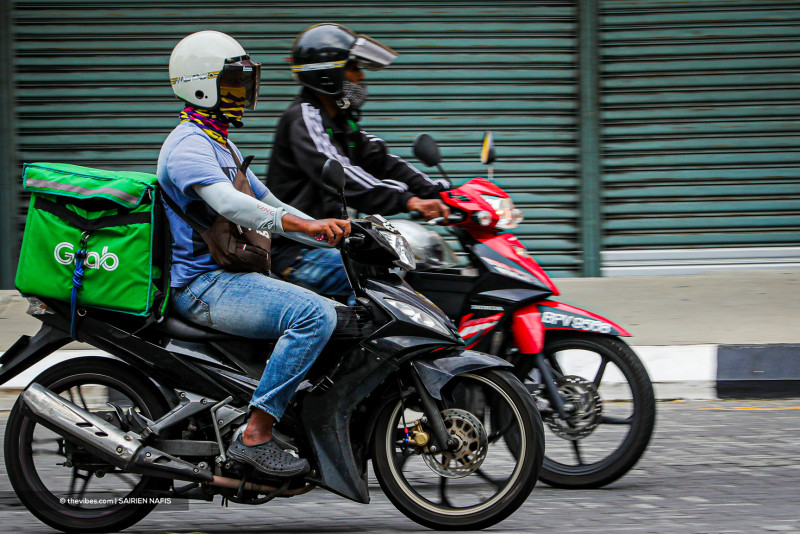
Deputy Human Resources Minister Datuk Awang Hashim (Pendang-PAS) acknowledged that presently, p-hailing workers (those involved in the delivery of parcels and food using motorcycles) are not covered by labour laws such as Act 265.
He said the act today is only applicable to employees defined under the first schedule of the legislation – meaning, those who enter into a contract of service and agree to serve the employer.
“We are in the process of amending the act. Among our proposed amendments is to include a new Section 101C to provide a clearer definition on employer and employee.
“This proposal is among the government’s efforts to clarify employment relations in the future, such as those in the gig economy,” he said in the Dewan Rakyat today.
“This is necessary considering the lacuna, especially in determining contract categories, whether it is a contract of service or contract for service (which include the gig economy).”
Awang, however, stopped short of providing more details on the proposed amendments, such as who will be included under the new section.
The deputy minister was responding to Datuk Ahmad Jazlan Yaakub’s (Machang-BN) question on the measures taken by the Human Resources Ministry to address the lack of social safety nets, basic salary, job recognition and protection under Act 265 in regard to gig workers.
According to Awang, the ministry is currently holding a series of talks with the relevant stakeholders such as service providers and industry players.
Discussions, he said, include deliberating on the need to enact a new law specifically on providing protection and caring for the welfare of those involved in the gig economy.
Earlier in his reply, Awang also said that those in the p-hailing industry are still protected under the Self-Employment Social Security Act 2017, which came into force on October 1 this year.
“Workers in this sector are required to register and contribute to the Social Security Organisation to ensure they are socially protected.
“This is especially (important) as they (face a) high risk of accidents during work,” he said. – The Vibes, December 2, 2021