
KOTA KINABALU – Wildlife conservation groups are beginning to question if there are updates on a case involving the seizure of 29.8 million tonnes of pangolin meat in 2019, which has yet to be heard in the Sabah courts.
A factory manager was arrested in the raid, while two processing facilities with thousands of boxes of pangolin meat and other animal parts were sealed and seized by state authorities back in February 2019.
However, checks by The Vibes revealed that no application had been made to any Sabah court by the authorities despite the seizure made three years ago.
According to the Sabah Wildlife Department, the case is taking a bit longer to investigate due to complications involving “owners of the said premises”.
“We will proceed with the charge (in the court) as soon as we complete the investigation,” a spokesman for the department told The Vibes.
Covid-19, lockdowns may have stalled process: conservationist
When contacted, conservationist and trained wildlife warden Alexander Yee pointed out that court proceedings in cases like these may take more than ample time to prepare for.
“With Covid-19 and the lockdowns in the past two years, it is likely that the process will be delayed.
“But I am confident that the courts have set a high priority towards settling crimes like these,” he said.
.jpg)
Pandemic not an excuse, proceedings can be held via video conferencing
However, a source once closely linked to the case told The Vibes that the local wildlife authorities should not take long to bring a charge in the court.
“The lockdowns due to the pandemic should have not been used as an excuse.
“Court proceedings could have been held via video conferencing.
“This was already being done for quite some time,” he said.
Online proceedings had already begun in the third quarter of 2020 throughout the nation due to the pandemic.
Further setbacks could lead to acquittal of culprits: source
Noting the individual’s arrest along with the evidence, the source believes further delays could see the culprits behind the case be acquitted or may have gone into hiding if investigations into the case continue at this stage.
The source also said it is peculiar to note that other poaching related wildlife cases have already been tried in court, except for this one.
“I wonder why there are no charges in court yet since all the evidence and proof were already obtained,” he said.
.jpg)
Facing extinction, pangolins among most trafficked animals worldwide: WWF
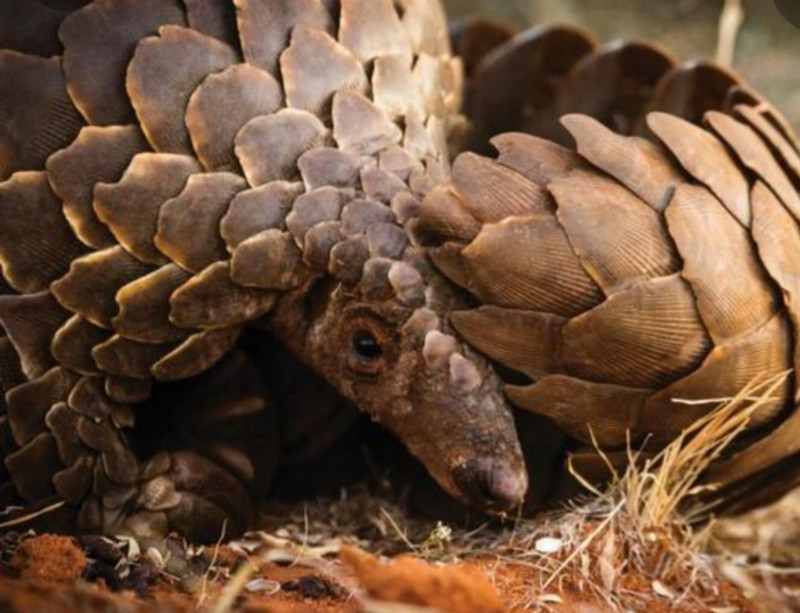
Pangolins are one of the most trafficked animals in the world, according to the World Wildlife Fund, with all its species considered critically endangered.
Two species especially – the Chinese pangolin and the Sunda pangolin – could go extinct within 10 years if the current trafficking trend continues.
An estimated 50,000 pangolins are in existence, according to a report from Pangolins.org.
They are being hunted for their prized scales, which are believed to have traditional medicinal benefits when consumed, and their meat being made a high-end delicacy in countries such as China and Vietnam.
The 2019 seizure in Tuaran, Sabah, takes cue from a large seizure of pangolin scales amounting to 10 tonnes in Vietnam, Hong Kong and Uganda the same year.
Authorities in Sabah arrested a 35-year-old man at a warehouse in Tamparuli, Tuaran and seized 1,860 boxes of pangolin meat.
The raid at the warehouse was made after police and the Sabah Wildlife Department inspected a factory in Kota Kinabalu Industrial Park in Sepanggar, which was used to process the pangolins’ meat and scales.
35 live pangolins, two sacks of pangolin sales, a digital weighing machine, and a car were also seized.
Overall, authorities announced that RM8.4 million worth of live animals and animal parts – comprising 61 live pangolins, 361kg of pangolin scales, 572 frozen pangolins, three containers filled with 1,860 boxes of frozen pangolins, two animal feet believed to be that of a bear, and four frozen bats – were seized during the raid in 2019.
Pangolin poaching ‘serious’ problem in Sabah: researcher
Pangolin researcher and founder of wildlife conservation organisation 1StopBorneo Wildlife Shavez Cheema said pangolin poaching is a serious problem on the island of Borneo, where the Sunda pangolin is indigenous to the Southeast Asian region.
“Is it serious in Sabah? I would say so. Poaching has been happening in Sabah and the Sabah Wildlife Department has confiscated wildlife and poached animals in many cases.
However, I do personally believe that awareness is kicking in, as organisations like the Wildlife Department, 1StopBorneo Wildlife, and Danau Girang Field Centre are trying their best to raise this awareness and rescue over the last few years,” he said.
Shavez said pangolin numbers are going down, and it is becoming more rare to spot them in the wild compared to 30 or 40 years ago, when they roamed freely.
“I have only seen one pangolin in the wild. Only during wildlife rescues, and whenever I talk to the hunters do they set up hundreds of metres of nets along the forest trail, and only then would they find (the animals).” – The Vibes, February 10, 2022
Additional reporting by Rebecca Chong


















_Datuk_Rusdi_Mohd_Isa._Facebook_pic..png)