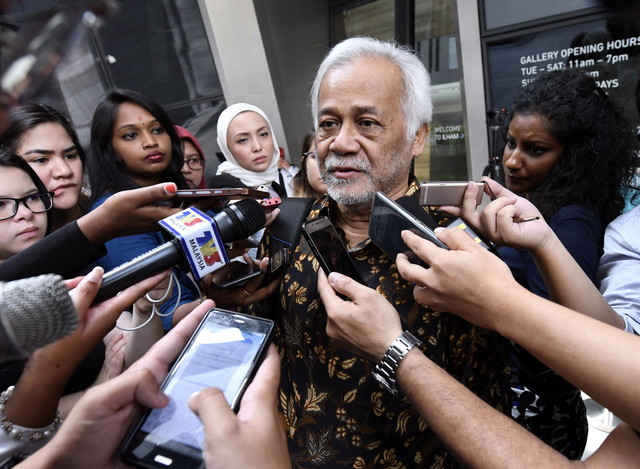

GEORGE TOWN – A Malaysian Institute of Economic Research (MIER) founder has called on the government to abolish the New Economic Policy (NEP) and to replace it with a needs-based policy to overhaul the economy.
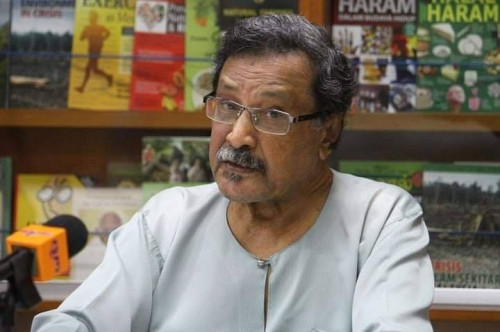
Veteran economist Tan Sri Kamal Salih said the resetting of the economy means doing away with protectionism and changing gears toward high productivity.
He said this was needed in the face of the Covid-19 pandemic, the Russia-Ukraine conflict, hyperinflation, a weakening ringgit, food security and environmental degradation.
Kamal opined that the NEP has “expired” in terms of its benefits, where an over-reliance on the policy would only be detrimental to the country.
“Only 10%, who are the rich, have benefited from the NEP. The rest, such as the M20 and B40, are struggling. The income disparity continues to widen after the pandemic.”
Kamal pointed out that there are an estimated 800,000 unemployed Malaysians, of whom about 30% are graduates who have “nowhere to go”.
He also said about 90% workers in Malaysia have mismatched jobs, with people being in the wrong positions or line of work.
“We need to overcome this. Also too much political interference in the economy. It is counterproductive.”
As the country battles acute labour shortages in key sectors such as manufacturing, plantations and tourism, he said radical measures must be adopted to regain its standing as the economic “Asian Tiger.”
“I am not saying we must totally ignore the NEP. It must be replaced with a policy which is driven towards the current needs of the country.”
Kamal said this during his six-lecture series on the resetting of the economy, which was previously presented at Universiti Malaya, and now at Universiti Sains Malaysia (USM). The series was moderated by economist Prof Datuk Rajah Rasiah.
During the talk, Kamal – a former USM deputy vice-chancellor – spoke on the need for remedies for the various crises currently faced by the country.
He highlighted the pandemic, inflation, the Russia-Ukraine conflict and concerns over food security and climate change.
“In this perfect storm, there is a need for change.”
For starters, Kamal warned about hyperinflation, citing that even though the official inflation rate was projected at 2.5%, the MIER would add another 1% to mark a more “realistic” figure.
Despite assurances that the country’s monetary policies remained guarded against global economic conditions, which are currently rife with inflationary pressure, Kamal said a weak ringgit erodes the ability of the country to import food at reasonable costs.
He noted that Malaysia only has three months of food reserves whereas Singapore has up to six years of reserves.
However, he said there is still hope to re-engineer the economy.
“We are on the right track now, just that we are moving in the wrong direction.”
Kamal said he believes the government will not collapse, although there is a need for stronger leadership.
He said Malaysia having three prime ministers in the span of two years is unattractive to investors, although many of them see the country as a preferred destination in the region.
Meanwhile, Rajah said Malaysia is not facing a predicament similar to Sri Lanka, as the former’s debt is mostly denominated in ringgit, while there is a healthy surplus in the nation’s current account in view of the country being export-orientated.
He also believes that the stinging economic sanctions on Russia have backfired on the West, as the Russian rouble has strengthened lately due to the country’s role as a major exporter of essential goods, including energy, food and services.
The lecture series continues tomorrow at USM. – The Vibes, June 1, 2022



.jpg)






.jpeg)