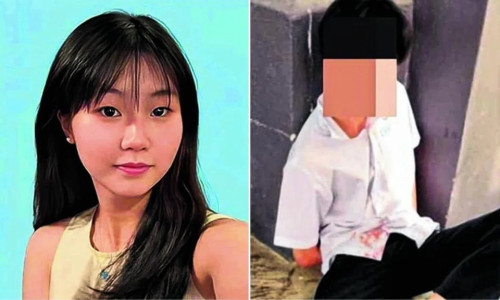
LAST week, 17-year-old Ain Husniza Saiful Nizam took a bold path many in Malaysia fear to tread by putting her teacher on blast for making rape jokes in, ironically, a class about sexual harassment.
Her gumption was roundly lauded, while the (as yet unnamed but still teaching) teacher, education system and society’s mentality towards any and all things sexual were concertedly vilified.
tw// R4P3 JOKES, VERBAL H4R4SSM3NT
— ain #MakeSchoolASaferPlace (@ant33ater) April 23, 2021
this is what i experienced yesterday at school. please help make it safer for us. @maszlee @zunarkartunis @KemPendidikan @adibahnoor #Awareness #Malaysia pic.twitter.com/MSK2rMX6pg
In the days following, obligatory calls for an end to sexual discrimination and abuse, fortification of gender justice and equality, eye-catching retweets and hashtags ensued.
Which is all well and good.
I support DAP’s Batu Kawan MP Kasthuri Patto when she says it is high time “the education system in Malaysia goes through an overhaul to stop the lackadaisical or ‘tidak-apa’ attitude towards such matters”.
I, too, believe “there is something called rape culture in our society, including treating the victim as the perpetrator, sexual objectification of women’s bodies and in this case, trivialising the issue of rape”, as said by Women’s Centre for Change programme director Karen Lai.
Women, Family and Community Development Minister Datuk Seri Rina Mohd Harun, who has herself no doubt endured speculation and comments about her own looks, urged an end to sexual jokes and body-shaming, saying, correctly, that children should be protected from any threat, including sexual harassment and exploitation. (No one will argue with you there Datuk Seri, but maybe a long-awaited bill on sexual harassment would help?)
But, when the commotion and clamour for change dies down, and it will, as per the nature of news cycles, what we will be left with is the grim reality of 9,489 rape cases (not including incest) in Malaysia and 7,571 cases of molestation from 2014 to August 2019, and of our daughters continuing to be wolf-whistled, cat-called, even propositioned on our streets in their school uniforms.
Most telling about the uproar that unfolded was the acknowledgement by so many parties about the need to educate our children, to mould them into beings who respect and honour others, and who employ empathy and compassion where many prefer the easy road of defensiveness, condemnation, judgment and intolerance.
It is an honourable aim, one that should be realised, but one that perhaps also points to the pains and heartache of so many generations past who would do anything to keep new generations from having to submit to the same.
Ask me, and I can cite to you about zero people who feel women are truly free in Malaysian society. Yes, we can drive cars (although passing roadblocks can be a pain), we can own property, we can even fish.
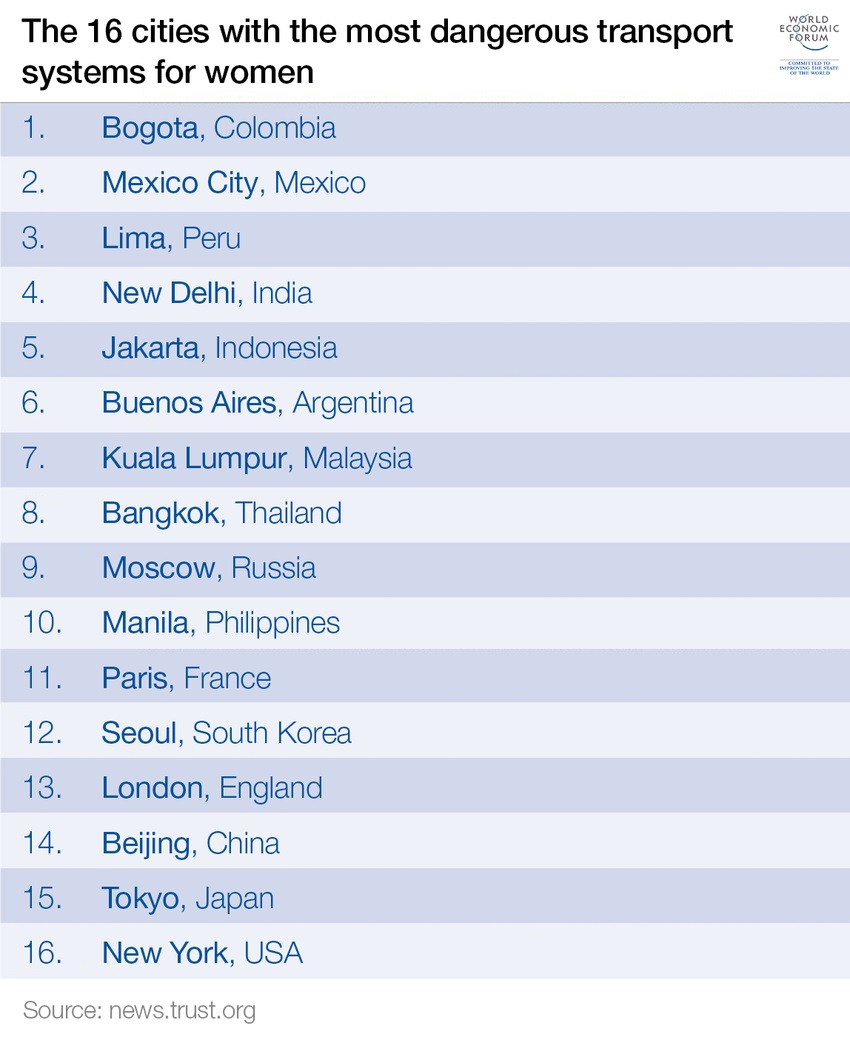
But, we can’t wear a two-piece at a public pool, we can’t ride public transport or compete professionally in sports in peace and, for some inexplicable reason, we cannot escape the indignity of whatever “period spot checks” are.
While the timing, circumstances, and incidents may change, the underlying message is nothing new for many of my fellow female folk: our bodies are not our own.
In a positive perspective, this is biologically true during pregnancy; we are but a vessel for the miracle that is childbirth and are goddesses for it.
In a negative light, we cannot (barring a threat to life) decide to abort a pregnancy, even if it is through rape or incest, or simply planning parenthood in a legally binding marriage.
Our bodies are not our own: we learnt to dress only as our parents allowed, we learnt to speak only when spoken to, we learnt not to “be difficult”, we learnt it is our responsibility to please our husbands to keep them from straying, we learnt to smile and show contentedness at all times.
If not, we are labelled “unsporting” and “moody”. If we speak up, we are “nagging” and “pushy”. If we take charge, we are “bossy” and need to “learn our place”. If we dress “sexily”, we are “sluts”, “easy”, “asking for it” and have “forgotten God”. If we play sports and don’t know how to cook, we are “lazy”, “unladylike” and, you know what, probably sluts, too.
Women are held to myriad standards, and throughout their lives, have learnt where the invisible lines never to cross are. Call it operant conditioning (or learned helplessness, I don’t know), these rules of engagement for women must be deployed on a battlefront littered with shame grenades thrown by men, other women, partners, spouses, bosses, educational institutions, religious bodies, federal agencies, courts, the law – step on one and prepare to be blasted sideways by side-eyes, the gossipmongers, your colleagues, your family, the law.
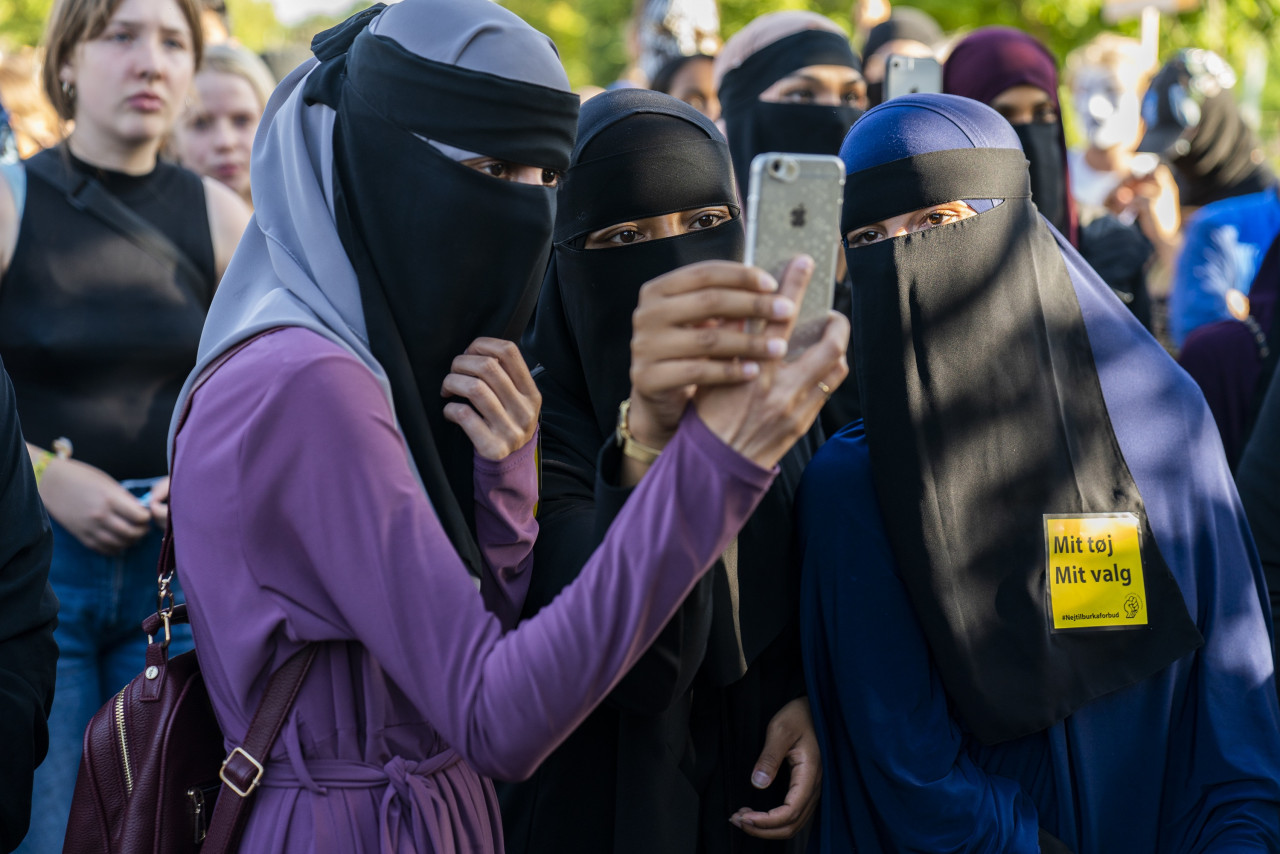
The same can even be said for behaviour typically deemed virtuous. Muslim women who choose to wear the hijab or niqab are marked as victims of religious “oppression” or the patriarchy, they are “disillusioned” or “brainwashed” by female-bashing propaganda, they are “unfashionable” or even accused of taking it up solely for profit.
Even here, we deny women the ability to choose for themselves, to think rationally; they know not what they do and we must save them from themselves. But for Muslim women, the choice to wear the hijab or niqab is a privilege, a blessed opportunity for them to serve their deen, to yield to the strength and beauty of a higher power, and nothing about that is wrong or ugly.
Our bodies are not our own: for as long as my memory serves, a woman’s body has always been fair game. You can comment on its size to her face (“Oh, sihatnyer!”), you can do it behind her back and, nowadays, you can sort of do both by leaving anonymous comments about it on her Instagram.
What more, when men are taught that they are entitled to not only judge but possess a woman’s body, then asking us about our bra size or laying an uninvited hand on us isn’t seen as the violation that it is. And that is a tremendous problem that appears to have a very simple solution: Just. Don’t. Do. It.
But, in a world where the value and social currency of a woman is dependent on her body, it makes sense that this is what those seeking to rob us of our worth target.
If anything, all the roads running from these issues appear to lead to one place: agency.
A woman with it is dangerous indeed.
If you cannot control her, you are weak, you are pathetic, and you will lose.
For some, trampling on their agency is simply an extension of all the practices and procedures of a sexist past that need no upgrade in the 21st century.
For others, it is weaponised, used to maintain the balance of power in a world where the toxic but long-held ideals of machismo and masculinity are under threat.
So, where does that leave us? With families wanting to control our bodies, schools wanting to control our bodies, religious agencies wanting to control our bodies, and police wanting to control our bodies.
Even if we, in our “wokest” dreams, fight these invaders and claim not to be controlled, our minds are still hijacked by the media, by influencers and reality TV stars who have sold us visions of an unachievable, “perfect” woman who wears designer perfume and bags costing the same as a locally made car, wears nothing larger than a size 4 and whose babies learnt to read at 3 months old.
But the times, they are a-changin’, and Ain Husniza, her fellow students rapping their schools about the sexual harassment that are menstruation checks and the women who spoke up about their abuse at the hands of police at roadblocks herald a future slightly brighter than much of our past.
Where once, such incidents were endured without complaint – chalked up to “boys will be boys” as a woman is left to bite her tongue while struggling with trampled feelings of self-worth in the silence of her own bedroom – now, today’s women are coming out into the public sphere to say: “We’re not going to take it.”
And we really shouldn’t.
Yet, even if these acts of courage fail to make permanent inroads into the sexism endemic to our society and its institutions, their voices, their one equal temper of heroic hearts – and, of course, their TikTok videos – will, hopefully, leave those in positions of authority questioning how exactly it is they are exerting their power, and where the line of abuse truly lies.
If not, at the very least, it will simply leave them wondering if a clip of stupid words exiting their stupid mouths will go viral on social media. If us women can’t stop them, maybe Facebook shame will. – The Vibes, May 3, 2021
Fuzeani Fauzi is assistant chief sub-editor at The Vibes. Feedback not in the form of jokes can be sent to [email protected]