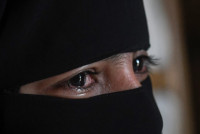
AS a migrant or asylum seeker, it is demoralising to be “stateless” in a foreign land without a home, a job, money, nor identification documents, except a card to show one's nationality or refugee status.
But one needs to eat and feed his or her family; one needs to provide healthcare and education for one’s children.
Undocumented migrants or asylum seekers do not have access to such expectations – they are walking ghosts in a place that they are resettled in.
They are denied their birth right to freedom of movement, to own a home, to gainful employment, to be educated and to have healthcare in case of an emergency, except for the basic jobs that the Malaysian government allows them to have.
The Rohingya from Rakhine, Myanmar, have been facing such problems for the past nine years, worsened when mass graves of their remains were found off Wang Kelian in Perlis, and now, a military coup in their homeland that raises the spectre of more prosecution.
The community has undergone a long history of extreme violence, discrimination and denial of the most basic rights, including the withholding and the withdrawal of citizenship.
The community, in large numbers, have sought refuge in Bangladesh, Malaysia, Thailand and Indonesia. However, a majority of them see Malaysia as a haven as Muslim-majority Malaysia has accommodated Muslim Rohingya in their past exoduses.
The migrants left Myanmar with what they had on their backs.
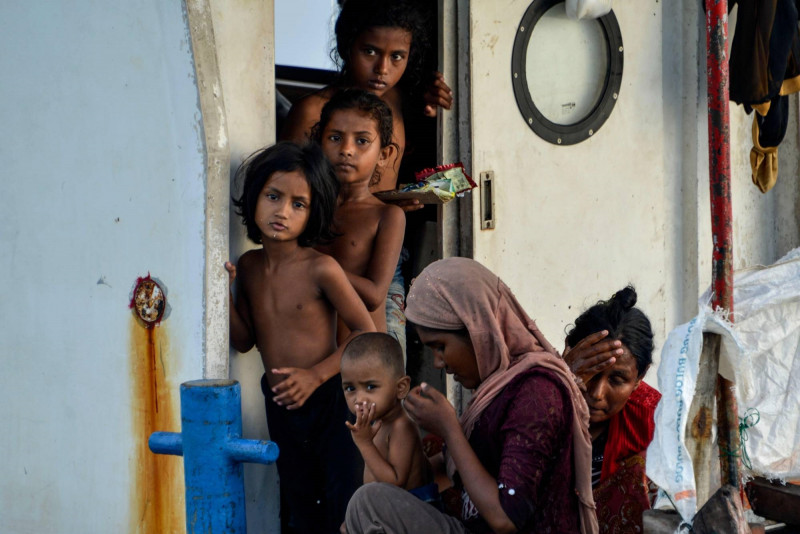
Men, women, children and the elderly walked barefoot through the jungle and mountains for several days to arrive in neighbouring Bangladesh before making their way to Thailand and Malaysia.
In 2012, the outbreak of violence between Muslim Rohingya and other Myanmar people in Rakhine state led to the displacement of more than 140,000 people.
It recurred in 2014 and 2017, forcing those seeking a way out to fall prey to human traffickers.
They paid a huge amount to the traffickers to transport them via the risks of the rough seas off the Bay of Bengal for even three to four months to reach Thailand, Indonesia and Malaysia.
There were reports of women being raped in front of their exhausted, hungry and dehydrated husbands during the boat journey to their promised land.
The Rohingya also do not have any documents as Myanmar has refused to recognise them as citizens ever since its independence from the British empire in 1948.
This means they are open to abuse or being taken away to be placed in detention centres, separated from their families.
The stateless people have had to play hide-and-seek with the authorities to keep from being abused by them, as some corrupt civil servants see them as "ATM machines" to withdraw cash.
Firm new policy needed
As a reporter who has been writing on the plight of the Rohingya community for more than 20 years, I see the importance of the government reviewing its policy and approach towards the Rohingya Muslim community in this country to safeguard their interest as asylum seekers.
There is a need to better liaise with the various authorities to draw new guidelines to cope with the presence of the Rohingya within local communities.
It is not just allowing them to stay here that counts, but to ensure that they are not exploited by greedy local employers and, in some instances, trafficked back out of the country.
Someone must also inform the community that marriages of underage women are also not condoned.
The Rohingya are always vulnerable to physical abuse, and they get threatened by unethical employers who pay low wages.
Now, in the midst of the Covid-19 pandemic, they prefer to lie low following the uproar at the Selayang wholesale market in Selangor, when they were accused of claiming ownership of the area.
The community was accused last year of being ungrateful to the nation, of “biting the hand that feeds them”.
Zafar Ahmad Abdul Ghani, president of the Myanmar Ethnic Rohingya Human Rights Organisation Malaysia (MERHROM) has clarified that, in April last year, some unidentified groups accused him of demanding Malaysian citizenship and equal rights for Rohingya on social media.
He was also accused of insulting the Malays, flouting the movement control order (MCO), questioning the Malaysian government for rejecting Rohingya boat people, as well as demanding dominance in the Selayang area.
Employment and protection
But the truth is that he was just seeking more protection for the community from being exploited.
The community’s people work illegally at construction sites, plantations and perform household chores just to earn a little money to feed themselves and their families.
The Rohingya have been arriving on our shores for the past 30 years. They also travel by land from Rakhine in Myanmar through Thailand and enter Malaysia, their promised land.
Following the issues, for more than a year and the enforcement of the MCO, they have restricted their movements for fear of being abused and to escape from smear campaigns of some quarters.
I see the need for the government to protect the interest of the migrants or asylum seekers. Let them be gainfully employed and protected from abuse. Let them be able to feed their families, be provided education, treatment and admission to hospitals on humanitarian grounds.
The government cannot simply deny its responsibility as it needs to secure the interest of asylum seekers who choose Malaysia in the hopes of saving their lives and escaping from persecution.
As of December last year, a total of 131,387 Myanmar refugees and asylum seekers are registered with the UN High Commission for Refugees in Malaysia, of whom 32,611 are Rohingya. The UNHCR has also noted that there are many other migrants of concern who remain unregistered in this country. – The Vibes, May 16, 2021
Arulldas Sinnappan is a journalist at The Vibes