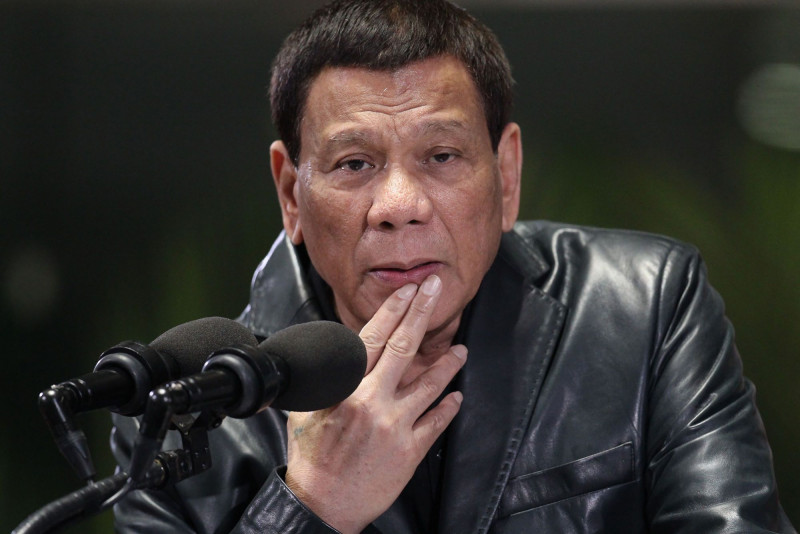
FORMER Philippine President Rodrigo Duterte was arrested on Tuesday in Manila, following an International Criminal Court (ICC) warrant related to his controversial and deadly war on drugs.
The 79-year-old faces charges of crimes against humanity, specifically murder, stemming from a crackdown in which rights groups estimate that tens of thousands of people—mostly from impoverished communities—were killed by police and vigilantes, often without any proof they were connected to illegal drug activities.
According to the presidential palace, the arrest came after the International Criminal Court officially sent the warrant to Manila via Interpol.
A statement from the palace confirmed: “Early in the morning, Interpol Manila received the official copy of the arrest warrant from the ICC. As of now, he is under the custody of authorities.”
It was also noted that Duterte and his group are in good health, with government doctors performing checks.
The arrest took place shortly after Duterte returned to Manila's international airport following a brief trip to Hong Kong.
While in Hong Kong on Sunday, the former president addressed a crowd of overseas Filipino workers, vehemently criticising the ICC investigation.
Duterte dismissed the legal proceedings, calling ICC investigators “sons of whores” and declared that he would “accept it” if his fate was to be arrested.
Duterte's administration withdrew the Philippines from the International Criminal Court in 2019. Despite this, the ICC insisted that it maintained jurisdiction over cases involving killings that took place before the Philippines' withdrawal, as well as those related to Duterte’s time as mayor of Davao, years before he became president.
In September 2021, the ICC launched a formal investigation into the war on drugs, although it temporarily suspended the inquiry in November 2021 after the Philippine government pledged to re-examine the cases of hundreds of deaths tied to police operations and vigilante killings.
The investigation was restarted in July 2023 when a panel of five ICC judges dismissed the Philippines’ objection that the court no longer had jurisdiction over the matter.
This was despite President Ferdinand Marcos Jr.'s administration repeatedly stating it would not cooperate with the ICC investigation.
Undersecretary of the Presidential Communications Office, Claire Castro, remarked on Sunday that the government was obligated to comply with any request from Interpol for assistance, should it arise.
Duterte remains immensely popular in the Philippines, where many view him as a tough leader who implemented decisive measures to combat crime.
His supporters continue to praise his brutal approach to the drug crisis. The former president, now seeking to return to political power, is running for mayor of Davao in the upcoming May mid-term elections.
In the Philipines, charges have been filed in a handful of cases linked to the drug war, but only nine police officers have been convicted for the deaths of alleged drug suspects.
Duterte, a self-proclaimed killer, had long encouraged officers to shoot drug suspects if their lives were in danger, arguing that the crackdown was essential for saving Filipino families and preventing the country from descending into a "narco-politics state."
During a Philippine Senate investigation into the drug war in October, Duterte offered no apologies for his actions, saying, “I did what I had to do, and whether or not you believe it or not, I did it for my country. No apologies, no excuses.” – March 11, 2025