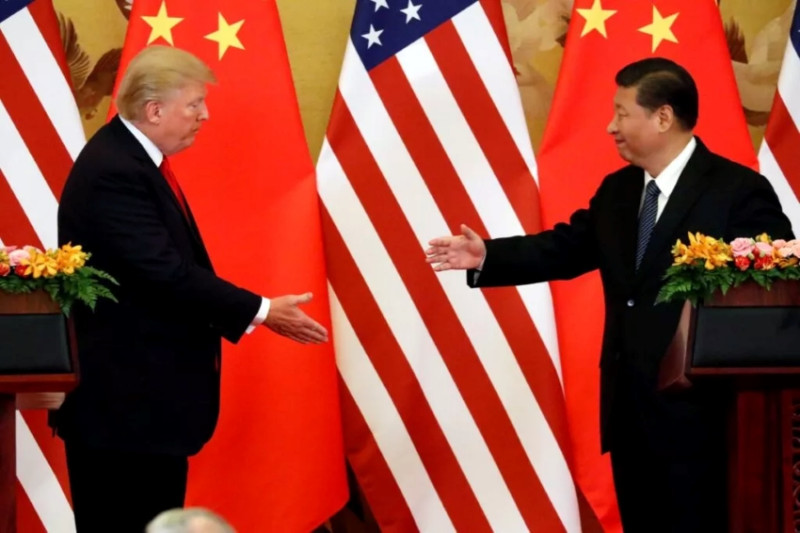
Officials seek to use negotiations with more than 70 nations to ask them to disallow China to ship goods through their countries
UNITED STATES President Donald Trump administration plans to use ongoing tariff negotiations to pressure U.S. trading partners to limit their dealings with China, The Wall Street Journal reported on Tuesday citing people with knowledge of the conversations.
Reuters reported today that U.S. officials plan to use negotiations with more than 70 nations to ask them to disallow China to ship goods through their countries and prevent Chinese firms from being located in their territories to avoid U.S. tariffs, the report added.
Trump says "Ball Is in China’s Court"
Separately, Bernama-dpa reported today that Trump has reiterated his unwavering stance in the ongoing trade standoff with China, asserting that it is up to Beijing to take the next step if it wishes to see an end to punitive tariffs.
“China needs to make a deal with us. We don't have to make a deal with them,” said White House Press Secretary Karoline Leavitt on Tuesday, following her conversation with the President. Her remarks were reported by the German news agency dpa.
Leavitt emphasised that the US holds a superior bargaining position in the dispute, claiming that China, like many other countries, is ultimately reliant on the American consumer market.
“There’s no difference between China and any other country, except they are much larger, and China wants what we have, what every country wants, what we have—the American consumer—or to put another way, they need our money,” she stated during a press briefing at the White House.
President Trump had previously indicated he was open to resuming talks with Chinese officials but was awaiting a direct overture from Beijing before moving forward. “The ball is in China’s court,” Leavitt said, echoing Trump’s position that it is now Beijing’s responsibility to return to the negotiating table.
In recent weeks, tensions between the world’s two largest economies have sharply intensified. Washington has introduced a new round of special tariffs on Chinese imports, with duties reportedly reaching as high as 145 per cent on selected goods.
In a tit-for-tat response, China has escalated its own tariffs on American products, raising them to as much as 125 per cent.
The deepening tariff war has triggered concern among economists and trade analysts, who warn of further disruption to global supply chains and growing uncertainty for businesses operating in both markets.
Despite this, Trump appears to remain confident that the economic pressure will ultimately force Beijing’s hand.
The White House has not disclosed any details regarding the potential timeline for future negotiations, nor has it specified which sectors could be affected by further tariff adjustments. - April 16, 2025