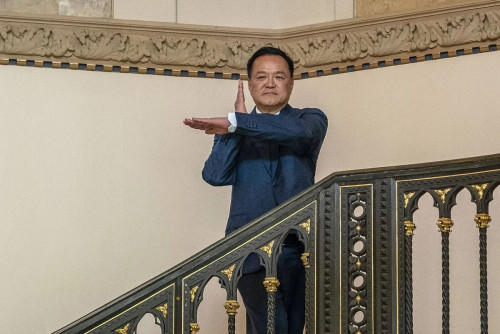
THAILAND’S Prime Minister Paetongtarn Shinawatra is facing growing public and political pressure to step down following the leak of a controversial phone call with former Cambodian leader Hun Sen, which has sparked outrage and cost her government a key coalition partner.
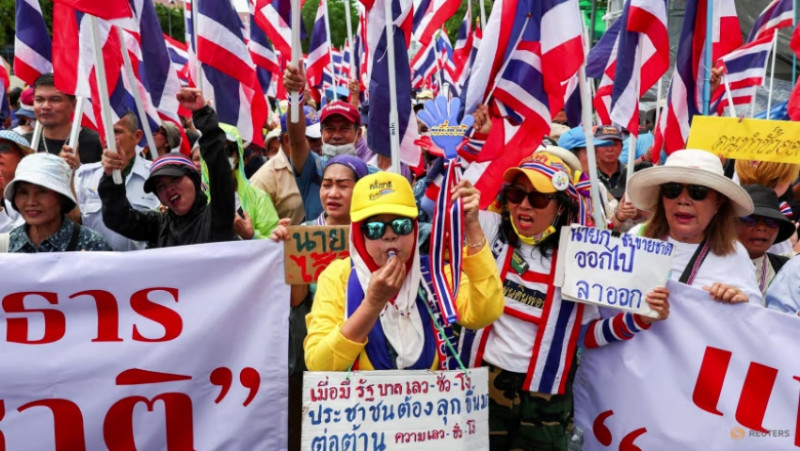
Hundreds of anti-government protesters gathered outside Government House on Thursday (19 June), many dressed in yellow – the symbolic colour of Thailand’s monarchy – demanding Paetongtarn’s resignation. They accused her of lacking diplomatic tact and endangering national interests.
“I was very disappointed when I heard the (leaked) audio,” said Kanya Hanotee, a 68-year-old temple worker. “She lacks negotiation skills. Who does she think she is? This country is not hers.”
The scandal erupted after audio surfaced in which Paetongtarn allegedly referred to the commander of Thailand’s northeastern army region as an “opponent” and addressed Hun Sen informally as “uncle”. The backlash has been swift, with the Bhumjaithai Party, a key coalition ally, withdrawing from the government on Wednesday, accusing the premier of “insulting the dignity of the military” and “undermining the country”.
AFP cited protesters, waving national flags and placards labelling her a “traitor”, chanted slogans including “Get out!” and “Go to hell!” Riot police stood guard, as demonstrators vented anger fuelled by decades of political division.
Many in the crowd identified with the Yellow Shirt movement, a conservative, royalist-aligned faction that has opposed the Shinawatra political dynasty since the early 2000s. “I didn’t support any political party. All I knew was that I hated Thaksin and his family,” said Kaewta, 62, recalling her involvement in protests near Bangkok’s Democracy Monument 20 years ago.
Thailand’s modern political history has been defined by a prolonged struggle between the conservative establishment and the Shinawatras, whose support base lies largely with rural and working-class voters, known as the Red Shirts. Paetongtarn, daughter of former prime minister Thaksin Shinawatra, is the third family member to hold high office.
“This power has been passed from her father to her aunt, and now to her,” said Mek Sumet, 59, an electrical goods seller who took part in the 2008 occupation of Don Mueang Airport. “She doesn’t think of the country, only of herself.”
With Thailand having seen a dozen coups since the end of its absolute monarchy in 1932, talk of another military intervention is once again making the rounds. Some protesters are openly welcoming the idea.
“I want the military to take control,” said Kanya. “We are thinking long-term. It will be positive for the country.” - June 19, 2025