A FRAGILE ceasefire between Iran and Israel has opened the door to renewed diplomatic efforts, according to Iran’s Permanent Representative to the United Nations, Amir Saeid Iravani, who declared at the UN Security Council on Tuesday that Western attempts to pressure Tehran into submission had “clearly failed”.
Speaking during a session on arms control, Iravani said, “We are now closer to diplomacy than ever before,” following twelve days of intense conflict between the two regional adversaries.
Bernama-Anadolu citing him saying that the recent surge in hostilities demonstrated the ineffectiveness of coercive strategies aimed at halting Iran’s peaceful nuclear programme.
“A full-scale and protracted war, which they believed would force Iran into ‘unconditional’ surrender through threats, coercion and aggression, has clearly failed. This proves a simple truth: diplomacy and dialogue are the only way to resolve the unnecessary crisis surrounding Iran’s peaceful nuclear programme,” Iravani told the Council.
The envoy also objected to Israel’s participation in the meeting, asserting that the “regime has no legal standing in this session”.
“From a legal standpoint and based on past practices, Israel has no right to participate in this meeting. This regime has no relevance to the agenda. There is no connection with Resolution 2231 or the JCPOA,” he said, referring to the 2015 UN Security Council Resolution which endorsed the Joint Comprehensive Plan of Action (JCPOA) on Iran’s nuclear activities.
He further accused Israel of “criminal aggression” supported fully by the United States.
“Israel has targeted Iran’s peaceful nuclear facilities, civilians, and infrastructure. These attacks have claimed hundreds of innocent lives, including women, children, nuclear scientists, academics, students, humanitarian workers and military personnel,” he said.
Reaffirming Iran’s commitment to nuclear non-proliferation, Iravani stated that Tehran continues to adhere to the Nuclear Non-Proliferation Treaty (NPT) and allows extensive monitoring by the International Atomic Energy Agency (IAEA).
“Iran remains committed to diplomacy and the peaceful resolution of disputes,” he added.
Separately, Iranian President Masoud Pezeshkian has indicated Iran’s readiness to resolve differences with the United States within a fair, internationally recognised framework, according to Anadolu Ajansi.
Iranian state media reported that Pezeshkian shared this stance in phone calls on Tuesday with Saudi Crown Prince Mohammed bin Salman, UAE President Sheikh Mohammed bin Zayed Al Nahyan, and Pakistani Prime Minister Shehbaz Sharif.
“We hope that negotiations between Iran and the US will begin soon and lead to a positive outcome,” Pezeshkian reportedly told the Saudi crown prince.
He emphasised Iran’s desire for fair and lawful agreements that protect the Iranian people’s “inalienable rights” and promote regional peace and stability.
“We have no demands beyond our rightful entitlements and welcome any support from friendly and brotherly nations in resolving these matters,” Pezeshkian said.
Prince Mohammed reassured Tehran that Saudi Arabia had not allowed its airspace to be used for attacks on Iran.
“Neither we nor any other country in our region have opened our airspace for any action against Iran, and we will not do so. There will also be no operations against Iran from US bases in our countries. We also understand your obligations to respond to the US attack,” he reportedly said.
In his call with UAE President Sheikh Mohammed bin Zayed, Pezeshkian stressed the importance of regional cooperation free from foreign interference.
“We can build the region together without foreign interference, in an environment of cooperation, stability, and peace,” he said.
The UAE leader reaffirmed his country’s consistent support for peace and security in the region, underlining the need for agreements that serve all regional stakeholders.
Speaking to Prime Minister Sharif, Pezeshkian stated that “the enemies’ conspiracies cannot harm the friendship between Iran and Pakistan”.
Tensions escalated dramatically after Israel launched airstrikes on Iranian targets on 13 June, including military and nuclear facilities, claiming Tehran was nearing the production of a nuclear weapon—an allegation Iran has strongly denied.
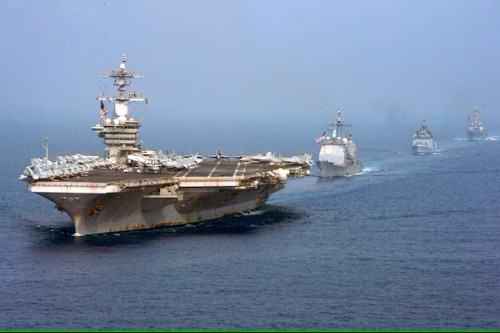
In response, Iran carried out missile and drone attacks. The United States entered the fray by bombing three Iranian nuclear facilities on Sunday.
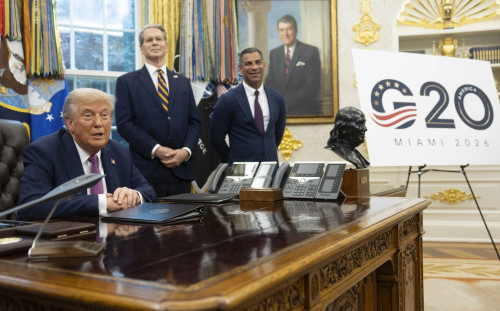
Following twelve days of hostilities, US President Donald Trump announced a ceasefire on Monday evening, urging all sides to honour the truce. - June 25, 2025