WASHINGTON – Republicans yesterday blocked an effort to amend a hard-won pandemic relief package to more than triple direct payments to struggling Americans, something demanded by President Donald Trump.
After months of partisan bickering, legislators on Monday finally approved a US$900 billion (RM3.65 trillion) stimulus to help families and businesses struggling to survive the hit to the economy from the coronavirus, before millions lose their benefits.
The legislation includes one-time payments of US$600 to most taxpayers, but Trump dropped a bombshell on the celebrations this week, hinting he might veto the bill unless the amount was increased to US$2,000.
Democrats, who have been pushing for months to increase pandemic support, cheered his statement, and House Speaker Nancy Pelosi challenged Republicans to support an amendment to boost the dollar amount.
The Democratic-controlled House of Representatives held a Christmas Eve “pro forma” session, normally a brief affair with little business, in an effort to win bipartisan approval to send the revised payments to Trump’s desk for signature.
But, Republicans refused to agree to the change.
“So, we do not have unanimous consent,” said Michigan Democrat Debbie Dingell, who was acting as speaker pro tempore.
Pelosi immediately lambasted Republicans and vowed to call the House back on Monday to approve the amendment in a regular session.
“Today, on Christmas Eve morning, House Republicans cruelly deprived the American people of the US$2,000 that the president agreed to support. If the president is serious about the US$2,000 direct payments, he must call on House Republicans to end their obstruction,” she said in a statement.
Later yesterday, Pelosi said the bill has been sent to the White House, and called on Trump to sign.
“The House & Senate are now sending this important legislation #ForThePeople to the White House for the President’s signature. We urge him to sign this bill into law to give immediate relief to hard-working families!” she tweeted.
High-stakes battle
The stakes are high, especially if Trump vetoes the bill.
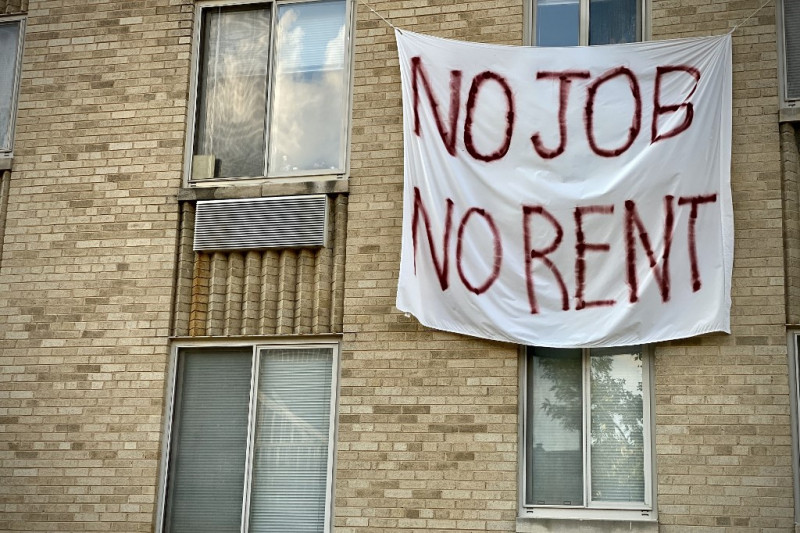
About 14 million jobless workers will lose their pandemic unemployment benefits right after Christmas, and millions more face losing their homes when an eviction moratorium expires at the end of the year.
And, the stimulus measure is wrapped up with a US$1.4 trillion funding bill, meaning the government will be forced to shut down at midnight on Monday if Trump does not sign it.
The chaos comes in the final weeks of Trump’s presidency, as he continues to insist without evidence that the election of president-elect Joe Biden is fraudulent, attacking Republicans who refuse to back his false claims.
It is highly unusual for a president to veto legislation that enjoys overwhelming bipartisan support, but Trump has never shied away from flaunting tradition.
Late on Wednesday, he also vetoed the bill that funds defence operations, even as lawmakers vowed to return on Monday to override his action and approve the measure.
They could do the same with the pandemic stimulus bill, but Trump could simply sit on it, meaning it cannot take effect.
That would kick it to the new Congress that takes office January 3 to vote on the package again, but not before the economy suffers even more damage.
Recent data has shown worrying signs that the world’s largest economy is faltering after the sharp rebound in the third quarter fuelled by the US$2.2 trillion Cares Act that Congress approved in late March, just as pandemic restrictions were taking hold.
Job losses have continued, and new claims for unemployment insurance have increased in four of the past six weeks, while consumer spending has slowed as confidence wanes amid the spike in Covid-19 infections.
“We hope spending will stabilise in January and then begin to creep higher in February, but the current picture is quite bleak,” said Ian Shepherdson of Pantheon Macroeconomics.
“We expect to see claims shooting over the one million mark by the first full week of January,” he said, warning that “a sustained downward trend is unlikely before early spring”.
The stock market has shrugged off the political chaos, closing higher for the past two days, focusing on hopes that the coronavirus vaccine rollout will bring an economic recovery. – AFP, December 25, 2020





.jpeg)