A FRAGILE ceasefire between the United States and Iran has halted nearly six weeks of war but analysts say the outcome has reinforced Tehran’s strategic position rather than weakened it, leaving the Strait of Hormuz effectively under Iranian control.
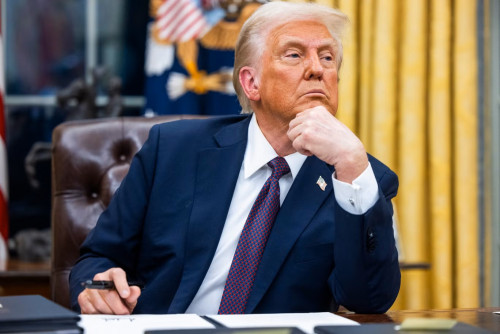
Reuters cited on Thursday that US President Donald Trump has declared victory following the agreement, yet the truce underscores a stark new reality: Iran remains governed by an entrenched leadership with significant influence over one of the world’s most critical energy chokepoints.
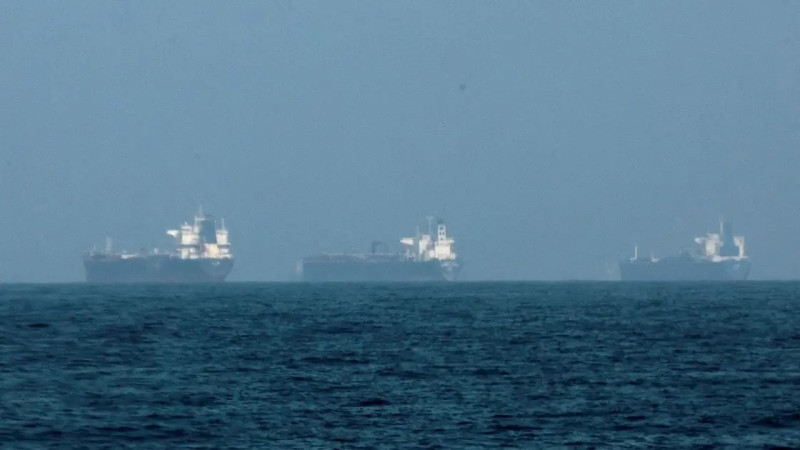
The conflict has sent shockwaves through global markets and destabilised Gulf economies reliant on uninterrupted energy flows, with the Strait — through which roughly a fifth of global oil and gas supplies pass — now functioning as a key lever of Iranian power.
“This war will be remembered as Trump's grave strategic miscalculation. One whose consequences reshaped the region in unintended ways,” said Fawaz Gerges.
Before the conflict, the Strait of Hormuz was widely treated as an international waterway, with Iran monitoring and occasionally disrupting shipping without asserting full control.
That balance has shifted markedly. Tehran is now seen as the de facto gatekeeper, able to dictate access and potentially impose charges on vessels seeking safe passage.
Despite sustained US and Israeli strikes, Iran has demonstrated resilience, maintaining internal political control while preserving key elements of its military and regional influence. Its network extends through allies and proxies across Lebanon, Iraq and the Red Sea, reinforcing its reach beyond its borders.
“What did the U.S.–Israeli war actually achieve?” Gerges asked. “Regime change in Tehran? No. The surrender of the Islamic Republic? No. Containment of Iran’s stockpile of highly enriched uranium? No. An end to Tehran’s support for its regional allies? No.”
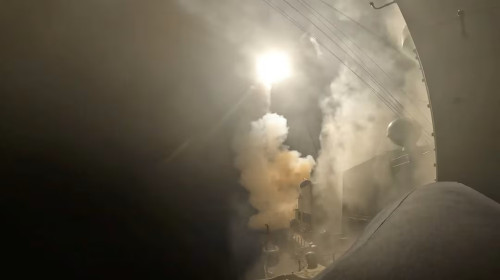
Echoing the administration’s position, US Defence Secretary Pete Hegseth said Washington had secured a decisive military outcome, asserting that Iran’s missile programme had been effectively dismantled, although Tehran retained the ability to launch strikes up to the ceasefire.
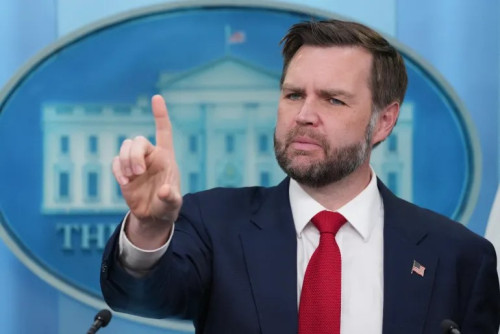
The White House has prioritised reopening the Strait without restrictions, with Press Secretary Karoline Leavitt indicating that future arrangements could even include shared toll revenues between Washington and Tehran.
Negotiations are expected to continue, with delegations from both sides set to meet in Islamabad to explore a longer-term settlement. However, significant gaps remain. Iran is reportedly seeking sanctions relief, recognition of its nuclear programme and continued authority over the Strait — demands that underscore the distance between the parties.
Regional analysts caution that the ceasefire’s durability will depend on addressing deeper structural issues, including missile capabilities, proxy networks and maritime security.
“This ceasefire is not a solution; it is a test of intentions,” said Ebtesam Al-Ketbi. “If it does not evolve into a broader agreement redefining the rules of engagement - in Hormuz and across proxy theatres - it will amount to little more than a tactical pause before a more dangerous and complex escalation.”
She warned that any agreement failing to tackle core disputes would leave the conflict effectively unresolved.
“If Trump reaches a deal with Iran without addressing core issues - ballistic missiles, drones, proxies, nuclear concerns, and the rules governing Hormuz - then the conflict is effectively left unresolved and the region exposed,” she said.
From the Gulf perspective, the stakes are particularly acute. Control of Hormuz is viewed as a red line by regional exporters whose economies depend on stable shipping routes.
Saudi analyst Ali Shihabi cautioned that any arrangement leaving the Strait effectively in Iranian hands would amount to a strategic setback for Washington, with potential political and economic repercussions extending beyond the region.
Meanwhile, Iran’s proposal to charge transit fees for vessels passing through the waterway could have far-reaching consequences for global trade and energy markets.
“If Iran can extract millions per ship, the implications are enormous - not just for the Gulf, but for the global economy,” Ketbi said. “In that sense, the outcome is not just a regional setback, but a systemic shift with worldwide consequences.”
The ceasefire, brokered by Pakistan, followed a conflict launched on February 28 by Trump and Israeli Prime Minister Benjamin Netanyahu, who had sought to curb Iran’s regional power and dismantle its nuclear ambitions.
Both sides have claimed success. Trump described the outcome as a “total and complete victory,” while Iran’s leadership asserted that Washington had accepted its terms.
Yet analysts note that Iran retains key elements of its strategic capability, including enriched uranium stockpiles and missile systems, while its leadership has emerged intact despite the pressure of war.
For Gulf states, rebuilding trust will require firm, verifiable commitments on non-interference, freedom of navigation and the security of critical maritime routes, particularly the Strait of Hormuz.
Without such guarantees, observers warn that the ceasefire risks entrenching a new regional order — one in which a vital global waterway is no longer governed by shared norms, but effectively controlled by a single, emboldened power. - April 9, 2026