World

Russia to mass produce second Covid-19 vaccine next month

2 bil rubles allocated to EpiVacCorona production

Updated 5 years ago · Published on 26 Jan 2021 10:30PM

Russia to mass produce second Covid-19 vaccine next month
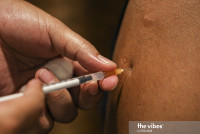
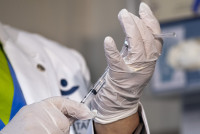
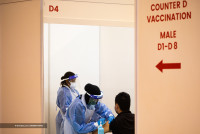
Sputnik V, registered in August months ahead of Western competitors and currently being rolled out to Russians, will be followed soon by EpiVacCorona, the production of which starts next month. – Twitter pic, January 26, 2021

MOSCOW – Russian authorities today said mass production of its second coronavirus vaccine would begin next month and that a third homemade jab is currently in registration.  

Russia launched an inoculation campaign earlier this month, making its first homegrown vaccine, Sputnik V, available to all citizens 18 and older. 

Sputnik V was registered in August – months ahead of Western competitors – and a second Covid-19 vaccine, EpiVacCorona, swiftly followed in October. 

“Next month we will move on to a large-scale release of the EpiVacCorona vaccine,” Prime Minister Mikhail Mishustin told a cabinet meeting today.

“It has already started to become available to the public,” he added, noting the government has allocated two billion rubles (RM107 million) to produce the jab.

EpiVacCorona was developed by Vektor, a top-secret laboratory in the Siberian city of Novosibirsk that stockpiles viruses ranging from Ebola to smallpox. 

Its coronavirus vaccine triggers an immune response using synthetic virus proteins, while Sputnik V uses adapted strains of the adenovirus, a virus that causes the common cold.

Russia’s health regulator Rospotrebnadzor said this month that early stage trials had shown EpiVacCorona to be 100% effective.

Russia has said that it will be able to inoculate 60% of the population this year, though rollout of Sputnik V has been slower than planned.

Health Minister Mikhail Murashko told the cabinet his ministry was in the process of registering a third homemade coronavirus vaccine.

He added that the jab would be made available to the public “within a month”.

Total infections stood at more than 3.7 million today, making Russia’s caseload the fourth-highest in the world. – AFP, January 26, 2021

Related News

Malaysia / 2y

Current health ailments not related to AstraZeneca vaccine, says Noor Hisham

Malaysia / 2y

Govt aware of AstraZeneca vaccine side effects when it was deployed, says Noor Hisham

World / 2y

AstraZeneca Covid-19 vaccine to be withdrawn globally

World / 2y

AstraZeneca admits Covishield can cause blood clots, low platelet count

Malaysia / 3y

8.5 million doses of Covid-19 vaccine worth RM505 mil expired since June 1: PAC

World / 3y

German courts confront suits against vaccine makers BioNTech, AstraZeneca

Spotlight

Business

Ringgit gains as oil prices plunge on hopes of Iran conflict de-escalation

Events

UKM to establish academic research platform named after Dr Wan Azizah

Malaysia

Deepavali preparations destroyed as flash floods inundate Sungai Buloh homes

Malaysia

Melaka polls: Calm campaign puts focus on what parties can offer voters

Malaysia

Anwar challenges Hadi over ‘Dajjal’ label

Malaysia

Shuhaily remains AKPS chief pending official transfer order, says lawyer

Malaysia

Najib's former wife Tengku Puteri Zainah passes away

Malaysia

Matrade exposes scam involving fake procurement orders, advance payment demands

By Alfian Z.M. Tahir

Malaysia

“Don’t panic,” Govt assures stable essential goods supply amid geopolitical tensions, monsoon threat

You may be interested

World

US sanctions 45 entities linked to Cambodia cybercrime syndicate

World

Iran warns countries aiding US military action will become 'legitimate targets'

World

Israeli President certifies election results

World

Iran reports six vessels ablaze in separate Strait of Hormuz incidents

World

Trump faces Iran war dilemma after Republican midterm losses

World

France braces for nationwide strikes and protests as Macron seeks to avert fresh unrest

World

Trump faces Republican revolt after midterm rout puts Democrats in control of Congress

World

Nearly 90 million displaced people exposed to climate risks, UNHCR warns