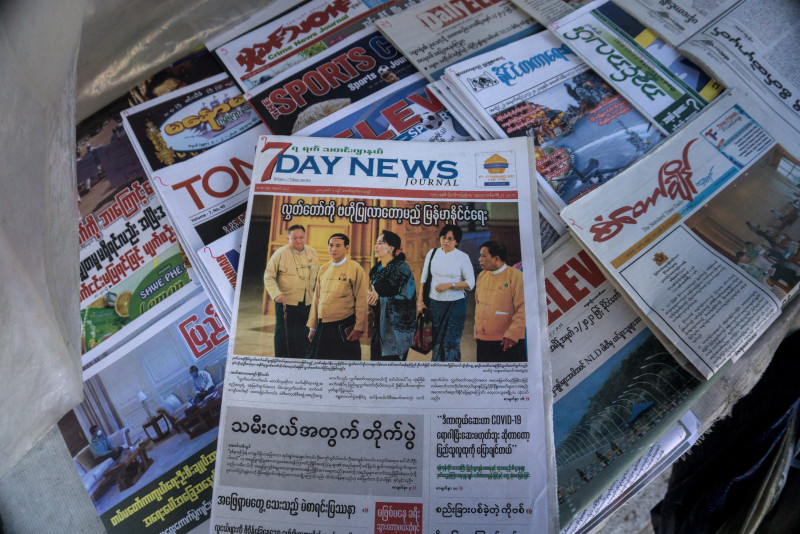
YANGON – Myanmar’s generals appeared in firm control today, a day after a surgical coup that saw democracy heroine Aung San Suu Kyi detained, as they offered silence to a barrage of global condemnation.
There are few signs of extra security on the streets here, Myanmar’s biggest city and commercial capital, indicating the military’s comfort levels as it faces no mass protests.
“We want to go out to show our dissatisfaction,” a taxi driver told AFP early today.
“But Amay Suu (Mother Suu) is in their hands. We cannot do much but stay quietly at this moment.”
The military staged its lightning coup yesterday, arresting Suu Kyi and other leaders from her National League for Democracy (NLD) party just ahead of a scheduled resumption of Parliament.
The military justified its seizure of power by alleging widespread fraud in elections held three months ago that NLD won by a landslide.
But, United States President Joe Biden led the chorus of global outrage, calling for a quick restoration of democracy and warning that Washington could reimpose sanctions.
“The international community should come together in one voice to press the Burmese military to immediately relinquish the power they have seized,” he said, referring to Myanmar by its former name.
“The US is taking note of those who stand with the people of Burma in this difficult hour.”
United Nations Secretary-General Antonio Guterres, the European Union and Australia are among the others to condemn the coup. Britain summoned Myanmar’s envoy in formal protest.
China, however, declined to criticise anyone, instead calling for all sides to “resolve differences”.
The UN Security Council has scheduled an emergency meeting on the situation today.
Detained before dawn
Suu Kyi and President Win Myint were detained in the capital, Naypyidaw, before dawn yesterday, party spokesman Myo Nyunt told AFP before communications with him were cut off.
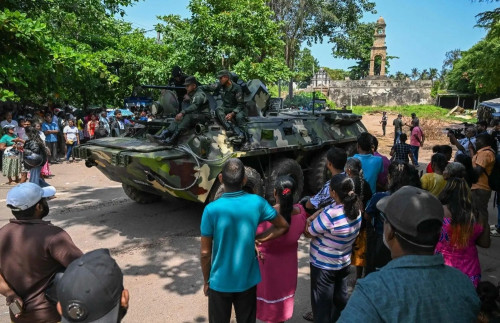
The military sealed off roads around Naypyidaw with troops, trucks and armoured personnel carriers. Military helicopters flew across the city.
Internet across the country was also severely disrupted in the day and banks were briefly closed, but the Myanmar Banks’ Association said they will reopen today.
By nightfall, the military had appeared to pull off a successful coup with no uprising against it, and NLD muted for now.
Late yesterday, state television announced the removal of 24 of Suu Kyi’s ministers, and 11 new appointments.
Military chief and coup leader Min Aung Hlaing is now in charge of the country, although former general Myint Swe is acting president.
Min Aung Hlaing is an international pariah, having been banned on Facebook and under US sanctions for a military campaign against Myanmar’s Muslim Rohinyga community that the US has described as ethnic cleansing.
An MP with Suu Kyi’s NLD said life continues as normal in the resident dorms for parliamentarians, but their compound is like “an open-air detention centre”.
“We are not allowed to go outside,” she told AFP, requesting anonymity for fear of the military.
“We are very worried.”
Suu Kyi and Win Myint are under house arrest, said an NLD lawmaker.
“We were informed not to worry. However, we are worrying. It would be a relief if we could see photos of them at home,” said the lawmaker on condition of anonymity.
Democracy process interrupted
The military yesterday announced that it will hold power under a state of emergency for 12 months, claiming it will then conduct fresh elections.
Myanmar’s November polls were only the second democratic elections the country had seen since it emerged from the 49-year grip of military rule in 2011.
NLD won more than 80% of the vote – increasing its support from the 2015 elections.
But, the military had for weeks complained that the polls were riddled with irregularities, and claimed to have uncovered more than 10 million instances of voter fraud.
Suu Kyi issued a pre-emptive statement ahead of her detention, calling on people “not to accept a coup”, according to a post on the Facebook page of her party’s chairman.
Suu Kyi, 75, is an immensely popular figure in Myanmar for her opposition to the military – which earned her the Nobel Peace Prize – having spent the best part of two decades under house arrest during the previous dictatorship.
Her international image, however, was shredded during her time in power, as she defended the military-backed crackdown on the Rohingya in 2017.
About 750,000 Rohingya were forced to flee into neighbouring Bangladesh during the campaign, which UN investigators have said amounted to genocide.
Derek Mitchell, the first US ambassador to Myanmar after military rule, said the international community still needs to respect Suu Kyi’s overwhelming victory last year.
The West “may have considered her this global icon of democracy, and that lustre is off. But if you care about democracy in the world, then you must respect the democratic choice, and she is clearly that”.
“It’s not about the person; it’s about the process.” – AFP, February 2, 2021






.jpg)