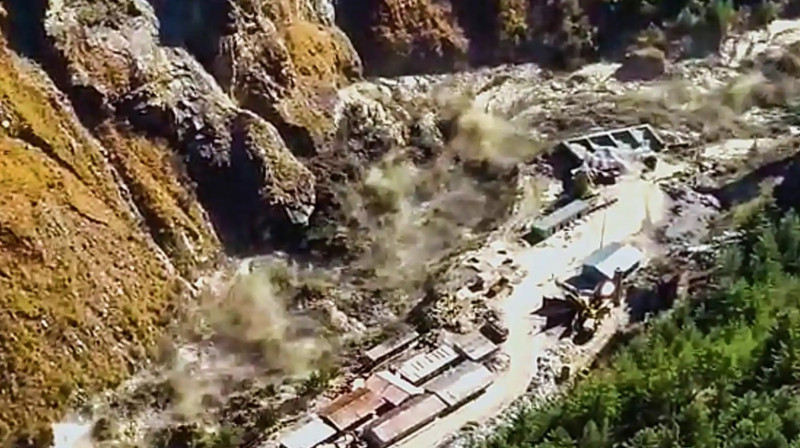
RISHIKESH – Fourteen people were confirmed dead today and at least 170 others are still missing after a chunk of glacier broke off and unleashed a devastating flash flood in India, officials said.
The wall of water barrelled down a valley in India’s Himalayan north yesterday morning, destroying bridges, roads and two hydroelectric power plants.
“There was a cloud of dust as the water went by. The ground shook like an earthquake,” local inhabitant Om Agarwal told Indian TV.
The Uttarakhand state government said today 14 bodies have been recovered from different places but that, according to local officials, 170 others are missing. Fifteen have been rescued.
Yesterday, police had put the number of people missing at more than 200, most of them from the two power plants.
Some were trapped in two tunnels cut off by the floods, and by mud and rocks.
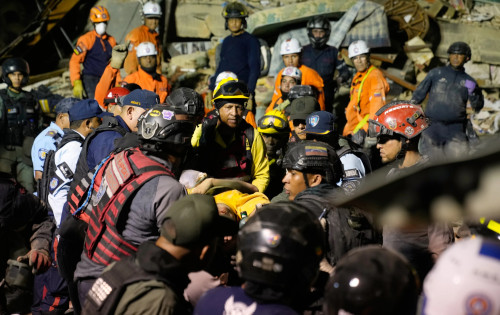
Twelve people were rescued from one of the tunnels yesterday but 25-30 more are still trapped in the second one, state disaster relief official Piyoosh Rautela told AFP.
With the main road washed away, paramilitary rescuers had to climb down a hillside on ropes to reach the entrance.
Several hundred rescue workers resumed their search operation at first light today, including national and state disaster response teams, the army and navy diving teams.
Officials said two dams had been emptied to stop the floodwaters from reaching the holy towns of Rishikesh and Haridwar, where authorities barred people from going near the river.
Villages on hillsides overlooking the river were evacuated, but as night fell, authorities said the main flood danger had passed.
‘India prays’
Scores of social media users captured the disaster, with footage showing water tearing through the narrow valley below one of the power plants with terrifying force.
Prime Minister Narendra Modi said he was monitoring the relief operation.
“India stands with Uttarakhand and the nation prays for everyone’s safety there,” he said on Twitter.
Floods in 2013 in Uttarakhand, which borders Tibet and Nepal, killed 6,000 people, and led to calls for a review of development projects in the state.
Vimlendhu Jha, founder of Swechha, an environmental NGO, said the disaster was a “grim reminder” of the effects of climate change and the “haphazard development of roads, railways and power plants in ecologically sensitive areas”. – AFP, February 8, 2021